
Why Engine Coolant Performance Is a System Outcome, Not an Additive Count
In automotive engines, cooling system failures rarely originate from a single missing function. Instead, they emerge when multiple protective mechanisms lose balance over time. Corrosion protection weakens, deposits accumulate, heat transfer efficiency declines, and temperature control margins narrow—often without a clear early warning.
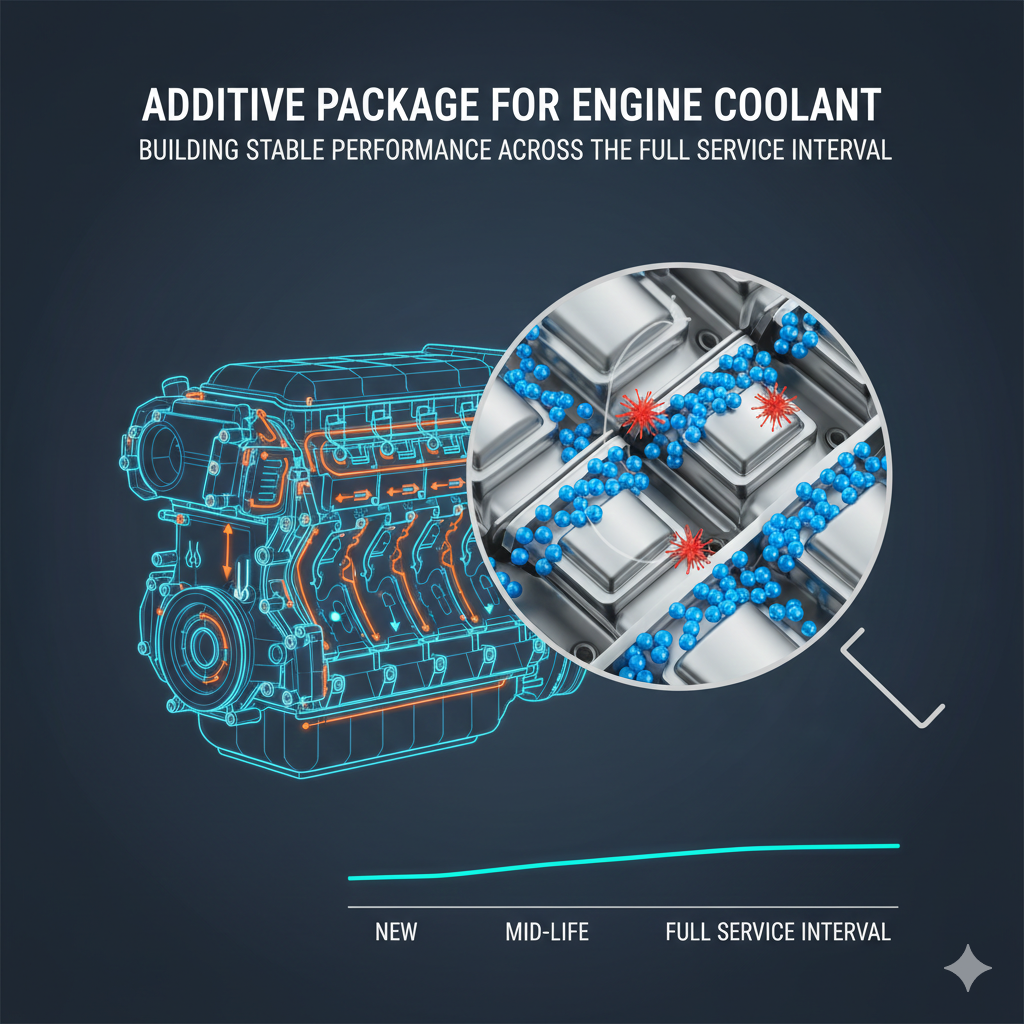
This behavior explains why engine coolant performance cannot be judged by individual additive presence alone. What determines stability is how the additive package functions as a system, particularly under real vehicle duty cycles involving cold starts, short trips, idle periods, and sustained highway operation.
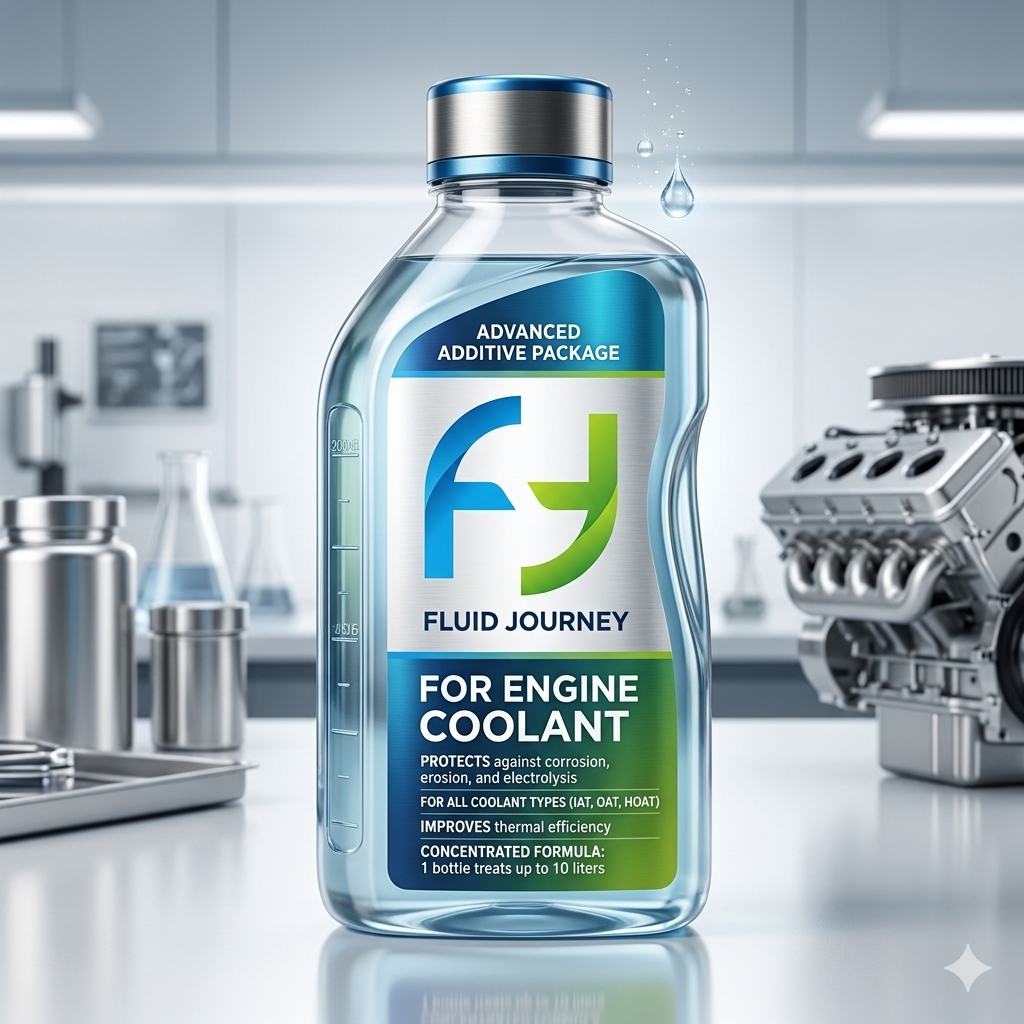
An additive package for engine coolant is therefore not a checklist of components, but a coordinated protection strategy.
What an Additive Package for Engine Coolant Actually Manages
From an engineering perspective, the additive package governs how coolant properties evolve from first fill to end of service. In automotive applications, this includes:
-
Corrosion inhibition across aluminum, steel, and cast iron components
-
pH buffering as oxidation progresses
-
Control of deposit formation in radiators and heater cores
-
Heat transfer consistency under variable load
-
Interaction stability during start–stop operation
Each function places stress on the others. Overemphasizing one area often accelerates degradation elsewhere.
Degradation Pathways During the Service Interval
Engine coolant does not degrade uniformly. The first half of the service interval is typically stable across most formulations. Performance differences become visible later, when additive depletion and interaction imbalance begin to surface.
Field observations in automotive systems show that poorly balanced additive packages can experience:
-
5–10% reduction in effective heat transfer late in the service cycle
-
pH drift beyond ±1.0 units, increasing corrosion risk
-
Localized deposit coverage exceeding 15–20% of heat-transfer surfaces
Well-designed additive packages limit these changes, keeping degradation gradual and predictable rather than abrupt.
Balancing Protection for Modern Automotive Materials
Modern automotive engines rely heavily on aluminum for weight reduction and thermal efficiency, while still incorporating steel, cast iron, and mixed-metal joints. Each material responds differently to coolant chemistry.
| Engine Component | Primary Risk | Additive Package Role |
|---|---|---|
| Aluminum heads & radiators | Pitting, oxide breakdown | Film stabilization |
| Cast iron blocks | Oxidation, scaling | Oxygen control |
| Steel components | General corrosion | Surface protection |
| Mixed-metal interfaces | Galvanic corrosion | Electrochemical balance |
Engineering implication:
An additive package for engine coolant must protect all materials simultaneously, not optimize for one at the expense of others.
Start–Stop Operation and Additive Interaction Stress
Modern vehicles increasingly operate under start–stop conditions, which introduce rapid temperature cycling and frequent oxygen exposure. These conditions accelerate additive interaction stress.
Additive packages designed for older, steady-state engines may struggle under these cycles, leading to faster inhibitor depletion and uneven surface protection. Automotive-focused additive packages address this by stabilizing film formation and buffering behavior during repeated thermal transitions.
Performance Comparison: Integrated vs Fragmented Additive Packages
| Performance Aspect | Integrated Additive Package | Fragmented Additive Approach |
|---|---|---|
| Corrosion control stability | Consistent | Uneven |
| Heat transfer retention | 95–97% | 85–90% |
| Deposit formation | < 5% surface coverage | 15–25% |
| pH drift | ±0.3–0.5 | ±0.8–1.2 |
| Late-cycle reliability | Predictable | Unstable |
| Maintenance planning | Proactive | Reactive |
Engineering insight:
Cooling reliability is defined by how additives work together, not by how many are present.
Procurement Perspective: Evaluating the Package, Not the Claims
For automotive procurement teams, additive packages often appear similar on paper. Many meet the same nominal standards and initial test results. The difference emerges during extended operation.
Experienced buyers therefore evaluate how additive systems age, how depletion is managed, and whether suppliers can explain late-cycle behavior. This shifts selection away from short-term compliance toward lifecycle stability and maintenance predictability.
Frequently Asked Questions
Q: Can an additive package be upgraded without changing base coolant?
A: Yes. Rebalancing additive systems often improves stability while retaining the same base fluid.
Q: Does a more complex package always perform better?
A: No. Complexity without balance often increases instability risk.
Q: How does additive package quality affect service intervals?
A: Stable packages support predictable, extended intervals by reducing late-cycle degradation.
Conclusion: Turning Additive Design Into Long-Term Cooling Stability
Engine coolant reliability is shaped by how additive systems behave over time, not by initial formulation strength alone. Understanding additive package for engine coolant design helps engineers and buyers select solutions that remain stable across real automotive duty cycles.
For those reviewing how integrated additive packages are applied in complete automotive antifreeze formulations, FYeco’s product range provides practical reference points for comparing protection strategies and long-term stability approaches.
👉 https://www.fyecosolution.com/products
When vehicle platforms involve aluminum-intensive designs, start–stop operation, or extended service targets, additive package selection often benefits from deeper technical alignment. FYeco supports application-focused discussions to help match additive systems with real vehicle operating conditions.
👉 https://www.fyecosolution.com/contact-us