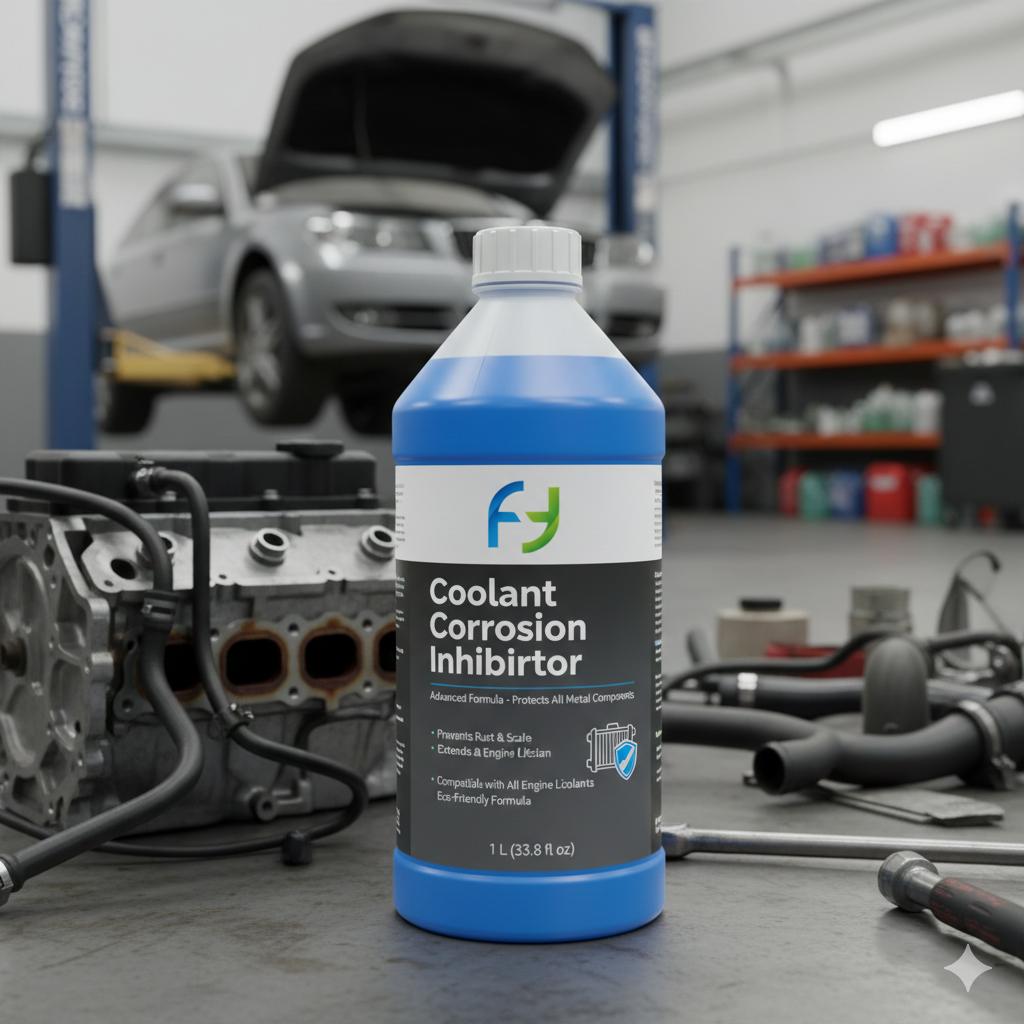

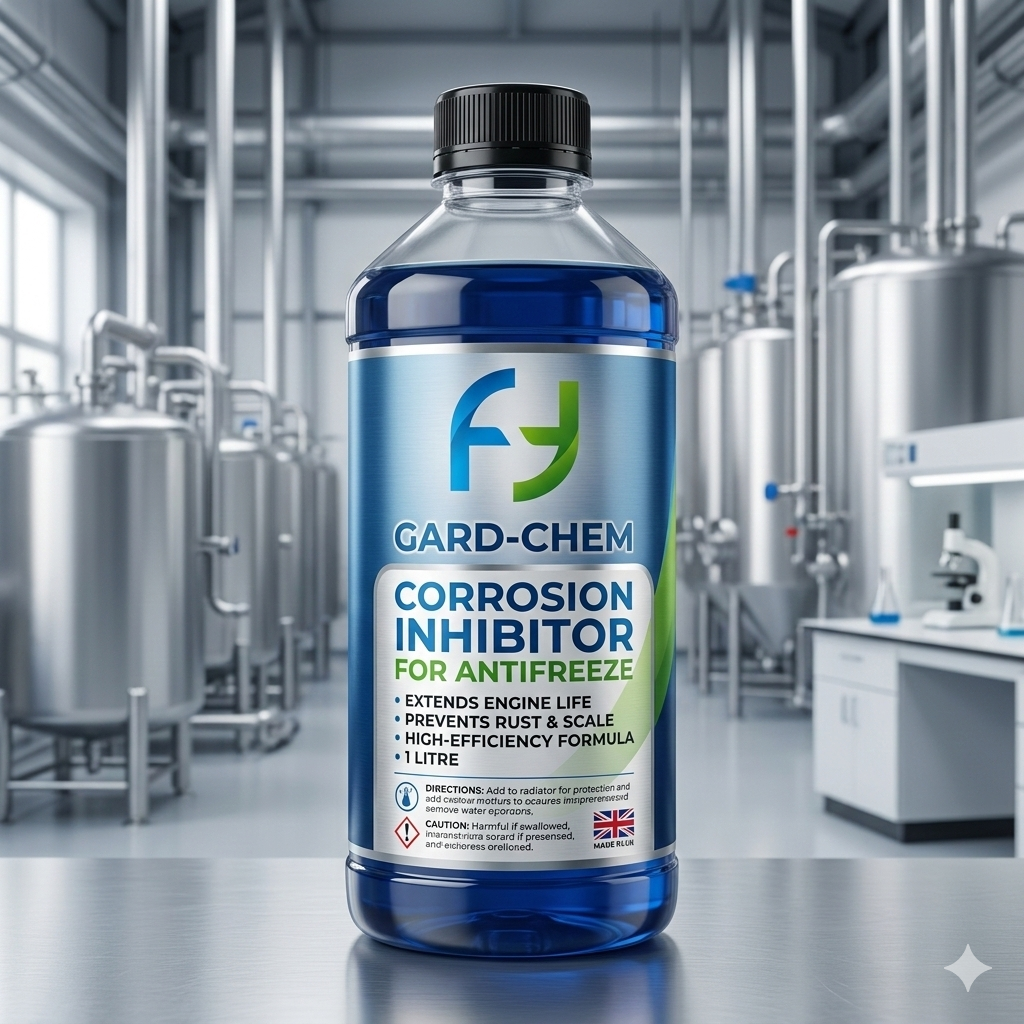
Corrosion Inhibitor for Antifreeze: Why Cooling Systems Fail Before Mechanical Limits
In many automotive maintenance scenarios, cooling system issues do not originate from mechanical defects. Instead, they emerge gradually—almost quietly. A radiator loses efficiency. A pump begins to wear earlier than expected. Metal surfaces show signs of localized corrosion.
What makes this more complex is that coolant specifications often appear correct. Freeze protection is adequate. Fluid levels are normal. Yet degradation continues.
For coolant manufacturers, OEM engineers, and fleet operators, this pattern raises a critical question:
If the coolant meets specifications, why does the system still deteriorate?
The answer often lies in the behavior of the corrosion inhibitor for antifreeze. It is not the presence of inhibitors that matters—but how effectively they stabilize electrochemical reactions over time.
At FYeco, formulation development focuses on controlling these reactions at the microscopic level. By adjusting inhibitor interaction, depletion rate, and surface behavior, the goal is to prevent corrosion from initiating rather than reacting to it after damage appears.
Understanding How Corrosion Begins Inside Cooling Systems
Inside an engine cooling circuit, multiple metals coexist in a conductive fluid environment. This combination naturally creates conditions for electrochemical activity.
When two different metals are exposed to coolant, a potential difference forms. Electrons begin to transfer. Over time, one metal becomes anodic and starts to corrode.
Temperature accelerates this process. Oxygen dissolved in coolant further intensifies oxidation reactions. Even minor impurities can shift chemical balance.
Left unmanaged, these processes can produce corrosion rates reaching 0.20–0.30 mm/year in aggressive conditions.
A properly designed corrosion inhibitor for antifreeze interrupts these reactions before they escalate, reducing corrosion rates to a fraction of that level.
How Corrosion Inhibitors Function at the Metal Surface
Corrosion inhibitors do not simply “block” reactions. Their behavior is more dynamic.
When introduced into coolant, inhibitor molecules migrate toward metal surfaces. Once there, they form a thin, often invisible protective layer. This layer alters the electrochemical interface between metal and coolant.
Several mechanisms are at play:
-
Adsorption film formation, creating a barrier against oxygen and ions
-
Electrochemical suppression, reducing electron transfer between metals
-
Localized pH buffering, stabilizing micro-environments at metal surfaces
A well-balanced corrosion inhibitor for antifreeze ensures that these mechanisms work together rather than interfering with one another.
Performance Comparison: Untreated vs Inhibitor-Protected Systems
| Performance Parameter | Without Corrosion Inhibitor | With Corrosion Inhibitor for Antifreeze |
|---|---|---|
| Corrosion rate (ASTM D1384 equivalent) | 0.20–0.30 mm/year | ≤0.05–0.08 mm/year (↓60–75%) |
| Aluminum pitting risk | High | Significantly reduced |
| Deposit formation | 20–30% coverage | <8–10% |
| Heat transfer retention | 80–85% | 93–96% |
| Cooling efficiency loss over time | 10–15% | <5–7% |
| System durability | Reduced | Extended service life |
Numbers like these illustrate a broader reality. Corrosion control is not a secondary feature—it directly influences thermal performance and system longevity.
Why Single Inhibitors Are No Longer Sufficient
In earlier coolant systems, a limited set of inhibitors could provide acceptable protection. Modern engines, however, present a more demanding environment.
Aluminum alloys dominate many components. Steel, cast iron, and copper still remain part of the system. Each material reacts differently to coolant chemistry.
A single inhibitor type rarely provides uniform protection across all surfaces. In some cases, improving protection for one metal may weaken protection for another.
This is why modern corrosion inhibitor for antifreeze systems rely on multi-component synergy. Different inhibitors perform complementary roles, creating a balanced protection network across the cooling system.
B2B Perspective: What Buyers Evaluate Beyond Lab Data
For coolant brands, distributors, and OEM suppliers, selecting an inhibitor system involves more than reviewing performance tables.
Consistency matters. A formulation that performs well in testing must deliver the same results across production batches. Even small variations in inhibitor concentration can lead to uneven protection in large-scale applications.
Regulatory compliance also plays a role. Chemical safety requirements, environmental standards, and export regulations influence formulation choices.
Technical support often becomes a deciding factor. Buyers need guidance on matching inhibitor systems with engine materials, operating conditions, and service intervals.
A reliable corrosion inhibitor for antifreeze solution therefore combines chemical performance with production consistency and application support.
Frequently Asked Questions
Q: Do corrosion inhibitors completely stop corrosion?
They do not eliminate corrosion entirely, but they significantly slow reaction rates and stabilize system behavior.
Q: Can inhibitors affect coolant flow or heat transfer?
Properly balanced inhibitors maintain heat transfer efficiency without causing flow restriction.
Q: How often should inhibitor performance be checked?
Monitoring typically aligns with coolant maintenance schedules, depending on operating conditions.
Controlling Corrosion Means Controlling Cooling System Stability
Cooling system durability depends on what happens at the microscopic level—on metal surfaces, within chemical reactions, and across temperature cycles. Corrosion inhibitors play a central role in stabilizing these interactions.
For manufacturers and fleet operators evaluating coolant performance, reviewing available antifreeze solutions can help identify formulations designed for long-term stability. You can explore FYeco’s automotive coolant products here:
https://www.fyecosolution.com/products
If your application involves mixed-metal engines, extended service intervals, or demanding operating conditions, discussing formulation strategies with a technical team can help define a more stable corrosion protection approach. You can contact FYeco here:
https://www.fyecosolution.com/contact-us