
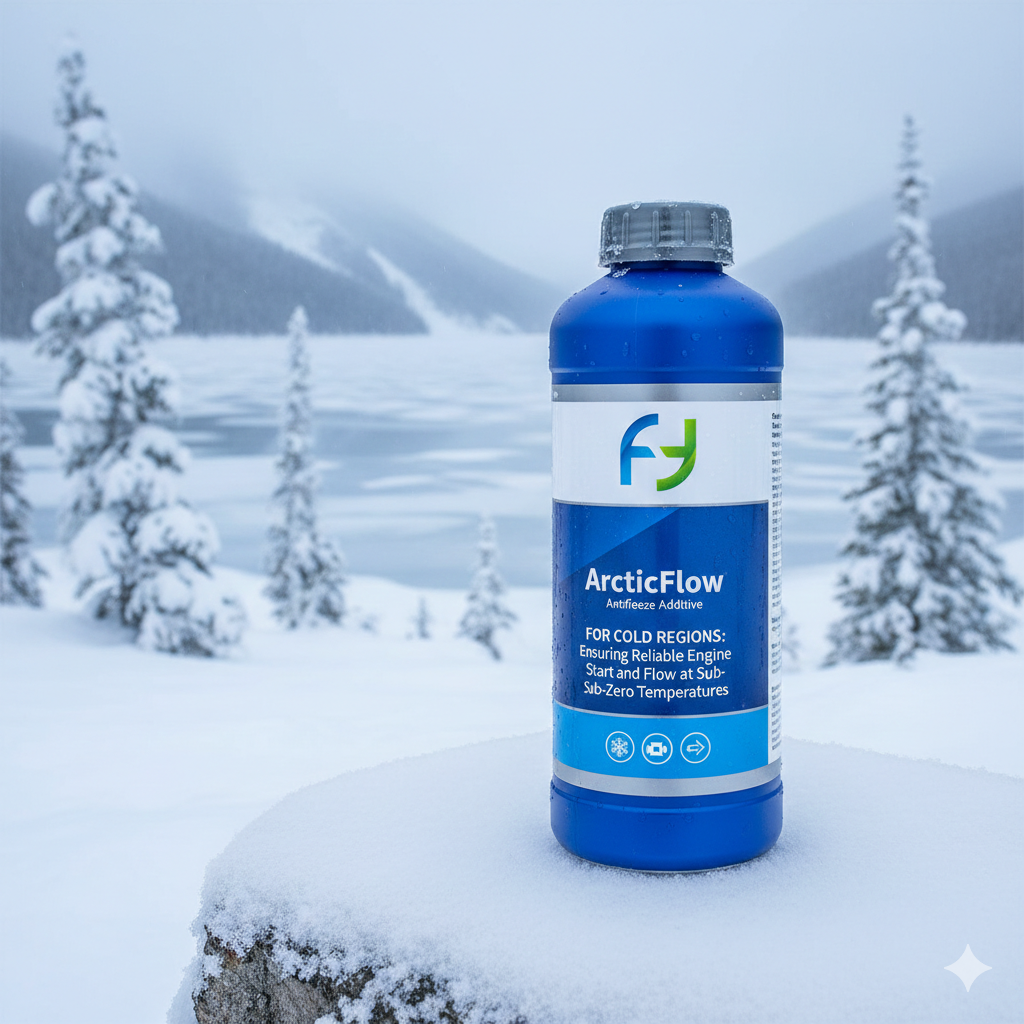
In cold regions, coolant systems face a completely different challenge compared to high-temperature environments. The issue is not overheating—it is whether the coolant can circulate, protect, and stabilize the engine during cold start and early operation.
At temperatures below -20°C, coolant viscosity increases sharply, flow resistance rises, and localized freezing risk becomes real. Under these conditions, antifreeze additive for cold regions is not just about lowering freezing point—it must ensure the system remains functional from the first engine rotation.
What Actually Happens Inside the Cooling System at Low Temperatures
Cold environments affect coolant behavior in multiple ways at the same time:
-
Fluid viscosity increases, reducing circulation efficiency
-
Initial coolant flow delay during startup
-
Local freezing risk in low-flow zones
-
Increased thermal stress when rapid heating begins
Testing data shows that at -30°C, coolant viscosity can increase by 200–300% compared to normal operating temperature, significantly affecting pump performance and initial circulation.
This is why low-temperature coolant failure often happens before the engine reaches stable operating conditions.
Core Functions Required from Antifreeze Additive for Cold Regions
An antifreeze additive for cold regions must address three key performance requirements simultaneously:
-
Maintain low-temperature fluidity to enable early circulation
-
Prevent crystallization or localized freezing under static conditions
-
Protect metal surfaces during delayed warm-up phases
Unlike high-temperature formulations, the focus here is early-stage stability, not long-term thermal resistance.
Performance Comparison in Sub-Zero Conditions
| Parameter | Standard Additive System | Cold Region Optimized Additive |
|---|---|---|
| Freezing protection | -15°C to -25°C | -35°C to -45°C |
| Viscosity increase at -30°C | +250–300% | +120–160% |
| Initial flow delay (cold start) | 8–12 sec | 3–5 sec |
| Pump load increase | High (+40–60%) | Moderate (+15–25%) |
| Local freezing risk | Medium–High | Low |
| Cold start wear risk | Elevated | Reduced |
Engineering insight:
The real difference is not freezing point alone, but how quickly coolant becomes functional after startup.
Selecting Additive Strategy Based on Vehicle Use in Cold Regions
Different vehicle types require different additive behavior under cold conditions:
Passenger vehicles (urban winter use)
Frequent cold starts increase the importance of quick circulation and reduced viscosity. Additives must support rapid system activation.
Diesel vehicles in cold environments
Longer warm-up times require stronger protection during extended low-temperature operation, especially for cylinder liners and cooling channels.
Fleet vehicles and logistics transport
Continuous overnight exposure to sub-zero temperatures increases the risk of coolant thickening or partial freezing. Stability under static conditions becomes critical.
For these reasons, antifreeze additive for cold regions should be selected based on actual temperature exposure and usage pattern, not just minimum temperature rating.
Common Low-Temperature Failure Symptoms in Real Use
In practical automotive use, insufficient additive performance in cold regions may lead to:
-
Slow cabin heating due to delayed coolant circulation
-
Increased engine wear during cold starts
-
Cooling system pressure fluctuations after startup
-
Occasional overheating after initial warm-up (caused by uneven flow)
These issues often appear intermittently and are easily overlooked, but they indicate early-stage coolant instability.
Frequently Asked Questions
Q: Is lowering freezing point enough for cold climate performance?
A: No. Flow behavior and circulation speed are equally important.
Q: Can the same coolant be used across all climates?
A: It is possible, but performance compromises often occur in extreme conditions.
Q: Does higher concentration always improve cold protection?
A: Not necessarily. Excessive concentration can increase viscosity and reduce flow.
Conclusion: Cold Climate Performance Depends on Early System Functionality
In cold regions, cooling system performance is defined by how quickly and effectively the coolant becomes active after engine startup. Antifreeze additive for cold regions ensures that fluidity, protection, and system stability are maintained even under sub-zero conditions.
For applications operating in low-temperature environments or facing frequent cold starts, reviewing suitable coolant formulations helps ensure stable system performance from startup to full operation. You can explore automotive coolant solutions through FYeco’s product portfolio here:
https://www.fyecosolution.com/products
If your vehicles operate in cold regions or experience startup-related cooling issues, aligning additive selection with real operating temperatures can significantly improve system reliability. You can discuss your application requirements directly with the FYeco team here:
https://www.fyecosolution.com/contact-us