
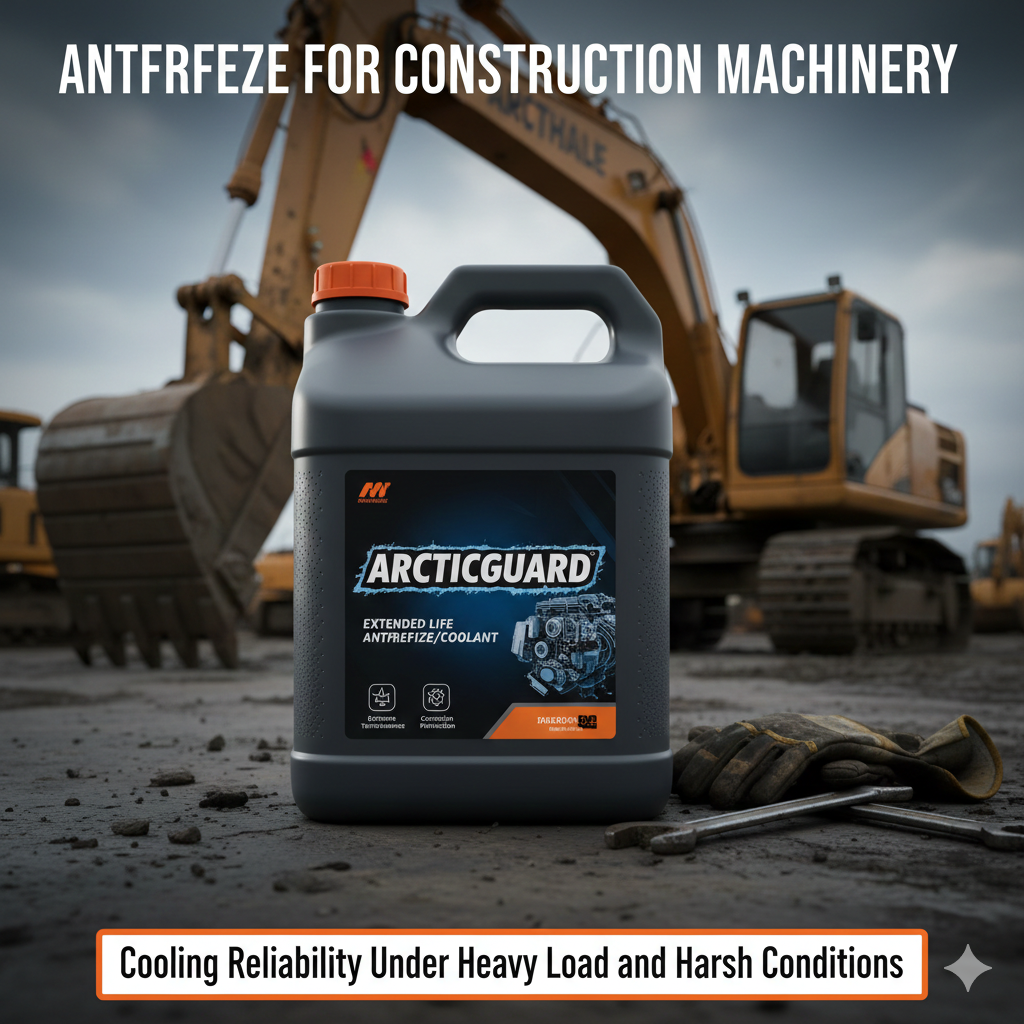
Antifreeze for Construction Machinery: Cooling Reliability Under Heavy Load and Harsh Conditions
Construction machinery engines work in conditions that differ sharply from passenger vehicles. Long idle periods followed by sudden high load, exposure to dust and debris, and limited maintenance windows place continuous stress on the cooling system.
Antifreeze for construction machinery must therefore deliver more than freeze protection. It must maintain stable heat transfer, protect mixed-metal components, and resist chemical degradation under prolonged high-temperature operation. Evaluating coolant performance in this context requires focusing on operating reality, not laboratory ratings alone.
Why Construction Machinery Stresses Coolant Systems
Engines used in construction equipment face a combination of challenges rarely seen in standard vehicles.
Typical job-site conditions include:
-
Sustained high load during digging, lifting, or pushing
-
Limited airflow around radiators due to dust buildup
-
Frequent idling followed by rapid load increase
-
Extended service intervals dictated by project schedules
These factors accelerate oxidation, additive depletion, and deposit formation. If coolant chemistry is not designed for endurance, thermal efficiency gradually declines, increasing the risk of overheating during peak operation.
Engine Materials and Cooling Circuit Complexity
Modern construction machinery engines often combine cast iron blocks, aluminum heads, steel liners, and auxiliary cooling circuits for turbochargers or aftertreatment systems.
An effective antifreeze for construction machinery must:
-
Protect aluminum components from localized corrosion
-
Prevent cavitation erosion around cylinder liners
-
Maintain pH stability across long operating hours
-
Limit scale and deposit formation in heat exchangers
Failure in any one of these areas may not stop the machine immediately, but it reduces thermal margin and increases long-term maintenance cost.
Coolant Behavior During Continuous Job-Site Operation
Unlike on-road vehicles, construction machinery often runs for hours at steady load with minimal shutdown.
Under these conditions:
-
Oxidation reactions proceed continuously
-
Inhibitors are consumed at a steady rate
-
Dust ingress increases contamination risk
A robust antifreeze formulation maintains chemical balance despite these stresses, ensuring that corrosion protection and heat transfer remain consistent throughout the workday.
Selecting Antifreeze Based on Machinery Type and Use
Coolant selection should be matched to how the equipment is used on-site.
Excavators and Loaders
Operate under sustained hydraulic and engine load, requiring strong thermal stability and cavitation protection.
Bulldozers and Earthmoving Equipment
Often work at low speeds with limited airflow, increasing the importance of heat transfer efficiency and deposit control.
Cranes and Intermittent-Use Machines
Experience long idle periods, making corrosion protection during standby just as important as performance under load.
In each case, antifreeze for construction machinery must balance endurance with protection across variable operating patterns.
Construction Machinery Coolant vs Standard Automotive Coolant
| Technical Aspect | Construction Machinery Antifreeze | Automotive Coolant |
|---|---|---|
| Operating load | Sustained, heavy | Intermittent |
| Thermal stress | Continuous | Cyclic |
| Cavitation risk | High | Lower |
| Additive endurance | High | Moderate |
| Maintenance frequency | Low | Higher |
This comparison explains why standard automotive coolant often underperforms in construction equipment, even if freeze protection appears adequate.
Procurement Considerations for Construction Equipment Operators
From a procurement perspective, antifreeze selection directly affects equipment uptime.
Key evaluation points include:
-
Proven stability under long service intervals
-
Compatibility with engine materials and seals
-
Resistance to cavitation and deposit formation
-
Consistency across supply batches for fleet use
Selecting coolant based solely on initial cost frequently leads to increased downtime and higher lifecycle expense.
Q&A
Q: Can automotive antifreeze be used in construction machinery?
It is generally not recommended due to differences in load profile and additive endurance requirements.
Q: Does higher glycol concentration improve protection on job sites?
Not necessarily. Excess concentration can reduce heat transfer efficiency.
Q: How often should coolant be replaced in construction equipment?
Intervals depend on formulation stability and operating conditions, not time alone.
Applying Antifreeze Solutions in Construction Machinery
Cooling system reliability is a key factor in construction machinery productivity and operating cost.
FYeco provides antifreeze solutions developed for heavy-duty construction equipment engines, focusing on thermal stability, corrosion protection, and performance under sustained load. Reviewing suitable options within FYeco’s product portfolio allows equipment operators and buyers to evaluate antifreeze choices based on real job-site conditions rather than generic specifications.
https://www.fyecosolution.com/products
For machinery operating in harsh environments with extended run times, discussing equipment type and service practices with the FYeco team supports a more reliable, application-driven coolant selection process.
https://www.fyecosolution.com/contact-us