
Antifreeze for Power Generators: Cooling Stability Beyond Rated Output
Power generators place cooling systems in a unique position. Unlike vehicles that experience varying speed and airflow, generators often operate at fixed RPM under steady electrical load, or remain idle for long periods before being required to deliver full output immediately. In this context, antifreeze for power generators must manage both sustained thermal stress and extended standby exposure, two conditions that challenge coolant chemistry in different ways.
Cooling failures in generator systems rarely stem from freeze protection alone. They more often result from gradual heat transfer loss, corrosion during idle periods, or instability during rapid load transitions. Selecting antifreeze based solely on temperature rating overlooks these operational realities.
How Generator Operating Profiles Shape Cooling Requirements
Generator engines typically fall into two dominant operating modes: continuous-duty operation and standby service. Continuous-duty generators run for extended periods—often 12–24 hours or longer—at stable but high thermal output. Standby generators, by contrast, may remain idle for weeks or months before starting under full electrical demand.
In continuous operation, coolant must maintain consistent heat rejection with minimal property drift. Monitoring data from industrial generator installations shows that a 5–7% decline in cooling efficiency can lead to gradual temperature rise, even when airflow and load remain constant. In standby systems, corrosion protection during idle periods becomes equally critical, as moisture and oxygen exposure continue even when the engine is not running.
Antifreeze for power generators must therefore balance thermal stability under load with chemical stability during inactivity.
Cooling System Design Characteristics in Generator Engines
Generator engines typically feature compact cooling circuits designed for predictable operating conditions. While this simplifies thermal modeling, it increases sensitivity to coolant degradation. Limited flow variability means any increase in viscosity or deposit formation directly affects heat transfer efficiency.
Corrosion mechanisms also differ from mobile equipment. During extended idle periods, localized corrosion can develop in low-flow zones, particularly around water jackets and mixed-metal interfaces. Studies indicate that coolant pH drift of 0.6–0.9 units during long standby intervals can significantly accelerate corrosion activity, even before visible deposits form.
Effective antifreeze for power generators must stabilize pH, suppress oxidation, and maintain inhibitor performance across both operating and non-operating phases.
Continuous Load vs Standby Operation: Coolant Degradation Patterns
Generator coolant degradation does not follow a single pattern. Instead, it reflects the operating role of the equipment.
-
Continuous-duty generators experience steady oxidation and inhibitor consumption, where viscosity control and deposit resistance determine long-term stability.
-
Standby generators face intermittent thermal cycling, where corrosion protection during idle periods becomes the dominant concern.
-
Prime power generators combine both behaviors, making formulation balance critical.
Field observations show that poorly matched formulations can experience viscosity increases of 6–10% over a service interval, reducing pump efficiency and elevating operating temperatures. In contrast, antifreeze for power generators is typically formulated to limit viscosity change to ±3–5%, preserving circulation stability across varied duty cycles.
Antifreeze for Power Generators vs General Engine Coolant
| Aspect | Antifreeze for Power Generators | General Engine Coolant |
|---|---|---|
| Operating profile | Continuous or long standby | Variable, mobile |
| Load stability | Fixed RPM, steady load | Fluctuating |
| Idle corrosion risk | High in standby mode | Lower |
| Heat rejection stability | ≤5% decline per interval | 8–15% possible |
| Viscosity control | ±3–5% | Wider variation |
| Maintenance predictability | Planned, stable | More corrective |
This comparison highlights why generator operators often encounter temperature drift or corrosion issues when using general-purpose engine coolant, even if freeze protection remains adequate.
Procurement Considerations for Generator Applications
From a procurement perspective, antifreeze for power generators should be evaluated based on service continuity and risk control, not unit cost. Generator downtime often carries disproportionate consequences, particularly in backup power systems supporting hospitals, data centers, or industrial processes.
Buyers increasingly prioritize coolant solutions that demonstrate formulation consistency, long service interval stability, and compatibility with extended standby conditions. In generator applications, the cost of coolant replacement is typically negligible compared with the operational risk of cooling failure during critical demand periods.
Frequently Asked Questions
Q: Can standard automotive antifreeze be used in power generators?
A: Automotive antifreeze may meet basic temperature requirements but often lacks the long-term stability and corrosion protection needed for continuous-duty or extended standby generator operation.
Q: Is freeze protection the primary selection factor for generator antifreeze?
A: Freeze protection is important, but long-term heat transfer stability and corrosion control during idle periods usually have a greater impact on generator reliability.
Q: How often should antifreeze be evaluated in standby generators?
A: Even with limited run time, coolant condition should be monitored periodically, as chemical degradation continues during idle periods and can affect performance when the generator is required to start immediately.
From Product Selection to Application-Specific Support
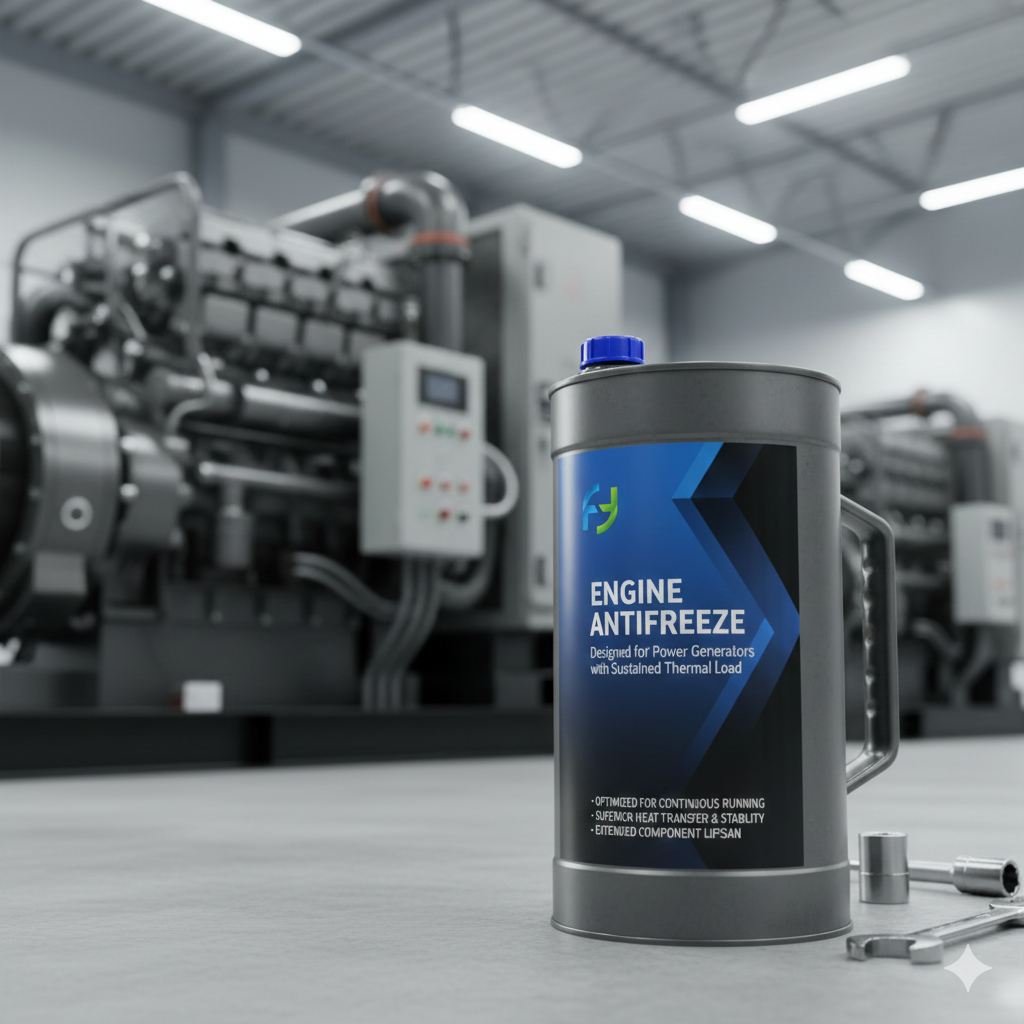
For generator systems operating under continuous load or extended standby conditions, reviewing suitable antifreeze formulations helps align coolant performance with real operating demands. FYeco offers antifreeze products designed to support stable cooling behavior in generator applications, allowing operators to evaluate options based on duty cycle and system design through the product range available at
https://www.fyecosolution.com/products
Where generator installations involve extreme ambient temperatures, long standby intervals, or specific engine designs, customized antifreeze solutions can provide additional control. Through FYeco’s technical service process, coolant formulations can be adapted to application-specific requirements, helping generator operators reduce uncertainty and maintain reliable thermal performance. Customization discussions and technical support can be initiated via
https://www.fyecosolution.com/services