
Why Automotive Engines Use Additive Concentrates Instead of Fully Premixed Coolants
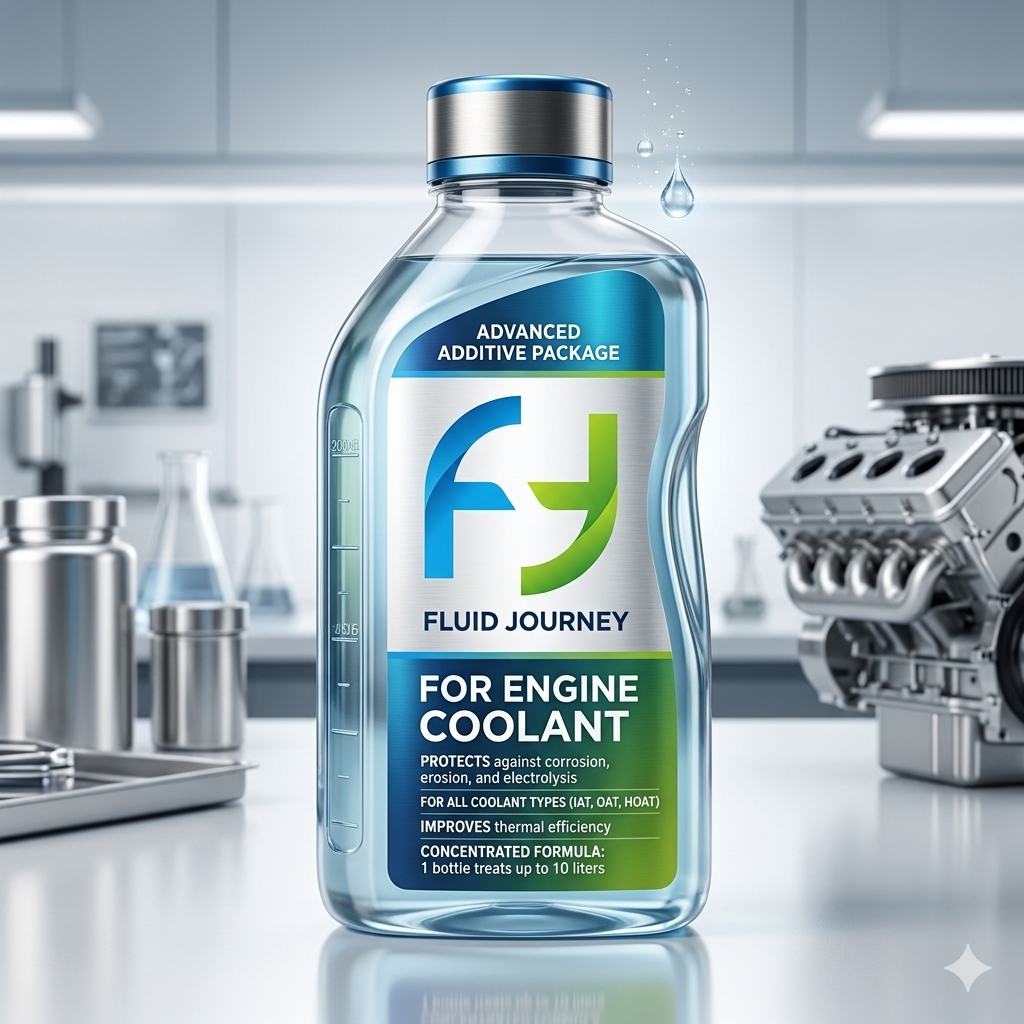
In automotive antifreeze programs, additive concentrates are commonly used to balance logistics efficiency, formulation flexibility, and platform compatibility. Instead of shipping fully formulated coolant for every vehicle variant, concentrates allow antifreeze performance to be built through controlled dilution at the formulation stage.
For automotive engines, this approach supports adaptation to different aluminum alloys, gasket materials, and cooling circuit designs. However, it also means that final coolant performance depends on how the concentrate behaves after dilution, not on the concentrate itself.
This distinction is critical when evaluating antifreeze additive concentrate for vehicle applications.
What Antifreeze Additive Concentrate Controls in Automotive Cooling Systems
Once diluted into the glycol base fluid, an antifreeze additive concentrate defines the chemical behavior of the coolant throughout the service interval. In automotive engines, this includes:
-
Corrosion protection for aluminum heads, radiators, and water pumps
-
pH buffering during frequent thermal cycling
-
Cavitation and erosion control near pump inlets
-
Deposit control in narrow radiator and heater core passages
-
Stability under start–stop and idle conditions
Automotive cooling systems are especially sensitive to short driving cycles and rapid temperature changes, which place additional stress on additive interaction.
Dilution Accuracy and Its Impact on Automotive Engine Protection
In automotive antifreeze applications, dilution deviation has measurable consequences. Field data shows that maintaining additive concentrate dilution within ±3–4% keeps corrosion protection and pH behavior within design limits.
When dilution deviation exceeds ±8–10%, the following issues commonly emerge:
-
Reduced inhibitor film density on aluminum surfaces
-
Accelerated pH drift during oxidation
-
Increased deposit formation in radiator cores
-
Early loss of corrosion protection late in the service cycle
Because these effects develop gradually, they are often misattributed to coolant aging rather than dilution error.
Interaction With Automotive Base Fluids and Water Quality
Automotive antifreeze additive concentrate must be compatible with the specific glycol system used, most commonly ethylene glycol–based formulations. Incompatible additive–base fluid combinations can destabilize inhibitor systems and increase precipitation risk.
Water quality also plays a measurable role. In automotive systems, high mineral content in dilution water increases deposit formation risk, particularly in aluminum radiators and heater cores. Well-designed concentrates tolerate reasonable water variability, but controlled water quality improves long-term performance consistency.
Automotive Performance Comparison: Concentrate-Based vs Premixed Antifreeze
| Performance Aspect | Additive Concentrate (Automotive) | Premixed Automotive Antifreeze |
|---|---|---|
| Logistics efficiency | High | Lower |
| Formulation flexibility | High | Limited |
| Sensitivity to dilution accuracy | High | Minimal |
| Consistency across vehicle platforms | Process-dependent | Factory-controlled |
| Adaptability to material changes | Strong | Moderate |
| Long-term stability | High if controlled | Consistent |
Engineering takeaway:
In automotive engines, additive concentrates enable flexibility but require tighter formulation and dilution control.
When Antifreeze Additive Concentrate Is the Right Choice for Vehicles
Additive concentrate–based antifreeze systems are typically preferred in automotive programs where:
-
Multiple vehicle platforms share a common coolant strategy
-
Aluminum-intensive engine designs require tailored protection
-
Cost and logistics efficiency matter at scale
-
Formulation control is centralized
For individual vehicle servicing or uncontrolled refill environments, premixed antifreeze often reduces risk.
Procurement Perspective: Evaluating Automotive-Specific Suitability
From an automotive procurement standpoint, antifreeze additive concentrate should be evaluated based on compatibility with engine materials, tolerance to dilution variation, and long-term stability under vehicle duty cycles.
Buyers typically assess whether the concentrate supports predictable corrosion protection across start–stop operation, short trips, and extended idle periods—conditions unique to automotive use rather than industrial operation.
Frequently Asked Questions
Q: Does additive concentrate reduce antifreeze performance in cars?
A: No. Performance depends on dilution accuracy and formulation balance, not on concentrate form.
Q: Are additive concentrates suitable for modern aluminum engines?
A: Yes, when properly formulated for aluminum corrosion control.
Q: Can additive concentrates support long automotive service intervals?
A: Yes, provided dilution and water quality are controlled.
Conclusion: Building Automotive Antifreeze Performance Through Controlled Concentration
In automotive engines, antifreeze additive concentrate provides flexibility and scalability, but only when dilution accuracy and formulation compatibility are properly managed. Understanding how concentrates behave after dilution allows engineers and buyers to maintain stable cooling performance across the vehicle service life.
For those reviewing how additive concentrates are implemented in complete automotive antifreeze formulations, FYeco’s product range offers practical examples designed specifically for vehicle engine applications.
👉 https://www.fyecosolution.com/products
When automotive platforms involve specific material combinations, extended service intervals, or tighter durability targets, additive selection often benefits from deeper technical alignment. FYeco supports application-focused discussions to help match antifreeze additive concentrate performance to real vehicle operating conditions.