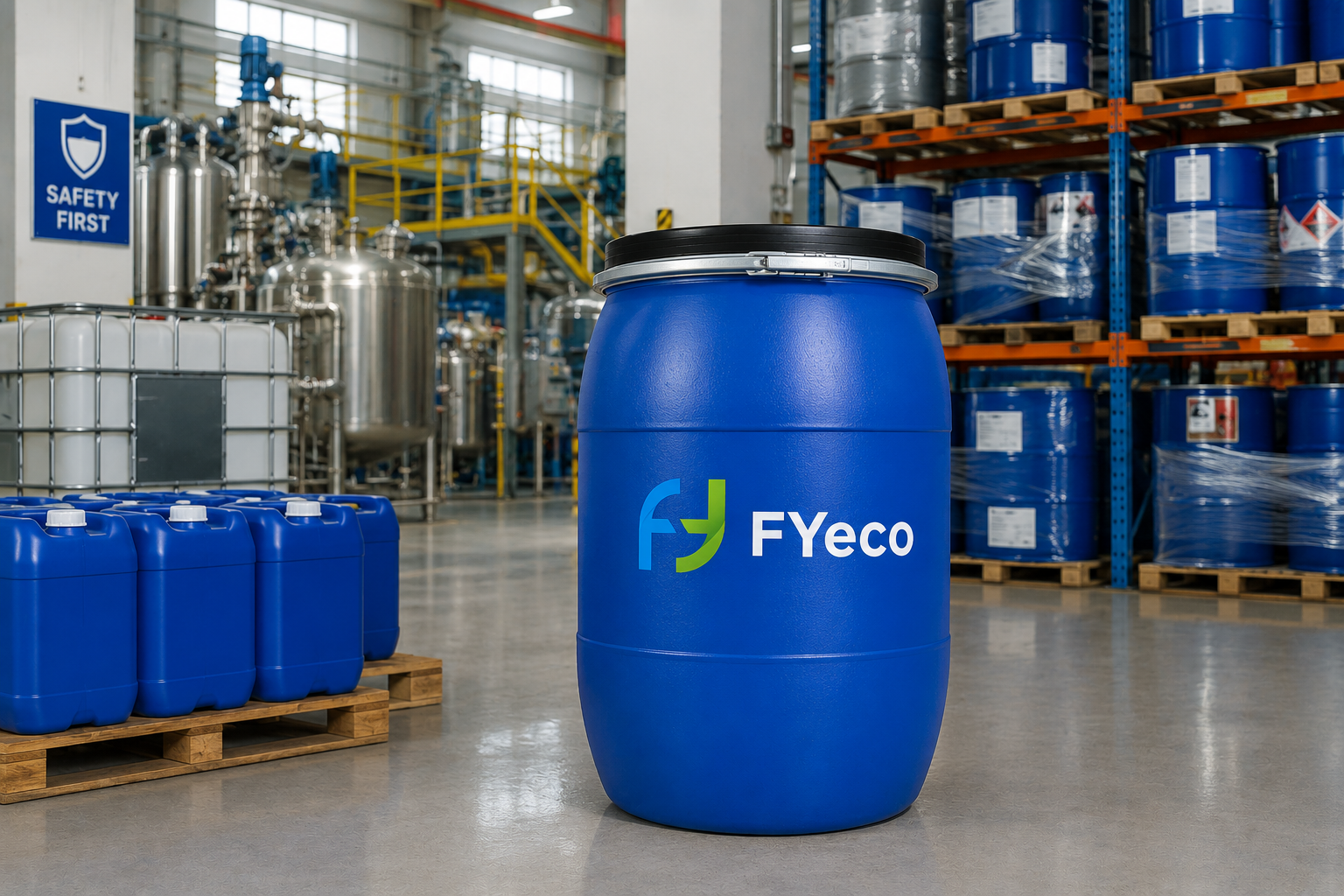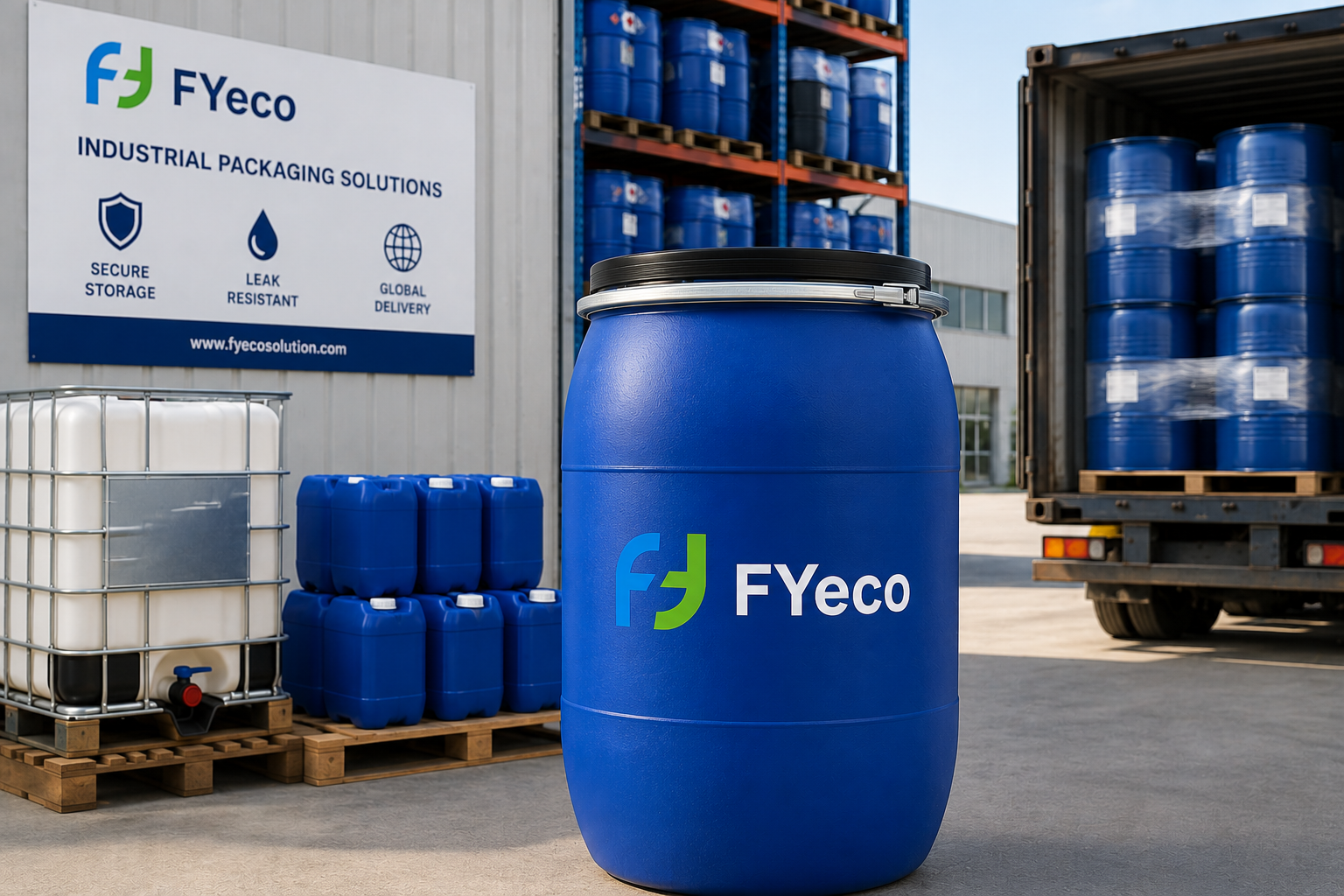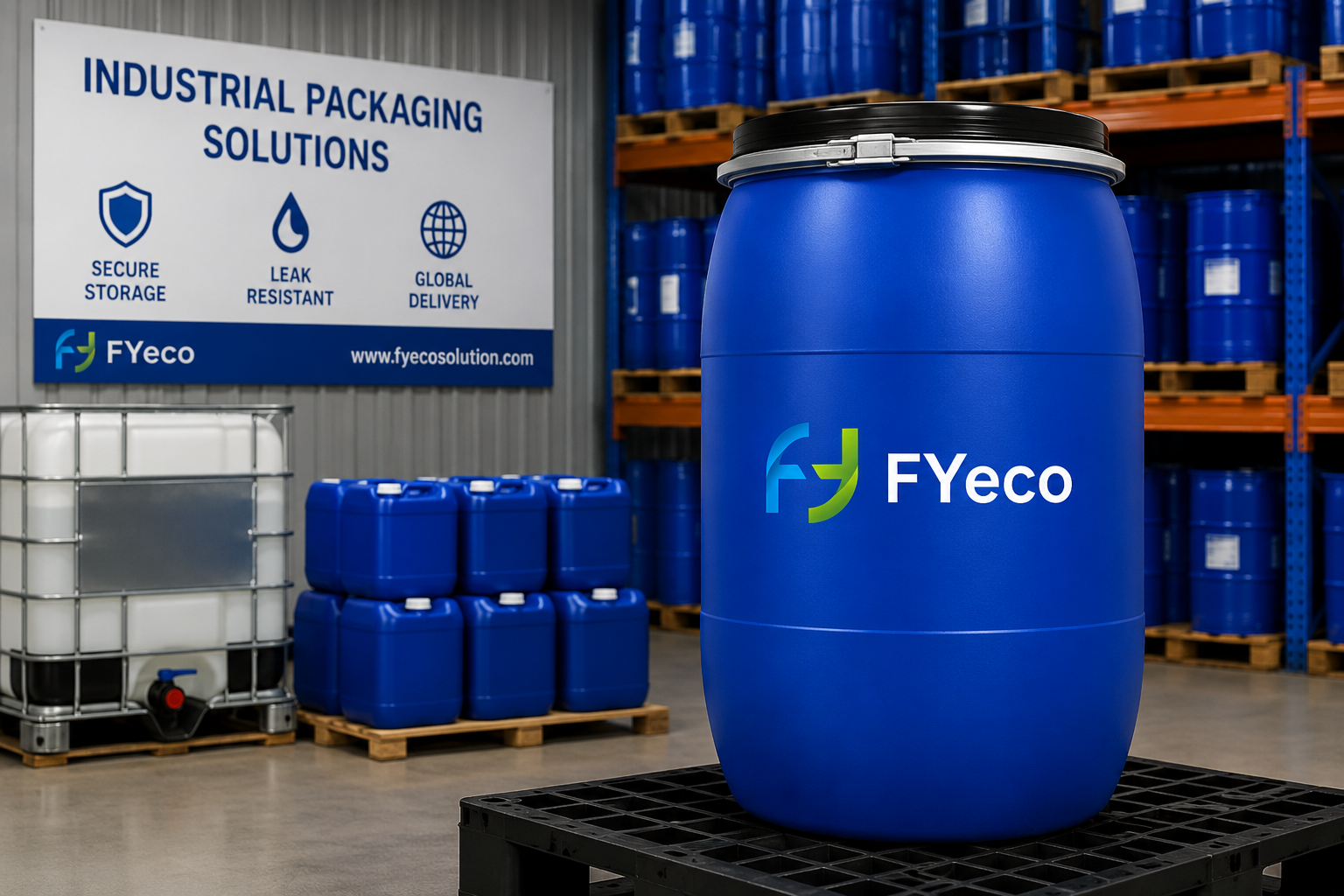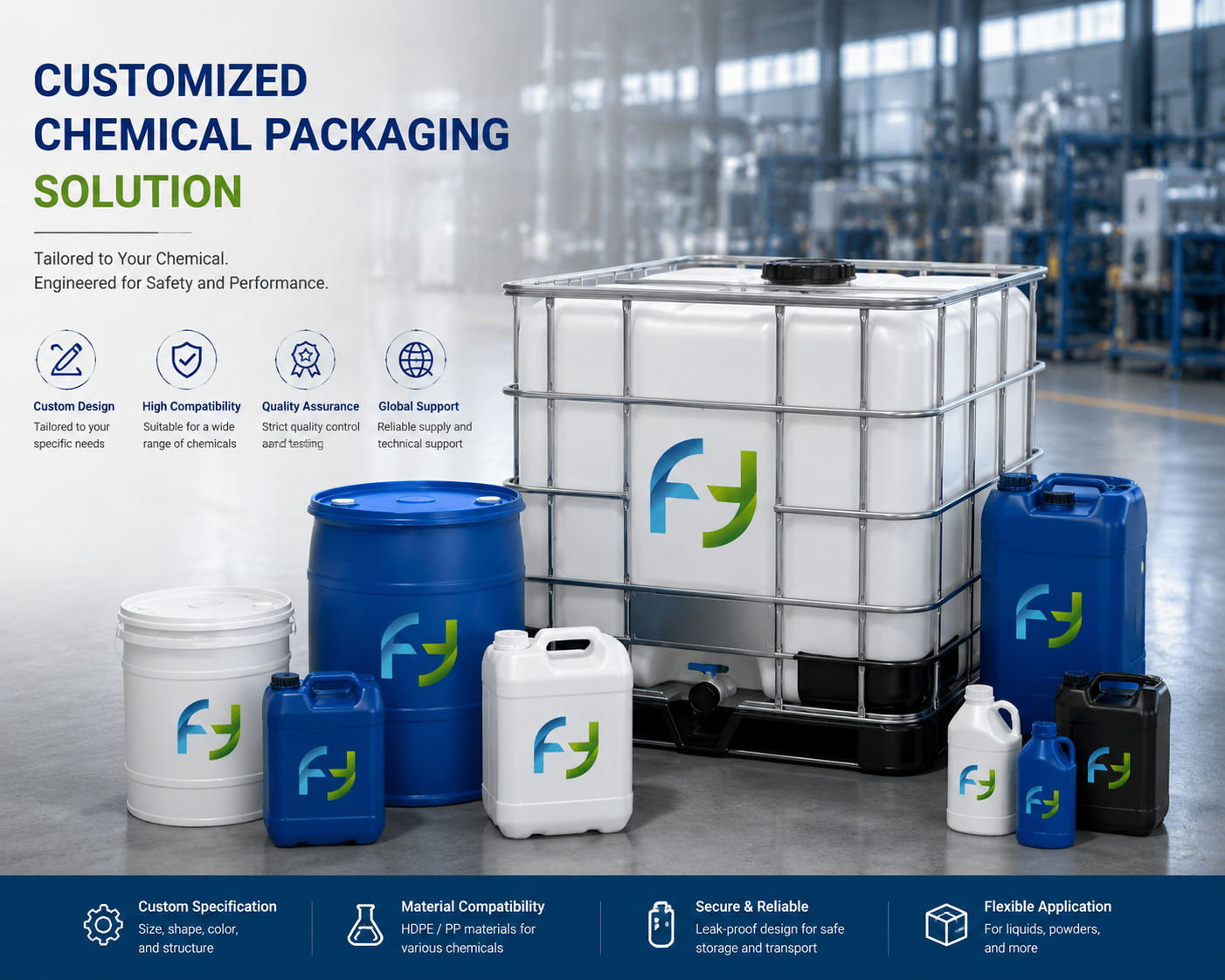

A container that performs well inside a warehouse may still fail during export transport.
Long-distance logistics introduce a completely different set of stresses. Containers are stacked for extended periods. Temperatures fluctuate across shipping routes. Vibrations during loading and ocean transport place continuous pressure on both the structure and sealing system.
For chemical manufacturers, coolant suppliers, and industrial exporters, these risks are not theoretical. A single leakage issue can delay shipments, damage cargo, and create compliance problems at customs or ports.
This is why selecting the right chemical drum for export is not simply about capacity. The container must maintain structural stability and sealing reliability throughout the entire logistics chain.
Why Export Packaging Requires Stronger Structural Performance
Export transport places far greater demands on packaging than local storage.
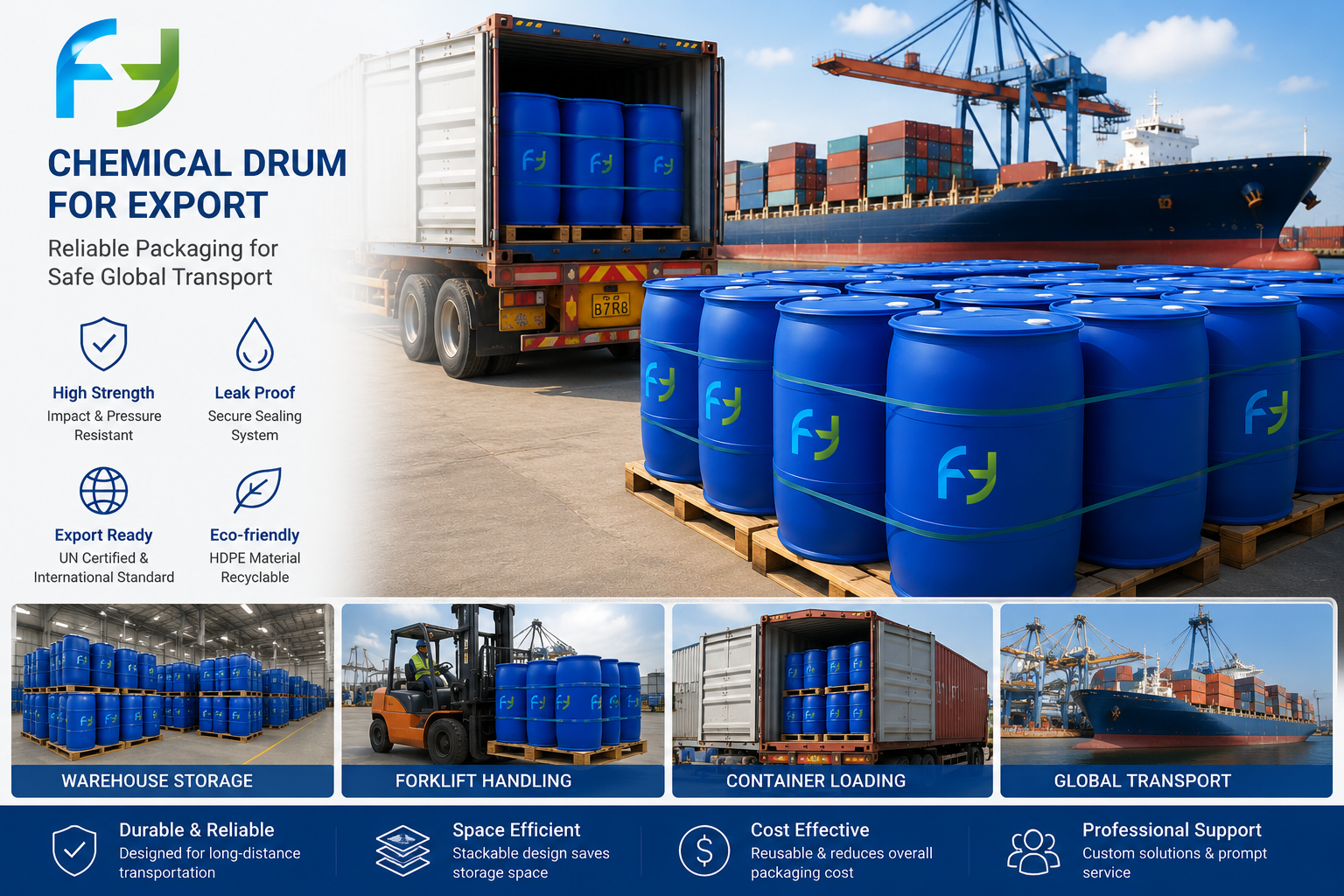
Drums may remain stacked inside containers for weeks. During shipping, containers experience vibration, impact, humidity changes, and temperature variation.
Under these conditions, weaknesses appear quickly:
- Deformation under stacking pressure
- Seal failure during vibration
- Material fatigue caused by temperature fluctuation
- Surface damage during loading and unloading
A properly designed chemical drum for export is engineered to resist these combined stresses rather than just static storage conditions.
Why HDPE Is Commonly Used for Export Chemical Drums
Most export chemical drums are manufactured from HDPE (high-density polyethylene).
The material offers several important advantages:
- Strong chemical resistance
- High impact durability
- Flexibility without cracking
- Good performance across temperature changes
However, material alone is not enough. Manufacturing consistency and structural design also affect export reliability.
A dependable chemical drum for export maintains uniform wall thickness and stable sealing performance across production batches.
Performance Comparison: Standard Drum vs Export-Grade Drum
| Performance Parameter | Standard Plastic Drum | Chemical Drum for Export |
|---|---|---|
| Stack load capacity | 2–3 layers | 4–6 layers |
| Leakage risk during transport | 3–5% | <1–2% |
| Impact resistance | Moderate | +40–60% improved |
| UV/weather resistance | Basic | Enhanced |
| Long-distance transport stability | Moderate | High |
| Service life | 1–2 years | 3–5 years |
These differences become critical in international shipping environments.
Structural Features That Improve Export Reliability
Several design elements directly affect export performance:
- Reinforced ribbing for pressure distribution
- Stable base structure for pallet handling
- Secure sealing systems to reduce leakage risk
- Uniform molding to avoid weak stress points
A high-quality chemical drum for export maintains shape and sealing integrity even after extended shipping cycles.
Application Scenarios Across Export Industries
Export chemical drums are widely used for:
- Coolants and lubricants
- Industrial chemicals
- Cleaning solutions
- Water-treatment products
- Agricultural liquids
Each application introduces different transport and compatibility requirements.
B2B Considerations: What Export Buyers Evaluate
International buyers typically focus on long-term reliability and compliance.
Key considerations include:
- UN certification compatibility
- Consistent production quality
- Supplier export experience
- Packaging durability during shipping
- Stable delivery capability
A reliable chemical drum for export supplier provides documentation, quality assurance, and technical support alongside the product itself.
Common Problems Caused by Low-Quality Export Drums
Export-related packaging issues often include:
- Bulging during stacking
- Leakage around caps or seals
- Structural deformation after transport
- Surface cracking under temperature variation
These failures usually result from poor molding quality or weak structural design.
Frequently Asked Questions
Q: Are export chemical drums reusable?
Yes, many HDPE drums are designed for multiple industrial use cycles.
Q: What certifications are important for export drums?
UN certification is commonly required for hazardous materials transport.
Q: Can export drums handle temperature changes during shipping?
Yes, when manufactured with suitable HDPE material and structural design.
Reliable Export Packaging Starts with the Right Drum
International liquid transport requires packaging systems designed for durability, safety, and long-distance stability. The right drum reduces operational risk throughout the shipping process.
Explore Export Packaging Solutions
You can explore FYeco’s industrial packaging products here:
https://www.fyecosolution.com/products
Discuss Your Export Packaging Requirements
For export specifications, chemical compatibility guidance, or custom drum solutions, contact FYeco here:
https://www.fyecosolution.com/contact-us