
In modern industrial logistics, an industrial packaging container plays a critical role in storing, protecting, and transporting liquids such as chemicals, automotive fluids, detergents, coatings, and other bulk materials.
For B2B buyers, packaging is not just a container—it directly affects product safety, transportation efficiency, warehouse management, and brand reliability. A poorly designed container can lead to leakage, deformation, contamination, or even supply chain disruption.
As a supplier focused on industrial packaging and chemical-related solutions, FYECO Solution provides plastic packaging products and industrial liquid packaging support for global buyers.
To make the right sourcing decision, buyers must evaluate more than price. They must evaluate structure, material, sealing system, production capability, and supplier reliability.
What Is an Industrial Packaging Container?
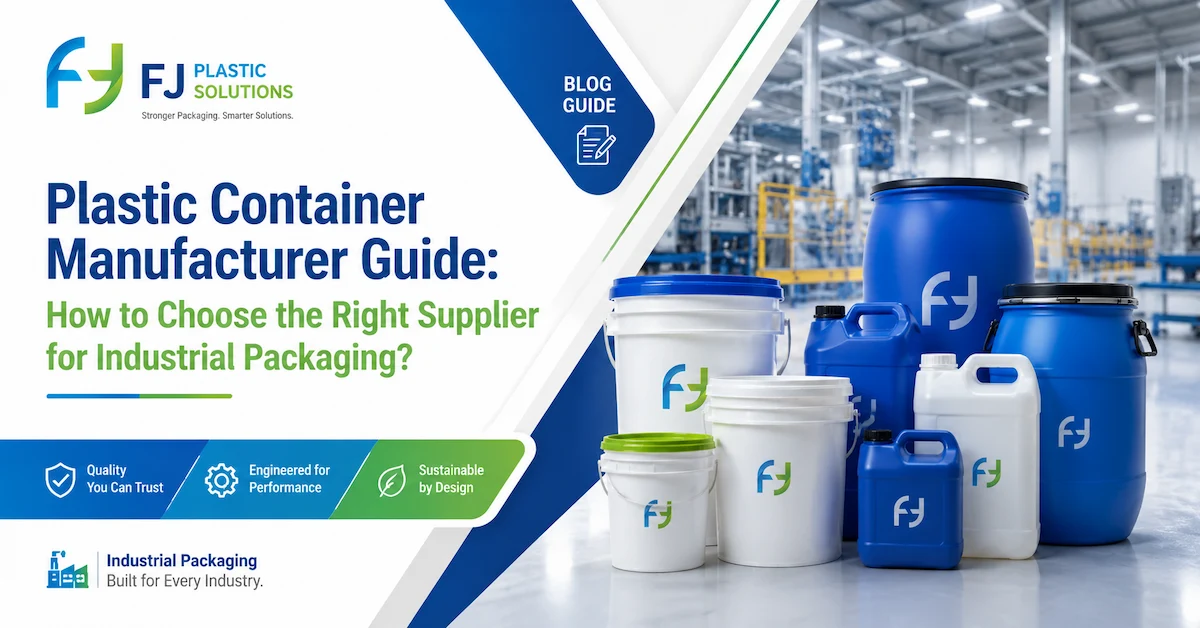
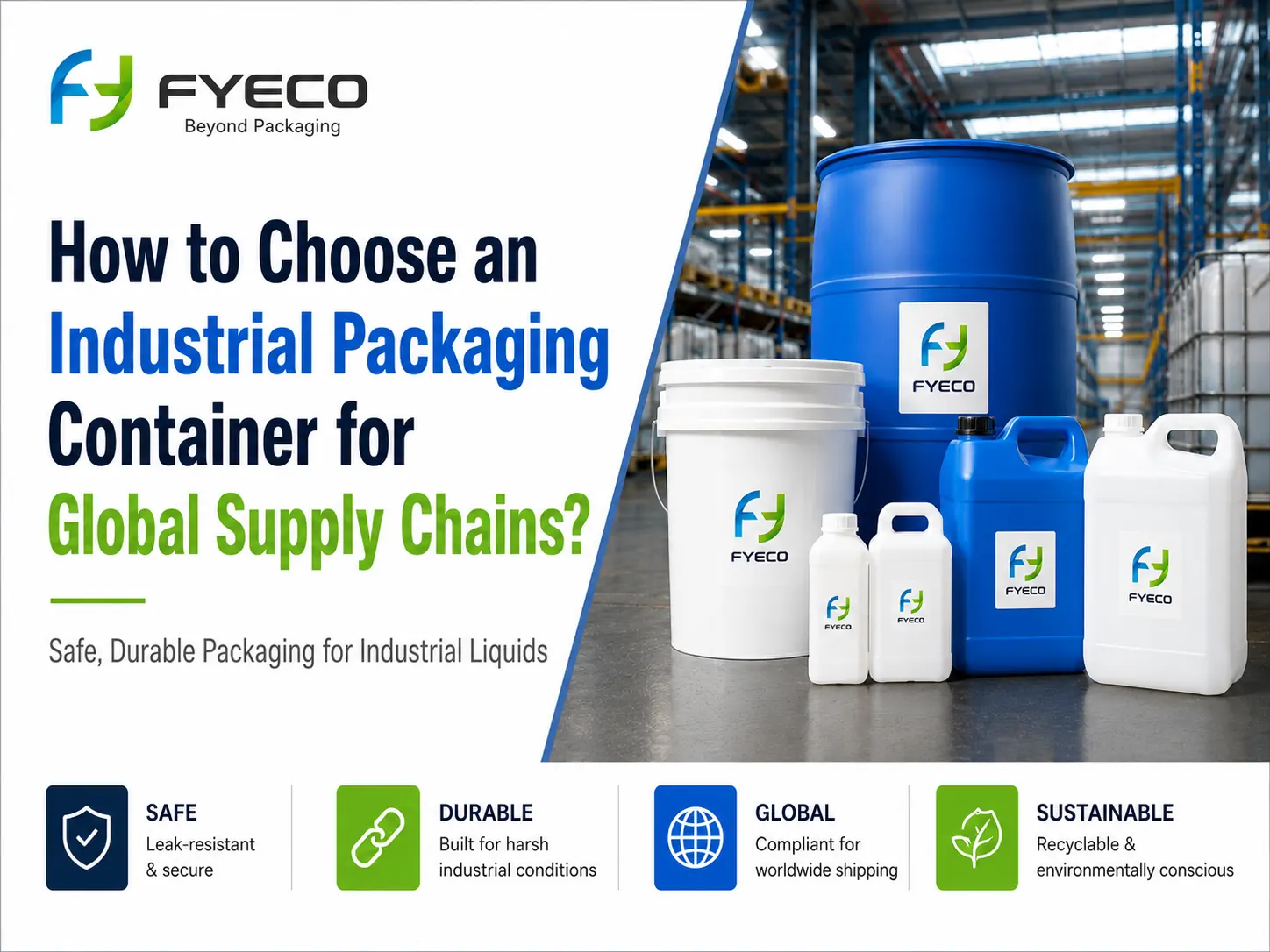
An industrial packaging container is a durable packaging solution designed for storing and transporting industrial liquids and materials. It includes plastic barrels, drums, jerry cans, buckets, tanks, and customized packaging systems.
These containers are widely used in:
- Chemical manufacturing
- Automotive fluid production
- Detergent and cleaning industries
- Coating and paint industries
- Agricultural chemical distribution
- Industrial liquid logistics
- Export packaging supply chains
You can explore related solutions on the FYECO Products page.
Why Industrial Packaging Containers Are Important
Industrial packaging containers are not simple storage tools. They are part of the supply chain system.
A high-quality container helps:
- Prevent leakage during transport
- Maintain chemical stability
- Improve stacking and warehouse efficiency
- Reduce logistics cost
- Protect brand reputation
- Ensure export compliance
- Increase production line efficiency
A poor-quality container may lead to product loss, safety risks, customer complaints, and high replacement costs.
Key Applications of Industrial Packaging Containers
1. Chemical Liquids
Used for acids, detergents, additives, and industrial solutions requiring chemical resistance.
2. Automotive Fluids
Includes antifreeze, coolant, lubricants, windshield washer fluid, and related products.
3. Detergents and Cleaning Products
Requires stable sealing, easy handling, and safe transportation.
4. Coatings and Industrial Paints
Requires anti-leak performance and compatibility with chemical formulations.
5. Bulk Industrial Materials
Used in warehouses, export shipping, and long-distance logistics.
Key Materials Used in Industrial Packaging Containers
Material selection directly determines performance and safety.
HDPE (High-Density Polyethylene)
Most widely used material due to:
- Strong impact resistance
- Chemical resistance
- Lightweight structure
- Cost efficiency
PP (Polypropylene)
Used for:
- Higher rigidity requirements
- Heat resistance applications
- Specific chemical compatibility
Modified Plastics
Used for:
- Enhanced durability
- UV resistance
- Improved mechanical strength
Recycled Materials
Used for:
- Non-critical industrial packaging
- Cost-sensitive applications
⚠️ Not recommended for sensitive chemical products without testing
Structure Design of Industrial Packaging Containers
A good container must be designed for real industrial conditions.
1. Wall Thickness Uniformity
Ensures durability and prevents weak points.
2. Reinforced Body Structure
Improves stacking and impact resistance.
3. Stable Base Design
Ensures safe pallet storage and transport.
4. Ergonomic Handle Design
Improves handling efficiency.
5. Leak-Proof Mouth Structure
Critical for liquid safety.
6. Stackable Design
Important for warehouse and shipping efficiency.
Sealing Performance and Safety
Sealing is one of the most important evaluation points.
A high-quality industrial packaging container should ensure:
- Tight cap fit
- Reliable gasket sealing
- Leak resistance during vibration
- Pressure stability during transport
- Compatibility with filling lines
Before bulk purchase, sample testing is strongly recommended.
How to Evaluate an Industrial Packaging Container Supplier
1. Material Control Capability
Supplier must match material with application requirements.
2. Production Process Stability
Includes blow molding, injection molding, and quality consistency.
3. Quality Control System
Should include:
- Raw material inspection
- Leak testing
- Drop testing
- Stacking testing
- Dimensional control
4. Customization Capability
OEM/ODM support is essential for brand buyers.
Visit FYECO Services for more details.
5. Delivery and Supply Stability
Important for large-scale industrial buyers.
Industrial Packaging Container Comparison
| Type | Advantages | Risks | Best Use |
|---|---|---|---|
| Plastic Container | Lightweight, corrosion-resistant | Sensitive to heat in some cases | Most industrial liquids |
| Metal Container | Strong structure | Heavy, corrosion risk | Special chemicals |
| Composite Container | High performance | Higher cost | High-end applications |
Specification Reference Table
| Item | Description |
| Material | HDPE / PP / Modified plastics |
| Capacity | Customizable (small to bulk) |
| Color | Blue / White / Black / Custom |
| Closure | Screw cap / sealed lid / gasket cap |
| Application | Chemicals, automotive fluids, coatings |
| Packaging | Pallet / carton / export packing |
| OEM | Available |
Common Buyer Mistakes
1. Focusing Only on Price
Low cost may mean weak sealing or poor durability.
2. Ignoring Liquid Compatibility
Different liquids require different materials.
3. Not Testing Samples
Always test before mass production.
4. Ignoring Logistics Requirements
Stacking and transport performance matter.
5. Choosing Suppliers Without Stability
Long-term supply consistency is critical.
Questions to Ask Suppliers
- What material is used?
- Is it compatible with my liquid?
- Can you provide samples?
- What is the sealing performance standard?
- Do you support OEM customization?
- What is your production capacity?
- What is the lead time?
- How is packaging handled?
- Do you support export orders?
- What QC tests do you perform?
Why Choose FYECO
FYECO Solution focuses on industrial packaging, chemical containers, automotive fluids packaging, and OEM customization services.
We help buyers:
- Select suitable packaging solutions
- Improve supply chain efficiency
- Reduce leakage and transport risk
- Support OEM branding needs
- Ensure stable long-term supply
FAQ
1. What is an industrial packaging container?
A container used for storing and transporting industrial liquids and materials.
2. What materials are commonly used?
HDPE, PP, and modified plastics.
3. Can it be customized?
Yes, including color, size, and branding.
4. Is it suitable for chemicals?
Yes, if material compatibility is confirmed.
5. What industries use it?
Chemical, automotive, detergent, coating, and logistics industries.
6. What affects quality?
Material, sealing, structure, and QC process.
7. What is OEM packaging?
Custom branding and design support for containers.
8. Why is sealing important?
To prevent leakage during transport and storage.
9. Can it be reused?
Yes, depending on material and application.
10. Where to buy?
From industrial suppliers like FYECO Solution.
Conclusion
An industrial packaging container is a key component of global industrial supply chains. Buyers must evaluate material, structure, sealing, quality control, customization, and supplier capability before making a decision.
Choosing the right supplier ensures safer logistics, lower cost, and better product protection.