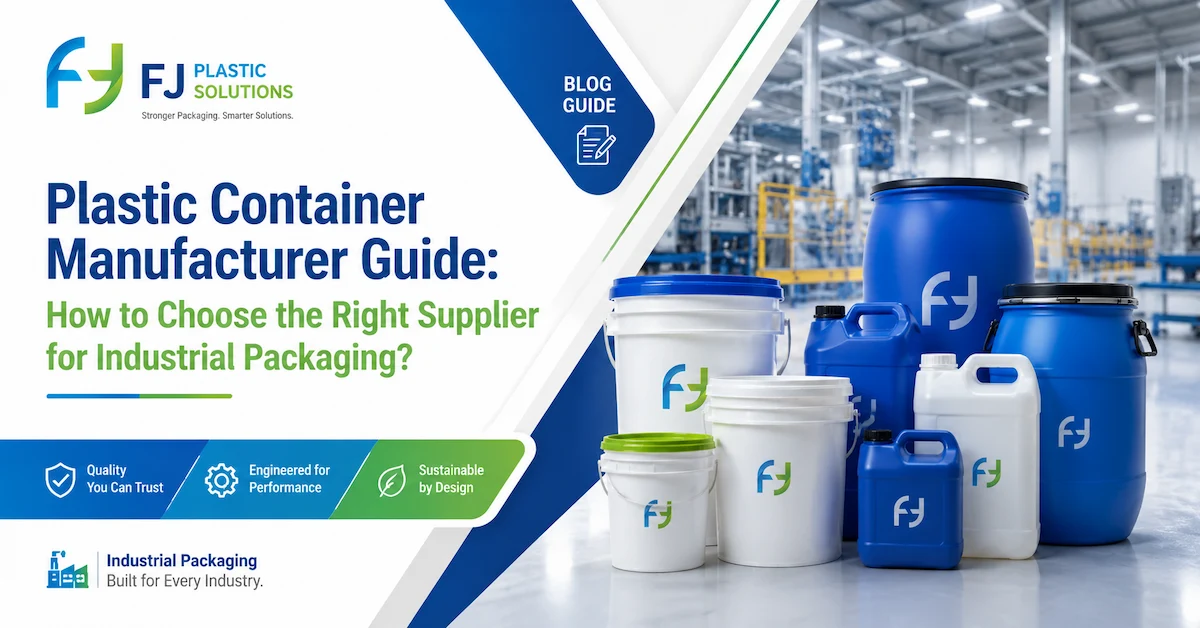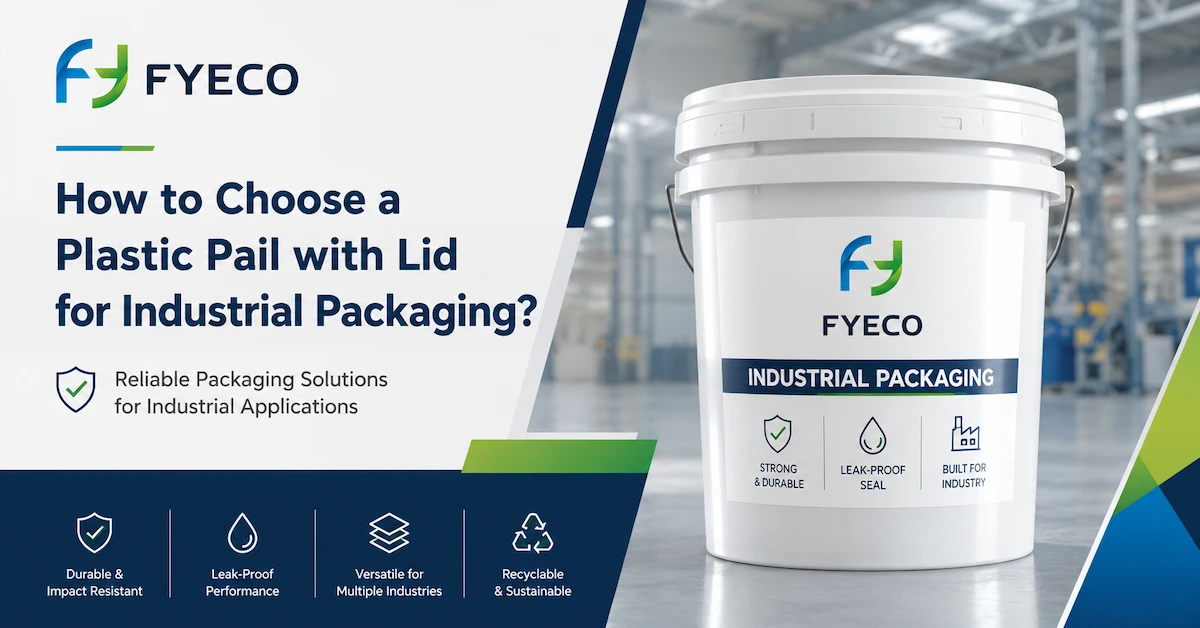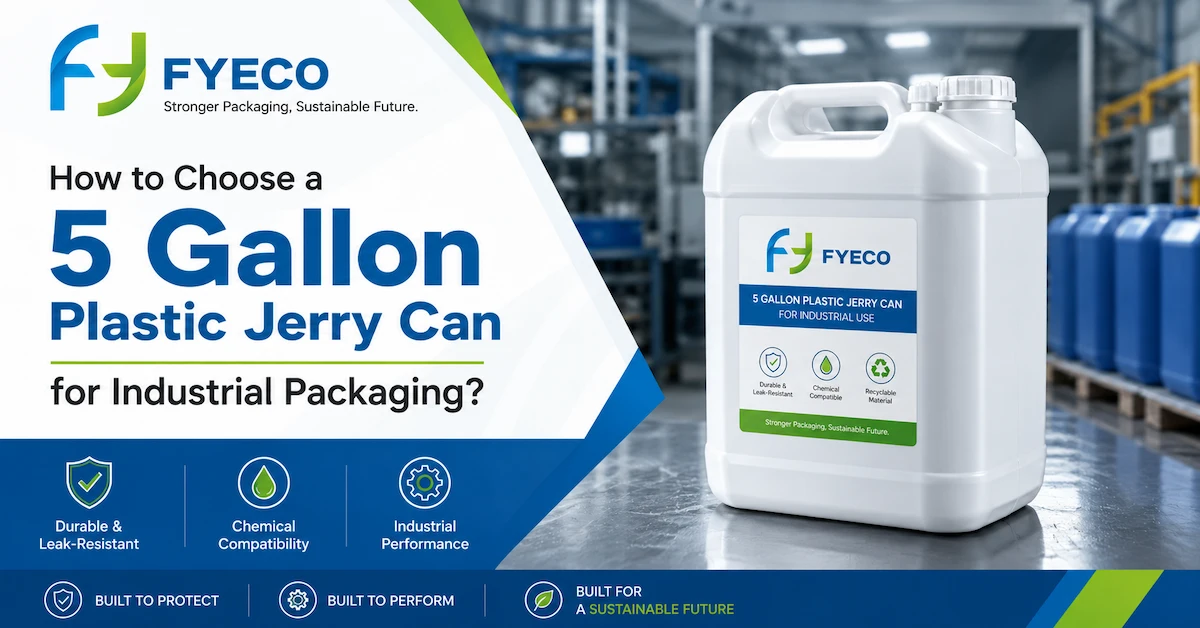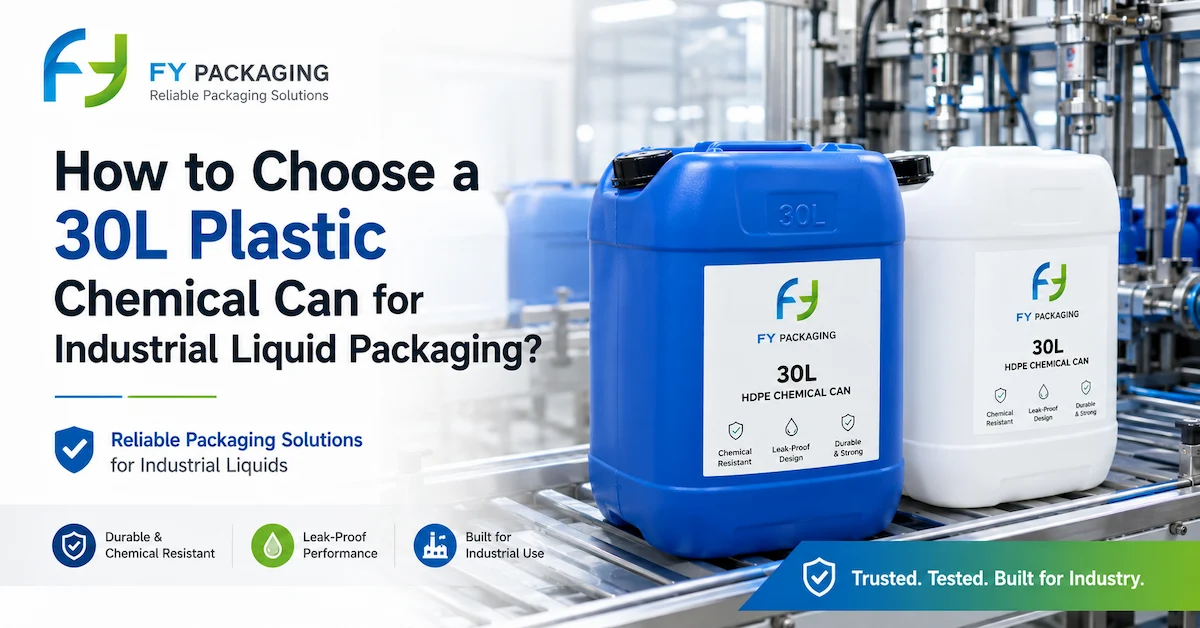

For chemical manufacturers, coating producers, detergent brands, automotive fluid suppliers, and industrial distributors, choosing the right HDPE pail supplier is an important packaging decision. A reliable pail can protect products, improve transportation efficiency, support warehouse storage, and strengthen brand presentation.
Although an HDPE pail appears simple, its actual performance depends on many factors, including raw material quality, wall thickness, lid sealing, handle strength, impact resistance, and manufacturing consistency.
For industrial applications, packaging problems can quickly become business problems. A weak handle may break during carrying. Poor sealing may cause leakage. Unsuitable plastic material may affect product safety. These issues can increase replacement costs and damage customer trust.
That is why professional buyers should evaluate not only the pail itself but also the supplier’s production capability, quality system, customization ability, and long-term supply stability.
As a supplier focused on industrial packaging solutions, plastic containers, and automotive chemical-related products, FYECO Solution supports global buyers with reliable packaging solutions for different industrial applications.
What Is an HDPE Pail?
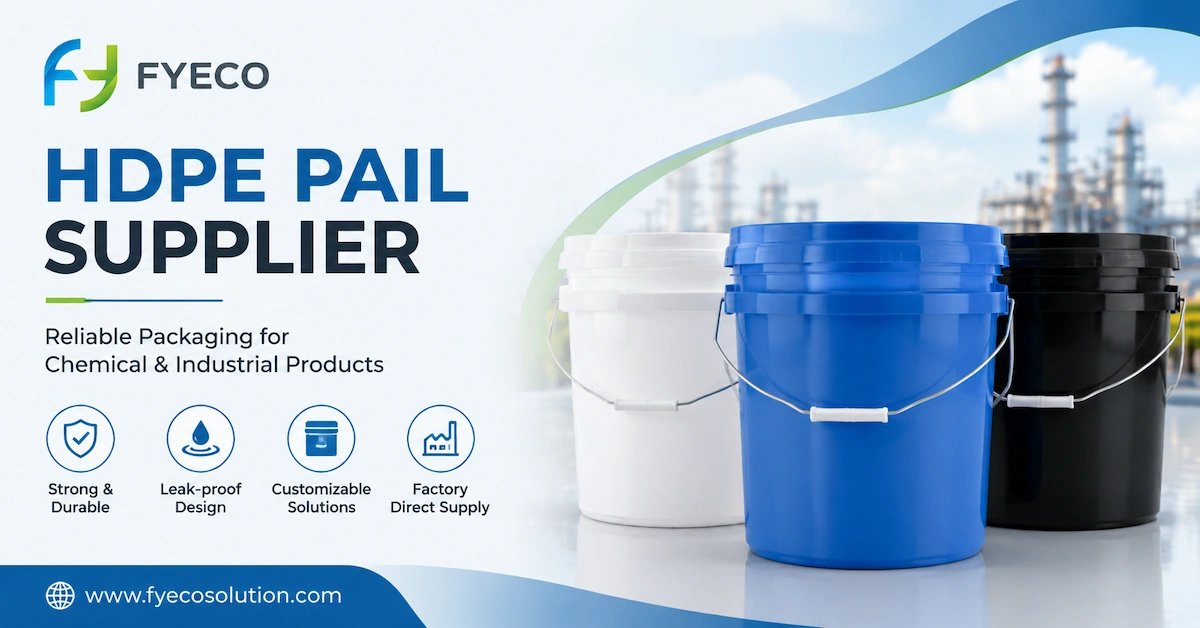
An HDPE pail is a rigid plastic bucket made from high-density polyethylene. It is commonly designed with a strong body structure, secure lid, and handle for storing, transporting, and distributing industrial products.
HDPE pails are widely used for:
- Chemicals
- Coatings and paints
- Adhesives
- Detergents and cleaning products
- Lubricants
- Automotive fluids
- Industrial compounds
- Water-based products
Compared with bottles and jerry cans, pails are often preferred for products that require wider openings, easier filling, stronger stacking ability, and convenient handling.
You can explore FYECO’s related industrial packaging products on the Products page.
Why HDPE Is Popular for Industrial Pails
HDPE is one of the most widely used materials for industrial plastic packaging because it provides a strong balance between durability, chemical resistance, and cost efficiency.
1. Chemical Resistance
HDPE can resist many common industrial liquids and chemical products, making it suitable for detergents, coatings, automotive fluids, and industrial materials.
2. Strong Impact Performance
During transportation and warehouse handling, pails may experience drops, stacking pressure, and movement. HDPE provides good toughness to reduce damage risks.
3. Lightweight Handling
Compared with metal containers, HDPE pails are lighter, easier to handle, and more convenient for distribution.
4. Cost Efficiency
For bulk packaging applications, HDPE pails provide reliable performance while maintaining reasonable production costs.
5. Customization Flexibility
HDPE pails can be customized with different colors, labels, lids, handles, and branding solutions.
Common Applications of HDPE Pails
Chemical Packaging
HDPE pails are commonly used for industrial chemicals, additives, cleaning solutions, and maintenance products. Material compatibility and sealing performance are critical for these applications.
Paint and Coating Packaging
Coatings and paints require containers with good sealing, stable structure, and easy opening performance. HDPE pails are widely used because they provide practical filling and storage solutions.
Detergent and Cleaning Products
For cleaning chemicals and detergents, buyers need packaging that is durable, easy to carry, and resistant to leakage.
Automotive Products
Lubricants, additives, and maintenance products often require reliable packaging with good chemical resistance and professional appearance.
Industrial Compounds
Adhesives, powders, and semi-liquid industrial materials often benefit from wider-mouth pail designs for easier filling and use.
Key Features to Evaluate Before Buying HDPE Pails
1. Material Quality
The quality of HDPE material directly affects strength, durability, and chemical compatibility.
Buyers should confirm:
- Material type
- Virgin or recycled material usage
- Product compatibility
- UV resistance requirements
- Storage conditions
A professional supplier should recommend materials based on the actual application.
2. Lid Sealing Performance
The lid is one of the most important parts of an industrial pail.
Buyers should check:
- Lid fitting accuracy
- Sealing performance
- Tamper-proof options
- Opening and closing convenience
- Leakage resistance
Poor lid design can create problems even if the pail body is strong.
3. Handle Strength
For filled HDPE pails, handle performance is essential.
A good handle should provide:
- Strong load support
- Comfortable handling
- Resistance to breaking
- Stable connection with the pail body
4. Wall Thickness and Structure
Uniform wall thickness improves:
- Impact resistance
- Stacking stability
- Long-term durability
- Transportation safety
Poor production control may lead to deformation or cracking.
5. Branding and Customization Surface
For OEM customers, packaging is part of the product identity.
Customization options may include:
- Custom colors
- Logo printing
- Label application
- Lid color matching
- Private label packaging
- Product series design
For customized packaging support, visit the FYECO Services page.
HDPE Pail Specification Reference
| Item | Common Option |
|---|---|
| Product Type | HDPE plastic pail |
| Material | High-density polyethylene |
| Capacity | Customized according to application |
| Color | White, blue, black, custom color |
| Lid Type | Snap lid, sealed lid, tamper-proof lid |
| Handle | Plastic handle / metal handle |
| Application | Chemicals, coatings, detergents, automotive products |
| Customization | Color, logo, label, lid, packaging |
| Packing | Carton packing / pallet packing |
| Buyer Type | Manufacturers, distributors, OEM brands |
How to Choose a Reliable HDPE Pail Supplier?
1. Check Manufacturing Experience
A professional HDPE pail supplier should understand industrial packaging requirements, not only produce plastic buckets.
Important factors include:
- Production equipment
- Mold capability
- Material control
- Quality inspection
- Export experience
You can learn more about FYECO’s company background through the About Us page.
2. Review Quality Control System
A reliable supplier should inspect products before shipment.
| Inspection Item | Purpose |
| Raw Material Test | Ensure material stability |
| Wall Thickness Check | Improve durability |
| Lid Test | Prevent leakage |
| Handle Test | Ensure safe handling |
| Drop Test | Check transport resistance |
| Appearance Inspection | Maintain product quality |
| Packing Inspection | Reduce shipping damage |
3. Evaluate Production Capacity
For bulk buyers, supply stability is critical.
Buyers should confirm:
- Monthly production capacity
- Lead time
- Repeat order ability
- Export packing capability
- Emergency production support
4. Confirm OEM Capability
A capable supplier should support:
- Custom colors
- Logo and label solutions
- Different capacities
- Customized lids
- Private label projects
This helps brands create consistent packaging across product lines.
HDPE Pail Supplier Comparison
| Supplier Type | Advantages | Risks | Best For |
| Trading Supplier | Flexible sourcing | Limited production control | Small orders |
| General Plastic Factory | Basic pail production | Limited industrial experience | Simple applications |
| Professional HDPE Pail Supplier | Better material and process control | Requires clear specifications | Industrial packaging |
| Integrated Packaging Supplier | Packaging + application support | Requires project communication | OEM brands |
Common Mistakes When Buying HDPE Pails
Mistake 1: Only Comparing Price
The cheapest option may use weaker materials, poor lids, or unstable production quality.
Mistake 2: Ignoring Product Compatibility
Different chemicals, coatings, and liquids require different packaging performance.
Mistake 3: Skipping Sample Testing
Samples help confirm sealing, strength, and product compatibility.
Mistake 4: Not Considering Storage Conditions
Temperature, stacking method, and transportation environment affect packaging requirements.
Mistake 5: Choosing Suppliers Without Long-Term Support
Industrial buyers need consistent quality and reliable delivery.
Why Choose FYECO for HDPE Pail Solutions?
FYECO Solution provides industrial packaging solutions including HDPE containers, plastic pails, jerry cans, barrels, and related packaging products.
FYECO supports buyers with:
- Packaging selection
- Material recommendations
- OEM customization
- Quality control support
- Stable production supply
To explore related packaging solutions, visit FYECO Products.
For customized packaging support, visit FYECO Services.
FAQ
1. What is an HDPE pail used for?
HDPE pails are used for chemicals, coatings, detergents, automotive products, adhesives, and industrial materials.
2. Why is HDPE used for plastic pails?
HDPE provides good chemical resistance, durability, impact strength, and cost efficiency.
3. How do I choose an HDPE pail supplier?
Evaluate material quality, production capability, sealing performance, customization support, and delivery reliability.
4. Can HDPE pails be customized?
Yes. They can be customized with colors, labels, logos, lids, handles, and packaging solutions.
5. Are HDPE pails suitable for chemicals?
Many are suitable, but compatibility should be confirmed according to the chemical product.
6. What causes pail leakage?
Leakage may result from poor lid fitting, damaged seals, or unsuitable packaging design.
7. Can HDPE pails be used for coatings?
Yes. They are widely used for paints, coatings, and industrial compounds.
8. Should samples be tested before bulk orders?
Yes. Sample testing helps verify quality before mass production.
9. What affects HDPE pail pricing?
Material, capacity, customization, mold requirements, order quantity, and packaging affect cost.
10. Where can I source HDPE pails?
You can contact FYECO Solution for industrial packaging solutions.
Conclusion
Choosing the right HDPE pail supplier is essential for safe, durable, and cost-effective industrial packaging.
Before purchasing, buyers should evaluate material quality, lid sealing, handle strength, structure design, customization ability, quality control, and supplier reliability.
A professional supplier does more than provide plastic pails. It helps buyers reduce packaging risks, improve logistics efficiency, and build a stable long-term supply chain.
FYECO Solution supports global buyers with reliable industrial plastic packaging solutions and customized service support.