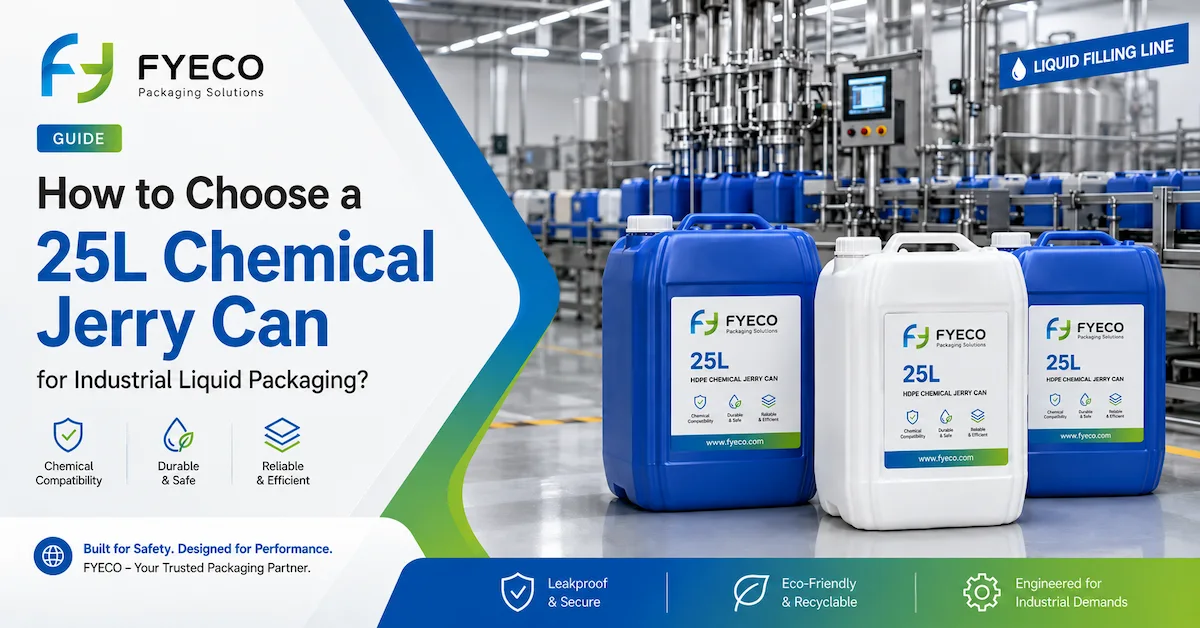

For chemical companies, automotive fluid brands, detergent suppliers, industrial distributors, and OEM buyers, choosing a plastic container manufacturer is not only about finding a factory that can produce containers. It is about choosing a long-term packaging partner that can help protect products, support stable filling operations, reduce logistics risks, and improve supply chain reliability.
A plastic container may look simple, but for B2B buyers, the container affects many important business results:
- Product safety
- Leakage prevention
- Warehouse stacking efficiency
- Transport durability
- Brand presentation
- Filling line compatibility
- Total packaging cost
- Repeat order stability
If the wrong supplier is selected, buyers may face problems such as inconsistent wall thickness, weak handles, poor cap fitting, unstable material quality, delayed lead times, or limited customization support. These issues often create hidden costs that are far greater than the small savings from choosing the lowest price.
As a supplier focused on industrial packaging and related product solutions, FYECO Solution supports customers with plastic packaging products and service support for different industrial applications. If you are evaluating a new packaging partner, this guide can help you make a more informed sourcing decision.
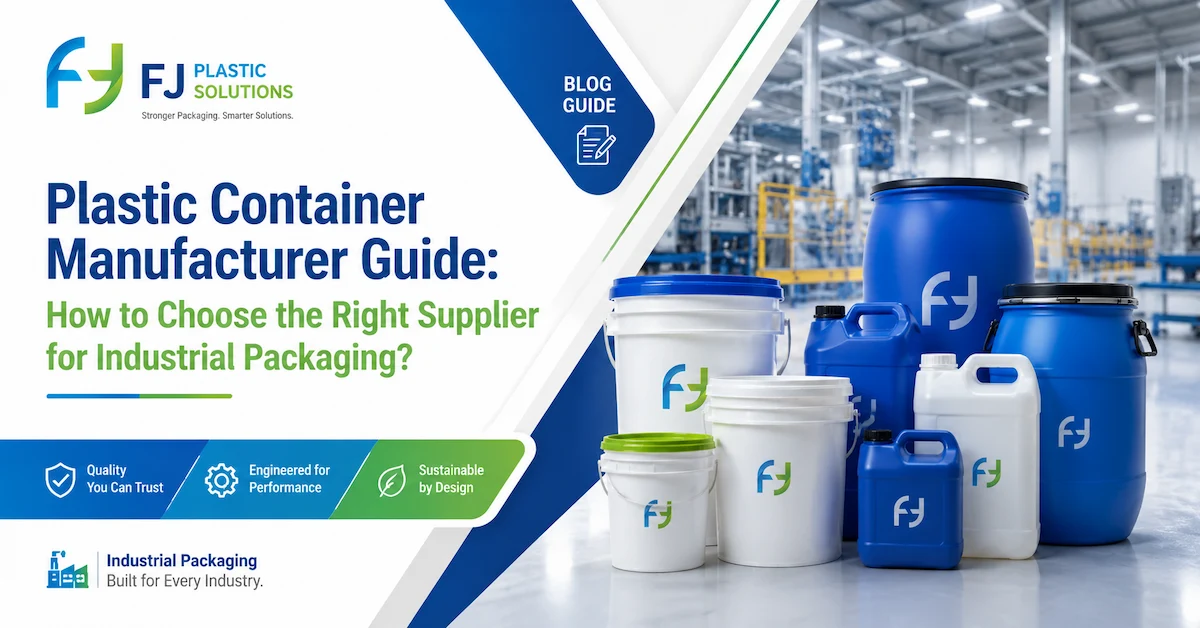
What Does a Plastic Container Manufacturer Produce?
A professional plastic container manufacturer usually produces more than one type of packaging. Depending on the market and application, the product range may include:
- Plastic pails
- Plastic jerry cans
- Plastic barrels and drums
- Chemical containers
- Industrial bottles
- Lubricant containers
- Detergent packaging containers
- Automotive fluid packaging containers
- Custom plastic packaging containers
Different container types are used for different product formats and usage needs.
Plastic Pails
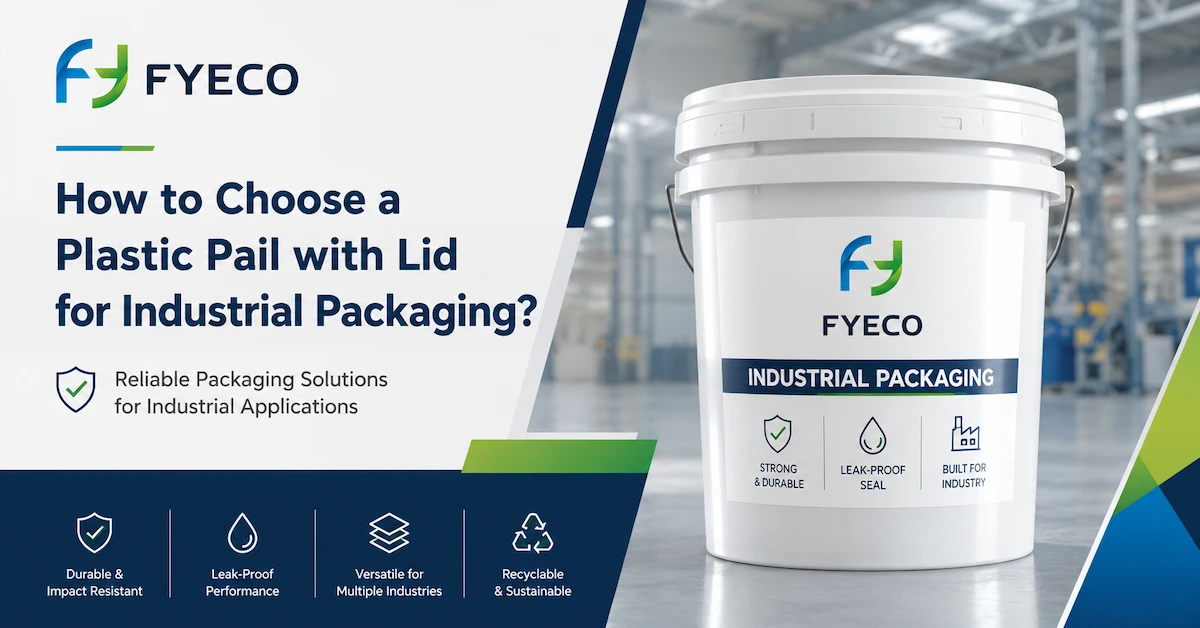
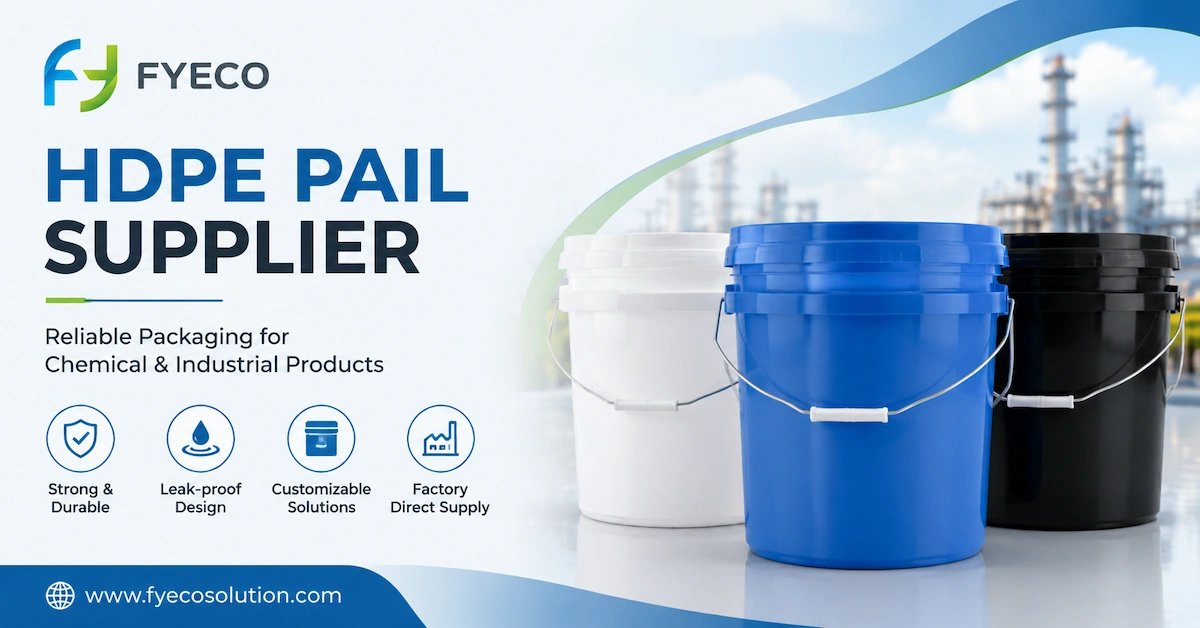
Plastic pails are suitable for coatings, adhesives, detergents, powders, and semi-liquid products. They usually feature a wide opening, strong lid, and convenient handling.
Plastic Jerry Cans
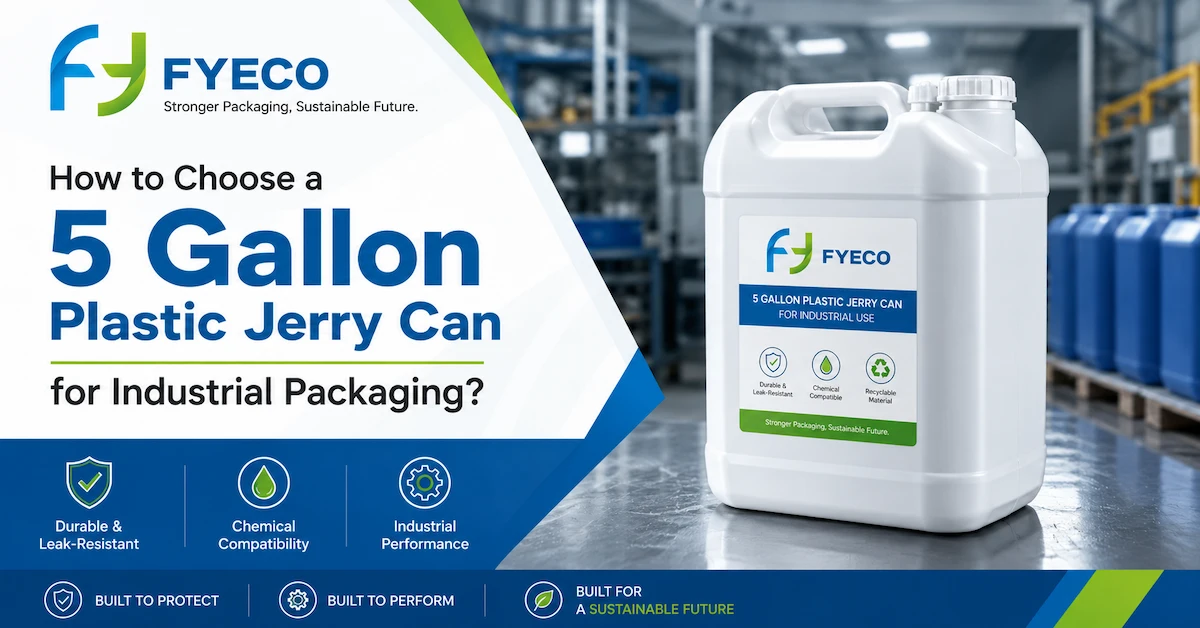
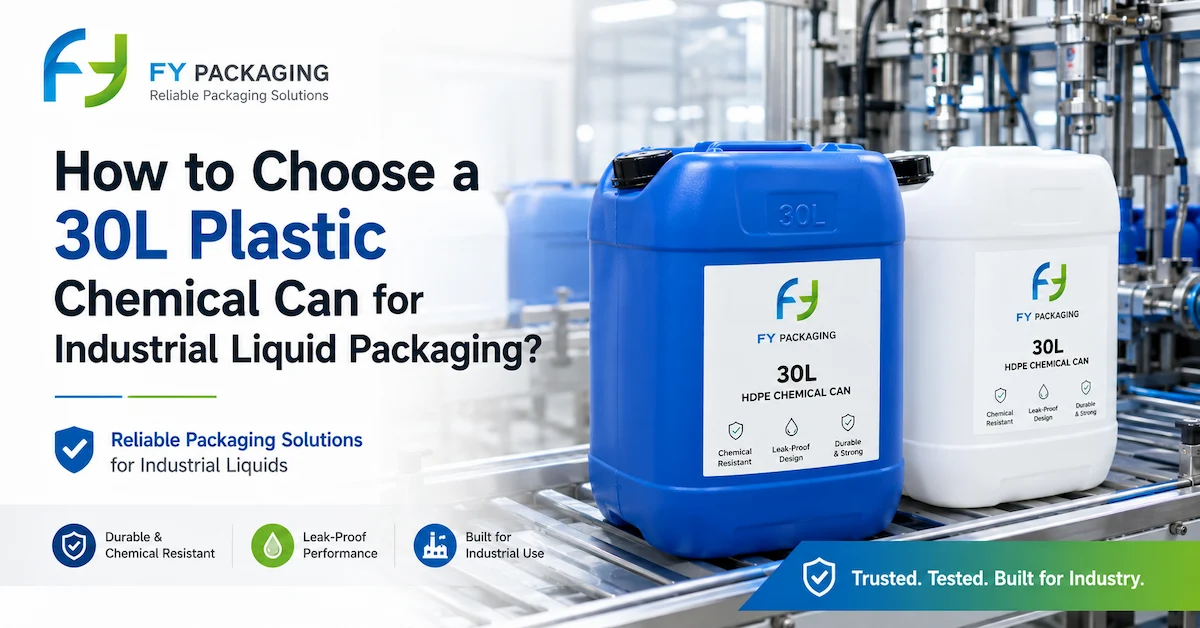
Jerry cans are widely used for automotive fluids, detergents, cleaners, and industrial liquids. Their rectangular shape improves pallet loading and transport efficiency.
Plastic Barrels and Drums
Plastic barrels are commonly used for higher-capacity liquid packaging. They are often selected for chemical storage, bulk packaging, and industrial distribution.
Plastic Bottles and Small Containers
Smaller containers are often used for retail packaging, maintenance products, additives, and smaller-volume chemical or automotive liquid packaging.
You can explore FYECO’s packaging directions through the Products page.
Which Material Is Best for Your Plastic Container?
One of the most important things a buyer should check in a plastic container manufacturer is material selection ability. A good supplier does not simply recommend the cheapest material. It recommends the right material for the application.
HDPE
HDPE is one of the most widely used materials in industrial packaging. It offers:
- Good chemical resistance
- Strong impact resistance
- Lightweight handling
- Good durability
- Cost efficiency
HDPE is widely used for chemical containers, plastic jerry cans, pails, and industrial liquid packaging.
PP
PP is often used when buyers need higher rigidity or certain product-specific performance characteristics. It can be a good choice for some industrial pails and specialized containers.
Modified Plastic Materials
Some applications require extra UV resistance, improved flexibility, or better structural performance. In such cases, modified materials may be used.
Recycled or PCR Materials
Some buyers also ask about recycled material options to support sustainability goals. However, for industrial and chemical packaging, compatibility, performance, and safety should always be evaluated carefully before use.
A professional industrial plastic packaging manufacturer should explain the advantages and limitations of each material based on the product to be filled.
Blow Molding vs. Injection Molding
Understanding the manufacturing process helps buyers judge whether a supplier is suitable for a specific packaging project.
Blow Molding
Blow molding is commonly used for:
- Jerry cans
- Bottles
- Hollow chemical containers
- Industrial liquid packaging containers
It is suitable for containers that need an enclosed hollow structure with stable wall thickness and light weight.
Injection Molding
Injection molding is commonly used for:
- Pails
- Lids
- Caps
- Certain rigid components
It is suitable for products that require stronger structure, detailed shapes, and precise lid or closure matching.
A capable plastic container manufacturer should know which process is best for the required packaging type and how to maintain stability in mass production.
How to Match the Container to the Product Inside
One of the biggest sourcing mistakes is choosing a container first and then trying to fit the product into it. In B2B procurement, the correct approach is the opposite.
Buyers should first define:
- What product will be filled
- Whether it is liquid, semi-liquid, or powder
- Chemical characteristics
- Filling temperature
- Storage conditions
- Transport method
- End-user handling needs
- Branding and labeling needs
For example:
- Chemicals may require stronger compatibility and leakage prevention
- Automotive fluids may need easy pouring and professional labeling surfaces
- Detergents may need convenient handling and strong sealing
- Coatings may need wide openings and easy-open lids
- Lubricants may need sturdy handles and durable structure
A reliable custom plastic container manufacturer should help the buyer choose the right container structure based on these real application needs.
What Quality Tests Should a Manufacturer Perform?
Quality control is one of the clearest differences between an average supplier and a professional plastic container manufacturer.
A strong supplier should have a clear QC process before shipment. Common inspections include:
| QC Item | Why It Matters |
|---|---|
| Raw material inspection | Ensures stable material quality |
| Wall thickness inspection | Reduces deformation and weak points |
| Capacity test | Confirms accurate filling volume |
| Lid or cap fit test | Helps prevent leakage |
| Leak test | Checks closure performance |
| Drop test | Verifies transport durability |
| Handle strength test | Improves carrying safety |
| Stacking test | Supports warehouse storage |
| Appearance inspection | Maintains brand image |
| Packing inspection | Reduces shipping damage |
If you are sourcing in volume, batch consistency matters more than one good sample. Always ask what QC checks are performed during normal production.
Standard Containers vs. Custom Plastic Containers
Many buyers start with standard packaging, but as their business grows, they often need more customized solutions. A professional custom plastic container manufacturer should be able to support both.
Standard Containers
Standard containers are usually best when buyers need:
- Faster lead times
- Lower mold cost
- Easier sample approval
- Lower development risk
Custom Containers
Custom containers are more suitable when buyers need:
- Private label differentiation
- Special dimensions or capacities
- Unique handle or lid design
- Better fit for filling lines
- Consistent product series packaging
- Stronger brand recognition
Common customization options include:
- Container color
- Capacity
- Logo or label support
- Cap or lid type
- Tamper-proof structure
- Packaging method
- Carton or pallet packing
If your project involves OEM or branded packaging, you can review service support on the Services page.
What Determines Plastic Container Cost?
Many buyers ask for price first, but the cost of a plastic container depends on more than material alone. A good purchasing decision should consider total value, not only unit cost.
Main cost factors include:
Material Type
HDPE, PP, modified plastics, and recycled materials all affect cost differently.
Container Size and Capacity
Larger containers usually require more material and may involve different packing and loading costs.
Wall Thickness
Thicker walls improve durability but increase material use and cost.
Mold and Tooling
Custom projects may require mold development, which affects initial investment.
Lid, Cap, and Handle Design
More complex closure systems or stronger handles may increase cost, but they also improve performance.
Color and Decoration
Custom colors, printed labels, or branding support may add to overall packaging cost.
Order Quantity
Large-volume orders often have more competitive unit pricing.
Export Packing
Carton packing, pallet loading, and export-specific protection can also affect cost.
The cheapest quote is not always the lowest real cost. Poor quality, leakage, product loss, and delayed delivery can make low-price packaging much more expensive in the long run.
How to Evaluate a Plastic Container Manufacturer
If you want to select the right supplier, use a complete evaluation method instead of looking at catalog photos only.
1. Check Factory Capability
Review whether the supplier has:
- Real production equipment
- Mold development capability
- Stable material sourcing
- Container production experience
- Export packaging experience
2. Review Product Range
A stronger plastic container manufacturer often has a broader product system, which makes it easier to support different packaging needs as your business grows.
3. Confirm Customization Support
If you need OEM packaging, make sure the supplier can support label, color, lid, cap, and size customization.
4. Ask About Lead Time and Capacity
For industrial buyers, supply stability matters. Confirm:
- Sample lead time
- Production lead time
- Monthly capacity
- Repeat order capability
- Emergency support
5. Review Communication Efficiency
A good supplier should respond clearly, understand application needs, and provide practical recommendations rather than only sending price lists.
To understand FYECO’s company background, you can visit the About Us page.
Plastic Container Manufacturer Comparison Table
| Supplier Type | Advantages | Risks | Best For |
| Trading company | Flexible sourcing | Less production control | Small trial orders |
| General plastic factory | Basic production ability | Limited industrial packaging experience | Simple packaging needs |
| Professional plastic container manufacturer | Better process control and quality consistency | Requires clear technical communication | Industrial packaging buyers |
| Integrated industrial packaging supplier | Application support + packaging solutions | Needs deeper project discussion | OEM brands and long-term buyers |
For most industrial buyers, a professional or integrated supplier usually creates more long-term value than a basic low-price source.
Why Work with FYECO Solution?
FYECO Solution supports industrial packaging buyers with plastic container solutions for different product applications. For customers looking for a reliable plastic container manufacturer, FYECO offers value in several practical areas:
- Packaging product selection
- Application-based material recommendations
- OEM customization support
- Industrial packaging communication
- Stable long-term cooperation potential
To learn more, you can visit:
FAQ
1. What does a plastic container manufacturer produce?
A plastic container manufacturer may produce pails, jerry cans, barrels, bottles, chemical containers, and custom industrial packaging products.
2. What material is most common for industrial plastic containers?
HDPE is one of the most common materials because of its chemical resistance, impact strength, and cost efficiency.
3. How do I choose the right plastic container manufacturer?
You should evaluate material selection, production process, quality control, customization support, delivery stability, and communication efficiency.
4. Can plastic containers be customized?
Yes. Many manufacturers support custom color, logo, label, lid type, cap type, packaging method, and even mold development.
5. Are plastic containers suitable for chemicals?
Many are suitable, but material compatibility should always be confirmed according to the product being filled.
6. What tests should be done before bulk ordering?
Common checks include leak testing, drop testing, wall thickness inspection, handle testing, and appearance inspection.
7. What affects plastic container pricing?
Material, size, wall thickness, mold requirements, lid design, order quantity, and export packing all affect cost.
8. Is a factory always better than a trading company?
Not always, but a factory usually provides better production visibility and process control for industrial packaging projects.
9. Why is OEM support important?
OEM support helps brands create more consistent packaging, better product recognition, and packaging that fits their market positioning.
10. Where can I source industrial plastic containers?
You can contact FYECO Solution to explore industrial plastic packaging solutions.
Conclusion
Choosing the right plastic container manufacturer is one of the most important steps in building a stable industrial packaging supply chain. The right supplier does more than produce containers. It helps buyers improve product protection, reduce leakage risk, support logistics efficiency, and strengthen long-term purchasing stability.
Before placing a bulk order, buyers should carefully evaluate material selection, manufacturing process, quality control, customization ability, cost structure, and delivery reliability.
If you are looking for a dependable plastic container manufacturer for chemicals, automotive fluids, detergents, coatings, lubricants, or other industrial products, FYECO Solution can help you explore suitable packaging options and practical OEM support.