
1. Introduction
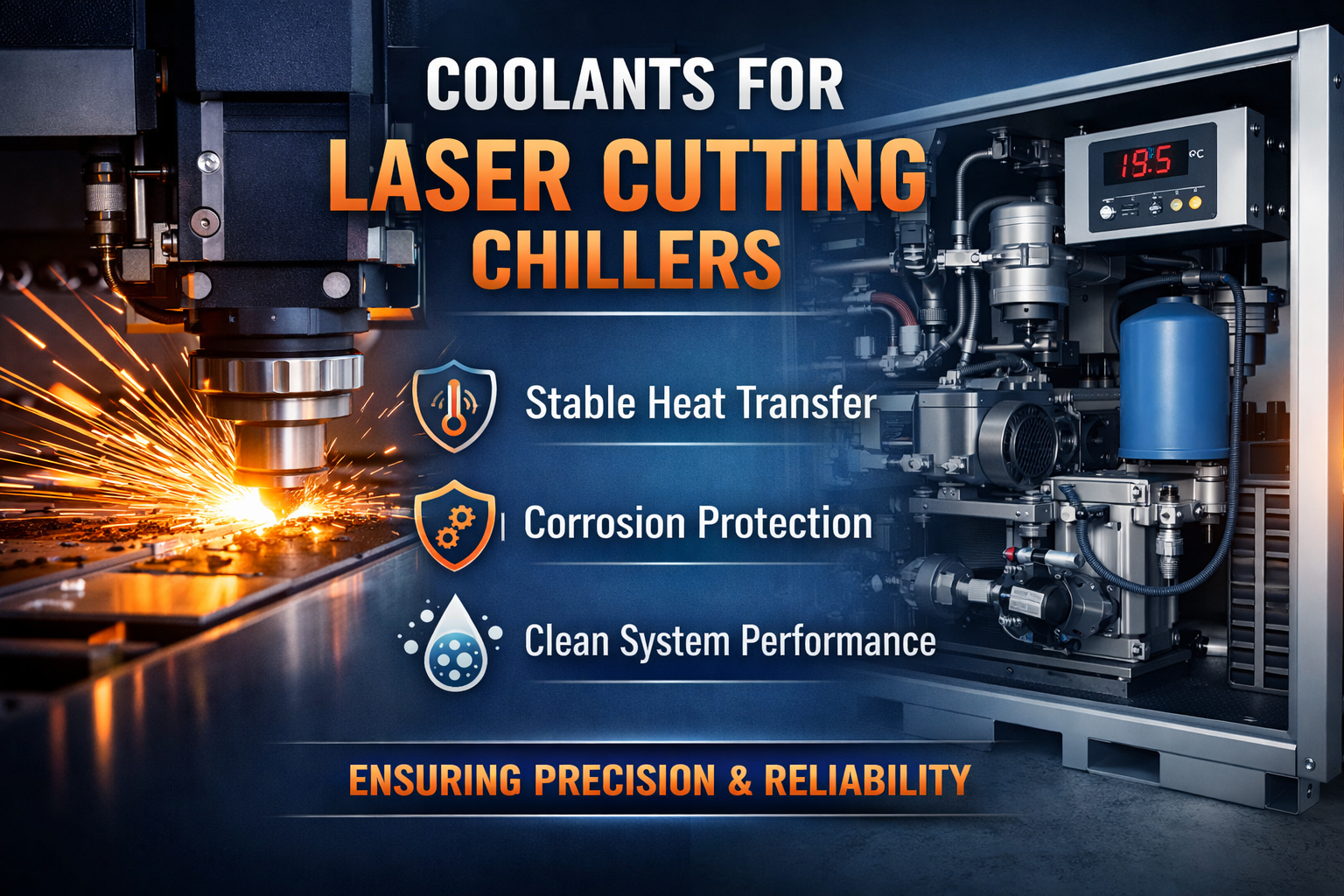
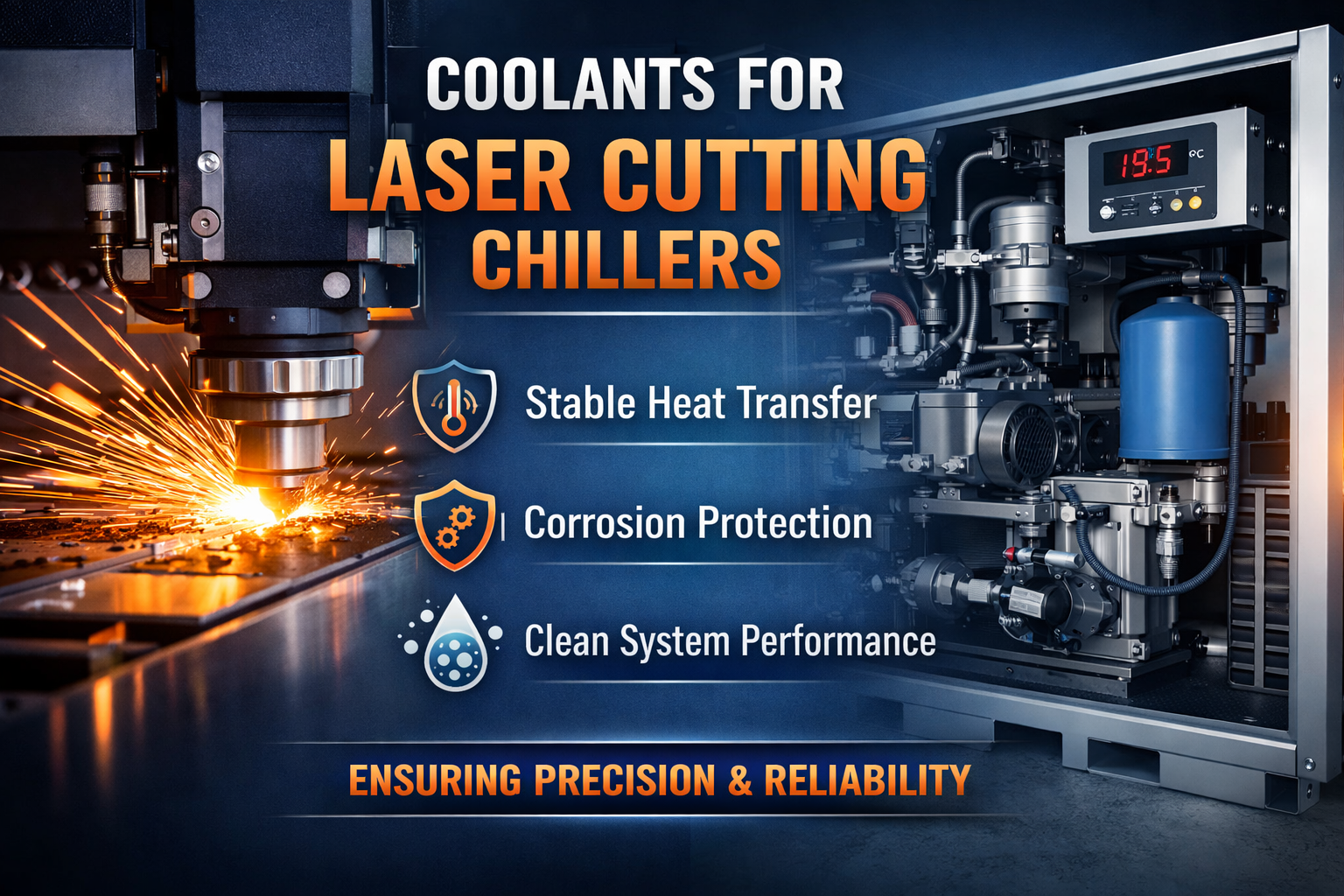
In modern manufacturing, laser cutting machine chiller coolant plays a critical role in maintaining stable laser performance and protecting sensitive optical components.Laser cutting machines rely heavily on stable and efficient cooling systems to maintain cutting accuracy, protect core components, and ensure long-term operational reliability. Among these systems, the industrial water chiller plays a critical role, and the performance of the coolant used inside the chiller directly affects the overall efficiency and service life of the laser equipment.
Unlike conventional automotive applications, laser cutting machine chillers operate under continuous high-load conditions, requiring coolants with excellent thermal stability, corrosion protection, material compatibility, and cleanliness.
2. Why Coolant Is Critical for Laser Cutting Chillers
Modern laser cutting machines generate significant heat in key components such as:
-
Laser source (fiber or CO₂ laser)
-
Cutting head optics
-
Power electronics and control modules
The chiller coolant must effectively remove heat while maintaining stable thermal conductivity and consistent flow performance. Any degradation of coolant quality may result in:
-
Reduced cooling efficiency
-
Temperature fluctuations affecting cutting precision
-
Corrosion of heat exchangers and internal piping
-
Blockage caused by deposits or biological growth
Therefore, coolant selection is not simply a matter of freezing protection but a system-level reliability decision.
3. Key Requirements for Coolants Used in Laser Chillers
3.1 Excellent Heat Transfer Performance
The coolant must support efficient heat exchange without forming insulating films or deposits on metal surfaces. Clean formulations help maintain stable thermal conductivity over long operating cycles.
3.2 Long-Term Corrosion Protection
Laser chiller systems typically contain multiple metals, including aluminum, copper, brass, carbon steel, and stainless steel. The coolant must provide balanced corrosion protection for all materials without causing galvanic corrosion.
3.3 Compatibility with Non-Metal Components
Seals, hoses, gaskets, and plastic components must remain stable during long-term exposure. Poor compatibility can lead to swelling, hardening, or leakage.
3.4 Clean and Low-Deposit Behavior
Silicate gel formation, scale deposition, or sludge buildup can severely restrict flow channels and heat exchangers. Low-deposit formulations are essential for precision equipment.
3.5 Freeze and Overheat Protection
In colder environments or during shutdown periods, freeze protection prevents system damage, while boiling protection ensures stability during high-temperature operation.
4. Suitable Coolant Technologies for Laser Cutting Chillers
Selecting the right industrial chiller coolant helps prevent corrosion, scale formation, and conductivity-related failures in laser cooling systems.
4.1 Organic Acid Technology (OAT) Coolants
OAT-based coolants use organic corrosion inhibitors that react only at active corrosion sites, offering:
-
Long service life
-
High heat transfer efficiency
-
Minimal deposit formation
-
Excellent compatibility with mixed-metal systems
These characteristics make OAT coolants well suited for industrial chillers requiring extended maintenance intervals.
4.2 Low-Silicate Coolants
Low-silicate formulations provide fast aluminum protection while carefully controlling silicate levels to avoid long-term deposition. They are often selected when specific OEM or system requirements apply.
5. Advantages of Using Industrial-Grade Coolants in Laser Chillers
Compared with untreated water or simple glycol mixtures, properly formulated industrial coolants offer:
-
More stable temperature control
-
Reduced maintenance frequency
-
Lower risk of internal corrosion and fouling
-
Extended service life of pumps, heat exchangers, and piping
-
Improved overall reliability of laser cutting operations
In high-precision manufacturing environments, these advantages translate directly into higher uptime and consistent product quality.
6. Application Considerations and Best Practices
-
Select coolants based on chiller manufacturer recommendations and operating conditions
-
Avoid mixing different coolant technologies without system flushing
-
Monitor coolant condition periodically (pH, appearance, contamination)
-
Use concentrates or ready-to-use products according to proper dilution guidelines
Proper coolant management is as important as coolant selection itself.
7. Conclusion
A properly formulated coolant for laser cutting machine chillers ensures long service life, stable heat transfer, and reliable equipment operation.
In laser cutting machine chillers, coolants are not merely auxiliary fluids but critical functional materials that directly influence equipment performance, precision, and longevity. Choosing a high-quality, application-appropriate coolant helps ensure stable operation, reduced maintenance, and long-term protection of valuable laser systems.
As laser cutting technology continues to evolve toward higher power and greater precision, the role of advanced coolant solutions in industrial chiller systems will become increasingly important.