
Export Antifreeze Coolant China: What Overseas Buyers Should Verify Before Sourcing
China has become one of the most active sourcing regions for automotive antifreeze coolant, supplying products to markets across Asia, Europe, the Middle East, Africa, and South America. Competitive manufacturing cost is often the first attraction, but for experienced buyers, export reliability depends far more on formulation control and compliance capability than on pricing.
Export antifreeze coolant China is not a single product category. It includes a wide range of formulations, quality levels, and regulatory readiness. Buyers who focus only on base fluid type or freeze-point ratings often encounter issues months after shipment—when coolant behavior in real engines begins to diverge from expectations.
Understanding what separates qualified exporters from trading suppliers is critical for long-term sourcing success.
Why Export Antifreeze Is a Different Product Category
Antifreeze coolant prepared for export is not identical to domestic-market products.
Export shipments must account for:
-
Long transportation and storage periods
-
Variable climate exposure during transit
-
Regulatory requirements in destination markets
-
Consistent performance across different vehicle platforms
Formulations intended for export typically require stronger chemical stability, clearer documentation, and more rigorous batch control. Without these adjustments, coolant that performs adequately in local markets may degrade or drift before reaching end users overseas.
Formulation Consistency and Batch Control for Export Orders
For overseas buyers, formulation repeatability is often a larger risk than initial product quality.
In export antifreeze coolant China sourcing, buyers should verify:
-
Whether base fluid sourcing is fixed and traceable
-
How additive ratios are controlled between batches
-
If dilution behavior remains consistent after long storage
-
Whether stability testing reflects extended shelf time
Inconsistent batch performance leads to field complaints that are difficult to trace back once products are distributed across markets.
Compliance Expectations in Global Automotive Markets
Export antifreeze coolant must align with destination market requirements, not just Chinese standards.
Depending on region, buyers may need confirmation related to:
-
Chemical composition disclosure
-
Heavy metal and restricted substance limits
-
Labeling and safety documentation
-
Compatibility with modern aluminum engine designs
Export-ready suppliers understand these differences and prepare documentation proactively, reducing customs delays and downstream compliance risk.
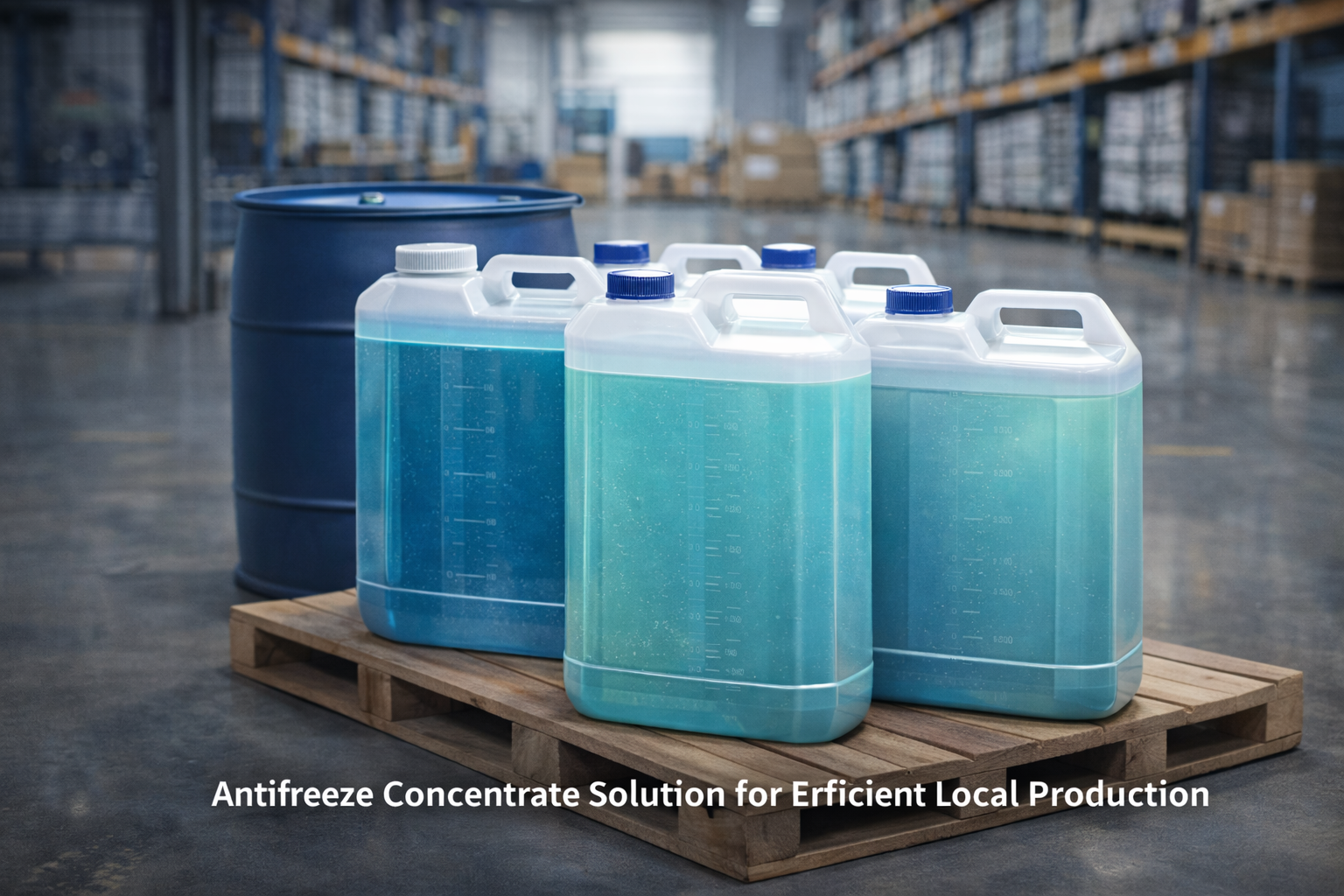
Packaging and Logistics Considerations in Antifreeze Export
Export performance is also influenced by how coolant is packaged and shipped.
Automotive antifreeze exporters typically address:
-
Container compatibility with glycol-based fluids
-
Leakage prevention during long-distance transport
-
Label durability and language requirements
-
Palletization and loading optimization
Neglecting these details often results in product loss, relabeling costs, or shipment rejection upon arrival.
Comparing Export-Oriented Suppliers vs Trading Sellers
| Evaluation Area | Export-Oriented Manufacturer | Trading-Based Seller |
|---|---|---|
| Formulation ownership | In-house, controlled | Outsourced or variable |
| Batch consistency | Stable | Inconsistent |
| Export documentation | Proactive | Reactive |
| Technical support | Available | Limited |
| Long-term supply reliability | High | Uncertain |
This comparison explains why experienced buyers prioritize suppliers with export process control, not just low quotations.
Procurement Reality for Overseas Buyers
When sourcing export antifreeze coolant China, buyers should assess the supplier’s ability to support:
-
Stable long-term supply programs
-
Multi-shipment consistency
-
Technical clarification when engine or climate conditions change
-
Market-specific labeling and compliance updates
These capabilities directly affect total landed cost and brand reputation in destination markets.
Q&A
Q: Is antifreeze exported from China suitable for modern vehicles?
Yes, when formulations are designed for current engine materials and validated for export conditions.
Q: Can one export formulation cover multiple regions?
Sometimes, but climate and regulatory differences often require adjustments.
Q: Is lower price an indicator of export readiness?
No. Export reliability depends on process control, not unit cost.
Working with an Export-Oriented Antifreeze Supplier in China
Successful antifreeze sourcing from China depends on selecting suppliers who understand export requirements beyond manufacturing.
FYeco provides antifreeze coolant solutions developed for export markets, with controlled formulation processes and documentation aligned to international automotive requirements. Reviewing FYeco’s product portfolio allows overseas buyers to evaluate export-ready antifreeze options based on real supply capability rather than assumptions.
https://www.fyecosolution.com/products
For distributors, aftermarket brands, or fleet operators sourcing antifreeze coolant from China, discussing destination markets and compliance expectations with the FYeco team supports a more reliable and transparent export sourcing process.
https://www.fyecosolution.com/contact-us