
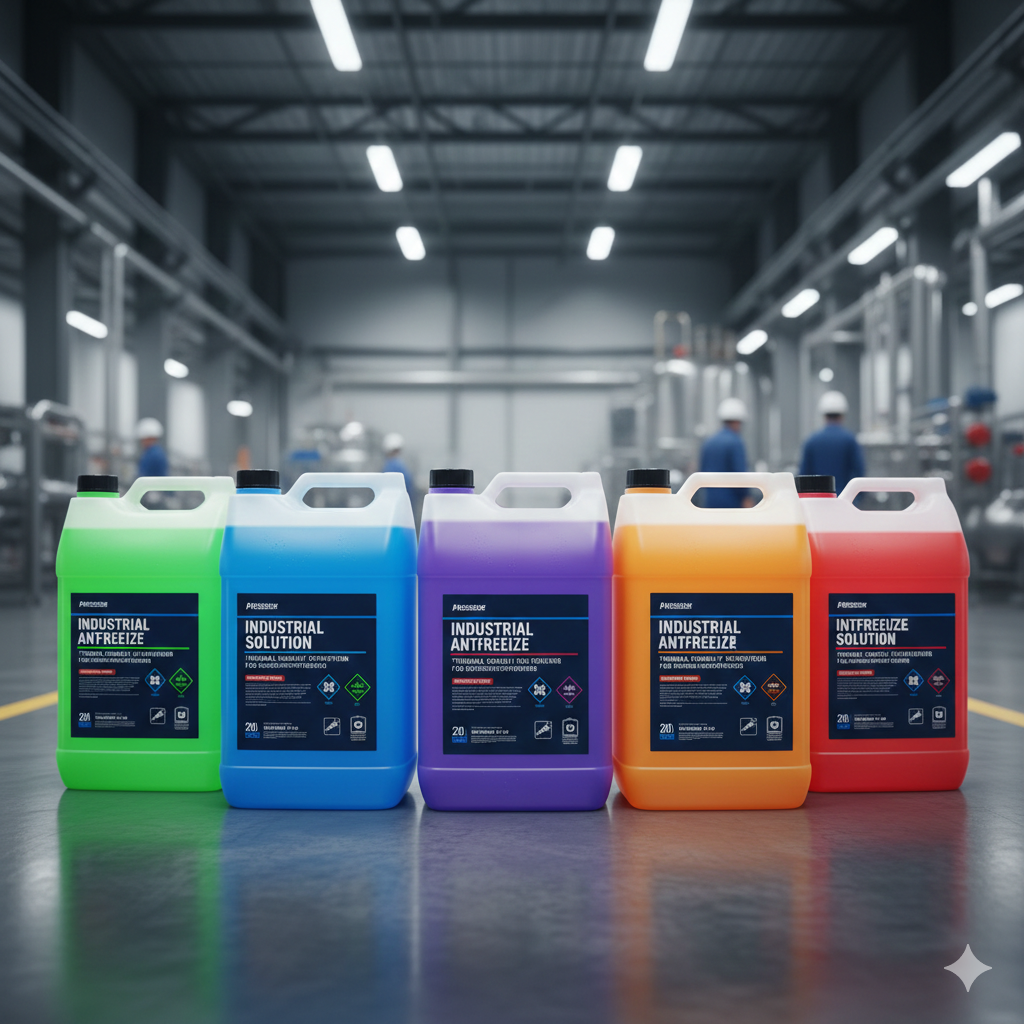
Industrial Antifreeze Solution: Managing Thermal Stability in Continuous-Operation Systems
In industrial cooling systems, antifreeze is not selected for seasonal protection alone. It is a core working fluid expected to operate continuously under stable thermal load, resist chemical degradation, and protect complex material combinations over extended service periods.
An industrial antifreeze solution must therefore perform differently from automotive coolant. It must tolerate long run times, limited shutdown windows, and operating environments where maintenance opportunities are infrequent and failure costs are high. Understanding how these formulations work in real systems requires focusing on thermal stability, chemical endurance, and system compatibility, rather than headline freeze-point numbers.
How Industrial Cooling Conditions Differ from Automotive Use
Industrial engines and equipment operate under fundamentally different conditions than vehicles.
Typical characteristics include:
-
Continuous or near-continuous operation
-
Higher average operating temperatures
-
Larger coolant volumes and longer circulation paths
-
Limited opportunity for frequent coolant replacement
These conditions place sustained stress on coolant chemistry. Inhibitors must remain active over longer periods, buffers must control pH drift, and base fluids must resist oxidation without relying on frequent replenishment.
This is why industrial antifreeze solution design emphasizes durability over convenience.
Formulation Priorities in Industrial Antifreeze Systems
An effective industrial antifreeze solution balances several competing requirements.
Base fluid selection determines freeze protection and viscosity behavior, but additive systems define long-term performance. Corrosion inhibitors must protect steel, cast iron, aluminum, and copper alloys simultaneously. Buffer systems must neutralize acidic by-products generated during prolonged thermal exposure. Deposit control additives must prevent fouling in heat exchangers and narrow passages.
Unlike automotive systems, where shutdown cycles allow partial chemical recovery, industrial systems demand formulations that remain stable under uninterrupted operation.
Thermal Stability Under Continuous Load
In real industrial environments, antifreeze is exposed to steady heat rather than frequent cycling.
Over time, sustained temperature accelerates oxidation reactions and additive depletion. If formulation stability is insufficient, coolant properties drift gradually—often without obvious early symptoms. Viscosity increases, heat transfer efficiency declines, and corrosion protection weakens.
A well-designed industrial antifreeze solution mitigates these effects by maintaining chemical balance across extended operating hours, reducing the risk of unexpected downtime.
Selecting Industrial Antifreeze Based on System Type
Selection should be driven by how the system operates, not by generic specifications.
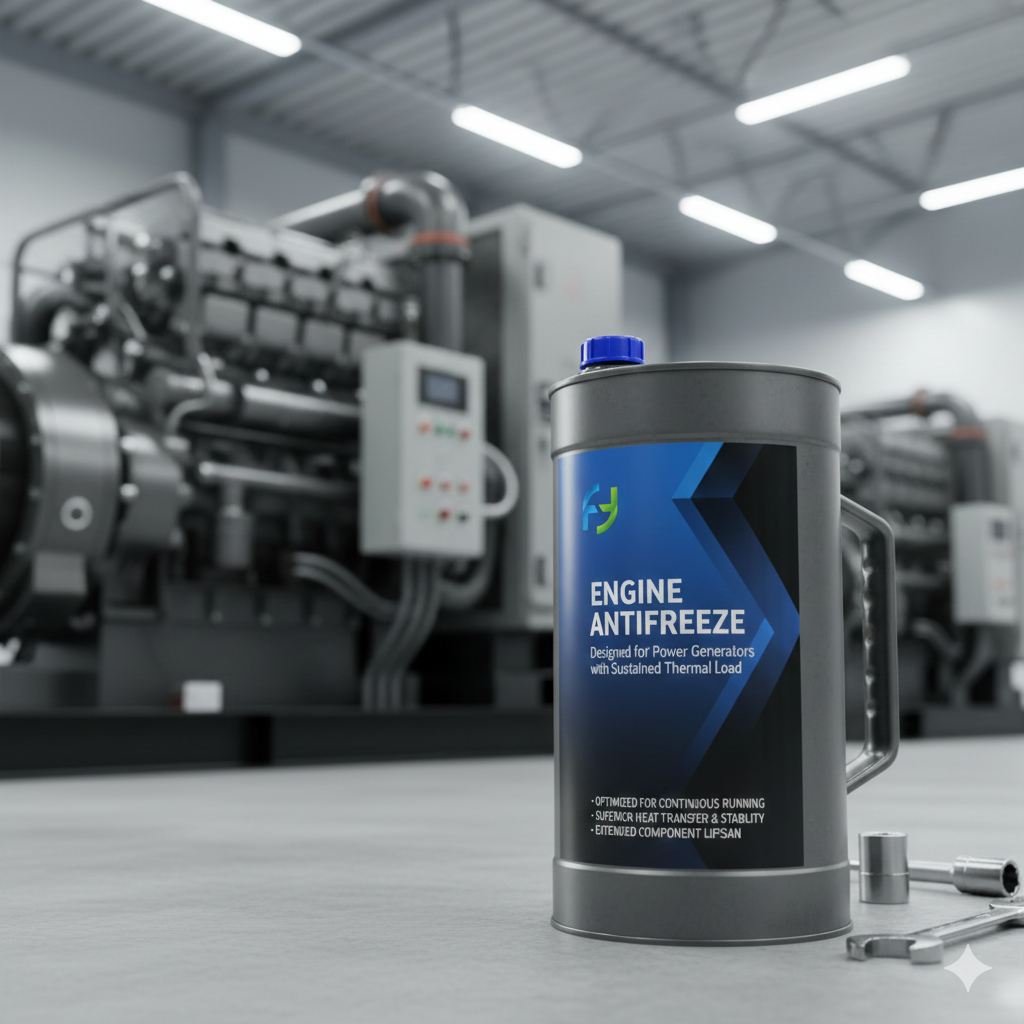
Industrial Engines (Diesel / Gas)
Require robust corrosion protection and oxidation resistance due to high thermal load and metal diversity.
Process Equipment Cooling
Often involves large volumes and complex flow paths, making deposit control and long-term clarity critical.
Outdoor or Harsh Environments
Systems exposed to temperature extremes or contaminants benefit from formulations with strong buffering and stability margins.
Matching antifreeze chemistry to system behavior prevents performance loss that cannot be corrected through maintenance alone.
Industrial Antifreeze vs Automotive Coolant in Practice
| Technical Aspect | Industrial Antifreeze Solution | Automotive Coolant |
|---|---|---|
| Operating duration | Continuous | Intermittent |
| Thermal load profile | Sustained | Cyclic |
| Additive endurance | High | Moderate |
| Maintenance frequency | Low | Higher |
| Formulation tolerance | Narrow, controlled | More forgiving |
This comparison explains why automotive coolant formulations often fall short in industrial environments, even if freeze protection appears adequate.
Procurement Considerations for Industrial Applications
From a procurement standpoint, industrial antifreeze is a system reliability investment, not a consumable.
Key evaluation points include:
-
Proven formulation stability over long service intervals
-
Compatibility with system materials and seals
-
Batch-to-batch consistency and traceability
-
Availability of technical support for system-specific issues
Selecting based solely on unit cost often results in higher lifecycle expense due to increased maintenance or unplanned shutdowns.
Q&A
Q: Can automotive antifreeze be used in industrial engines?
It is generally not recommended due to differences in operating conditions and additive endurance.
Q: Does industrial antifreeze require less frequent replacement?
Service life depends on formulation stability and system conditions, but intervals are typically longer.
Q: Is higher glycol concentration always better for industrial systems?
No. Excess concentration can reduce heat transfer efficiency and increase pump load.
Applying Industrial Antifreeze Solutions in Real Systems
Industrial cooling systems demand antifreeze solutions designed for endurance, not short-term protection.
FYeco develops antifreeze and additive solutions tailored for industrial engines and equipment operating under continuous thermal load. Reviewing available industrial antifreeze solutions within FYeco’s product portfolio allows engineers and buyers to evaluate suitability based on real operating conditions rather than generic specifications.
https://www.fyecosolution.com/products
For industrial systems with extended run times, high thermal stress, or limited maintenance access, discussing system parameters with the FYeco team supports a more reliable, application-driven antifreeze selection process.
https://www.fyecosolution.com/contact-us