
Why Additive Systems Define Coolant Performance Over Time
In practical engine operation, cooling failures rarely occur because a coolant freezes or boils unexpectedly. They occur because the internal protection mechanisms gradually stop working. When temperature begins to drift upward late in a service interval, the root cause is almost always additive depletion or imbalance—not base fluid breakdown.
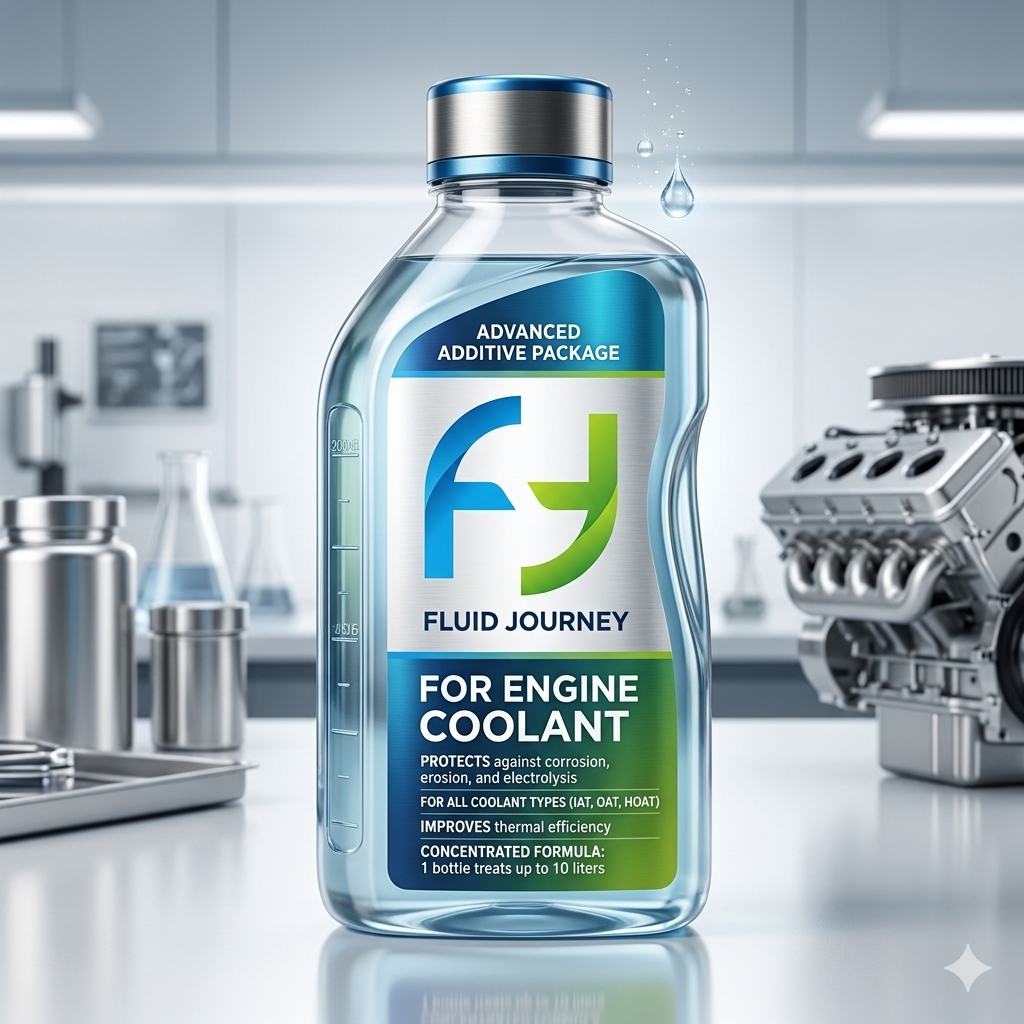
This is why the antifreeze additive package is the true control center of coolant performance. It governs how the fluid interacts with metal surfaces, how it responds to oxidation and contamination, and how predictably it behaves over thousands of operating hours.
In many applications, two coolants with identical freeze points and similar base fluids can deliver radically different results solely because their additive systems are designed differently.
What an Antifreeze Additive Package Actually Controls
From an engineering standpoint, the additive package is responsible for managing competing degradation mechanisms simultaneously. Cooling systems are chemically active environments where metals, oxygen, heat, vibration, and contaminants interact continuously.
A properly designed antifreeze additive package performs five critical functions:
-
Corrosion suppression across cast iron, aluminum, steel, and soldered joints
-
pH buffering to maintain chemical balance as oxidation progresses
-
Cavitation control to protect liners and pump surfaces under load
-
Deposit management to keep narrow passages thermally efficient
-
Property stabilization to limit viscosity and performance drift
If any one of these functions dominates at the expense of others, long-term instability emerges.
Corrosion Control: Beyond “Rust Prevention”
Corrosion inside cooling systems is rarely uniform. It concentrates at metal interfaces, high-temperature zones, and areas of low flow. Additive systems must therefore provide multi-metal protection, not single-surface inhibition.
Field inspections show that insufficient corrosion control can reduce effective heat transfer by 5–10% within one service interval, even when coolant appears visually clean. This loss is enough to eliminate thermal margin in engines operating near rated output.
An effective antifreeze additive package forms stable protective films while avoiding excessive precipitation that could restrict flow or insulate heat-transfer surfaces.
Cavitation Resistance Under High Load and Vibration
Cavitation damage is a common but often underestimated failure mode in high-load engines. Pressure fluctuations near liners and pump inlets generate micro-bubbles that collapse against metal surfaces, leading to erosion over time.
Basic additive systems offer limited cavitation protection. In contrast, advanced antifreeze additive packages integrate cavitation suppressants that reduce erosion rates by 40–60%, significantly extending component life in engines operating under sustained load or vibration.
Additive Balance and Long-Term Property Stability
One of the most common formulation errors is increasing additive concentration to “improve protection.” While this may improve short-term corrosion resistance, it often accelerates deposit formation or destabilizes viscosity over time.
Well-balanced additive systems focus on controlled depletion, not maximum concentration. In real-world applications, this approach limits viscosity change to ±3–5% across the service interval, compared with 8–12% commonly observed in poorly balanced formulations.
This stability directly affects pump efficiency, flow distribution, and temperature uniformity.
Antifreeze Additive Package vs Basic Additive Systems
| Technical Aspect | Advanced Antifreeze Additive Package | Basic Additive System |
|---|---|---|
| Multi-metal corrosion protection | Engineered, long-term | Limited |
| Cavitation erosion resistance | 40–60% reduction | Minimal |
| pH stability | ±0.3–0.5 units | ±0.8–1.2 units |
| Deposit formation tendency | Low, controlled | Moderate to high |
| Heat transfer retention | ≥95% | 80–90% |
| Additive depletion behavior | Predictable | Uneven |
| Maintenance planning impact | Condition-based | Reactive |
Engineering implication:
The difference between stable cooling and late-interval failure is often determined by additive system design, not base fluid choice.
Where Additive Package Quality Matters Most
The importance of additive system design increases significantly in applications involving:
-
Continuous high-load operation with minimal cooling margin
-
Extended service intervals or limited maintenance access
-
Mixed-metal engine architectures
-
High vibration or pressure fluctuation environments
-
Standby systems exposed to long idle periods
In these conditions, additive durability and interaction stability directly determine system reliability.
Procurement Perspective: Evaluating What Specifications Don’t Show
From a procurement standpoint, additive package quality is rarely visible in product datasheets. Many products meet the same nominal specifications yet behave very differently in service.
Buyers evaluating antifreeze additive packages focus on formulation consistency, depletion behavior, and supplier capability to support application-specific requirements. In high-risk applications, lifecycle cost is driven more by additive system performance than by coolant price.
Frequently Asked Questions
Q: Can additive packages be modified without changing the base fluid?
A: Yes. Many performance improvements are achieved by rebalancing additive systems while retaining the same base fluid.
Q: Do additive packages determine coolant service life?
A: In most cases, service life is limited by additive depletion rather than base fluid degradation.
Q: Is higher additive concentration always better?
A: No. Excessive concentration often causes instability. Balance and compatibility are more important than additive strength alone.
From Additive System Design to Application-Specific Solutions
Understanding coolant performance requires looking beyond freeze point and base fluid selection. FYeco offers antifreeze products formulated with carefully balanced additive systems that support long-term cooling stability, allowing users to evaluate suitable solutions through the product range at
https://www.fyecosolution.com/products
When operating conditions place exceptional stress on coolant chemistry, additive systems can be adjusted through FYeco’s technical service process. By tailoring corrosion inhibitors, cavitation suppressants, and stabilizers, custom additive packages help align coolant behavior with real engine demands. Technical discussions and formulation support are available via
https://www.fyecosolution.com/services