
Introduction
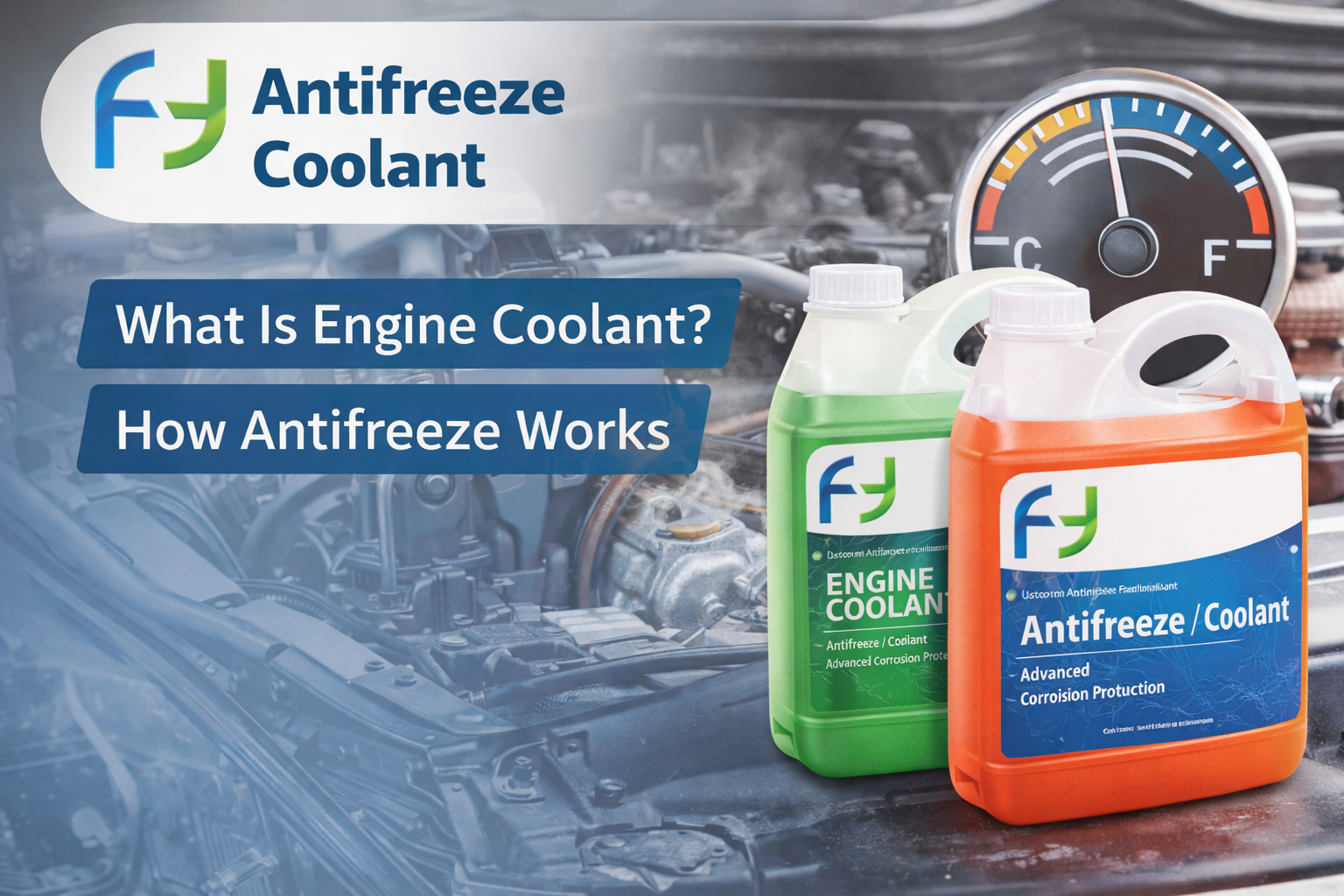
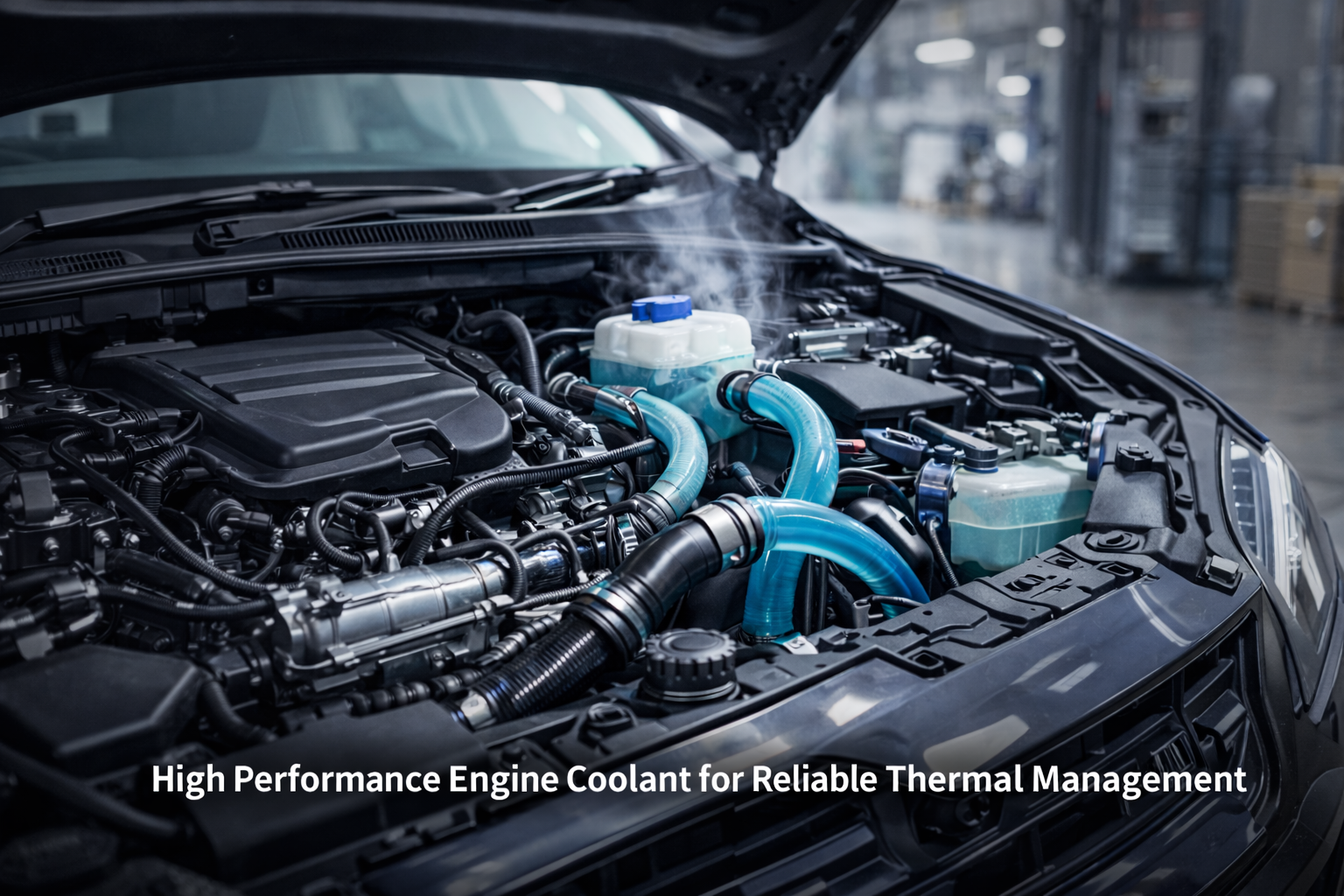
A high-quality automotive antifreeze solution is a critical component in modern cooling systems, ensuring stable operating temperatures and reliable engine cooling protection across a wide range of automotive and industrial applications.
In demanding environments, the correct industrial coolant fluid not only transfers heat efficiently but also protects system components from corrosion, scaling, and premature failure.
As engines and industrial equipment become more compact and thermally loaded, the role of a well-engineered thermal management coolant has become increasingly important for long-term operational reliability.
The Primary Functions of an Automotive Antifreeze Solution
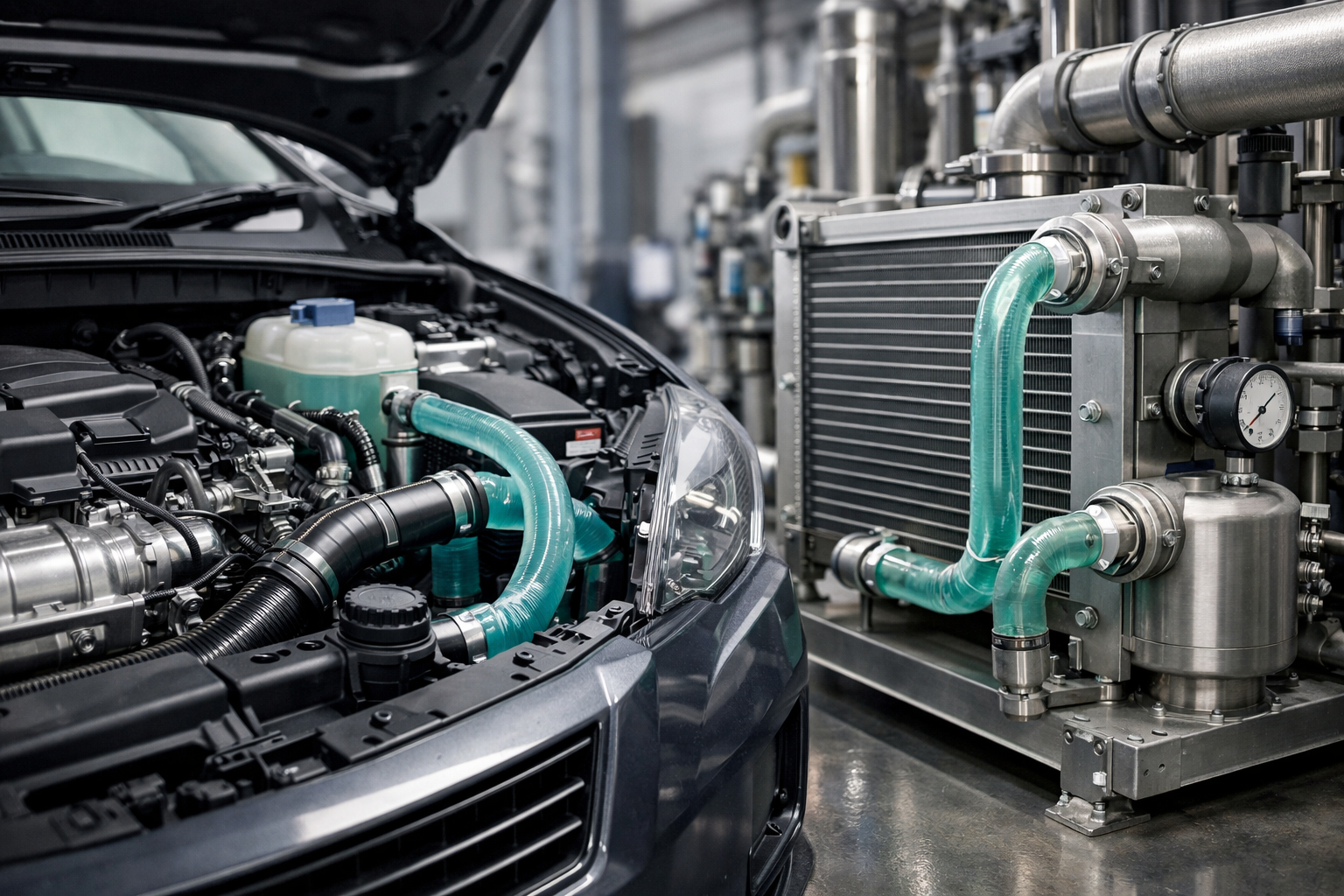
An effective automotive antifreeze solution performs several essential functions beyond basic freeze protection. It regulates operating temperatures, supports efficient heat dissipation, and ensures continuous engine cooling protection under both low- and high-temperature conditions.
In industrial applications, a properly formulated industrial coolant fluid helps maintain stable system pressure, reduces downtime, and supports consistent production performance.
Low-Temperature Protection and Engine Cooling Protection
Reliable engine cooling protection begins with freeze resistance. A stable automotive antifreeze solution prevents coolant solidification at low temperatures while maintaining fluid circulation during cold starts.
For global and industrial use, long life coolant technology ensures that freeze protection performance remains stable throughout extended service intervals, reducing the risk of localized freezing or thermal shock.
High-Temperature Stability and Thermal Management Coolant Performance
Modern cooling systems operate under increasingly high thermal loads. A premium thermal management coolant maintains its heat transfer efficiency at elevated temperatures without degradation.
In both vehicles and industrial equipment, industrial coolant fluid designed with long life coolant technology minimizes evaporation loss, resists oxidation, and ensures stable viscosity over time.
Corrosion Protection and Material Compatibility
One of the most critical functions of any cooling formulation is corrosion prevention. A high-performance corrosion inhibitor antifreeze protects aluminum, steel, copper, and mixed-metal systems from rust, cavitation, and electrochemical corrosion.
By integrating advanced inhibitor systems, a modern automotive antifreeze solution extends component life and reduces maintenance costs in both automotive engines and industrial cooling circuits.
Why Long Life Coolant Technology Matters
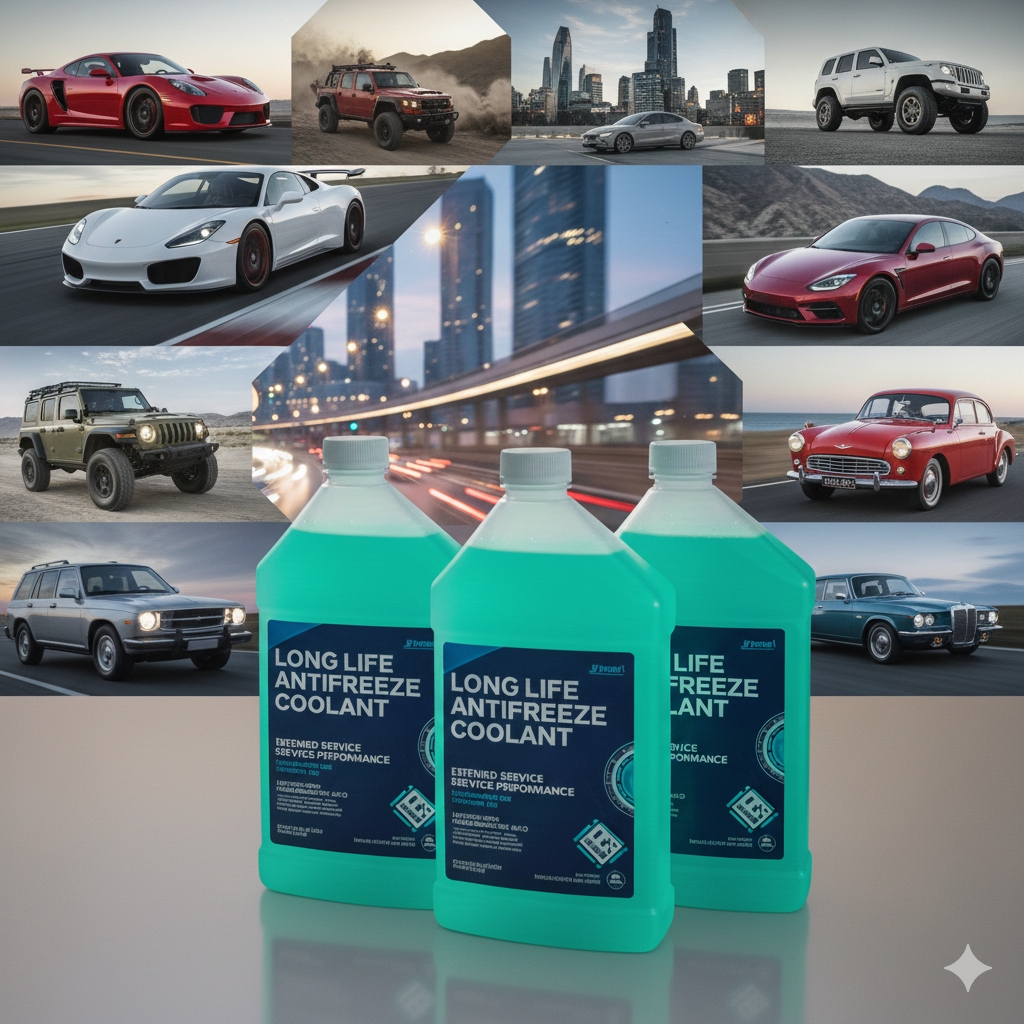
The adoption of long life coolant technology significantly reduces fluid replacement frequency and operational interruptions. For fleet operators and industrial users, this translates into lower total cost of ownership and improved system reliability.
When combined with a stable thermal management coolant formulation, long service intervals do not compromise engine cooling protection or corrosion resistance.
Conclusion
A well-formulated automotive antifreeze solution is far more than a temperature control fluid. By delivering reliable engine cooling protection, advanced corrosion inhibitor antifreeze performance, and proven long life coolant technology, it supports the long-term efficiency and safety of automotive and industrial cooling systems.
Selecting the correct industrial coolant fluid is a strategic decision that directly impacts equipment lifespan, operational stability, and maintenance efficiency.