
For chemical manufacturers, detergent brands, automotive fluid suppliers, cleaning product companies, and industrial distributors, choosing the right plastic jerry can supplier is an important supply chain decision. A jerry can is not only a container. It affects filling efficiency, product safety, warehouse storage, transportation performance, brand image, and customer satisfaction.
A low-quality plastic jerry can may look acceptable before filling, but problems often appear during real use. The container may deform after stacking, the handle may break during carrying, the cap may leak during shipping, or the material may not be suitable for the filled liquid. These problems can increase product loss, customer complaints, and after-sales costs.
That is why professional B2B buyers should not only compare price. They should evaluate material selection, structure design, cap sealing, handle strength, quality inspection, OEM support, and supplier delivery capability.
As a company focused on industrial packaging, plastic containers, and automotive chemical-related solutions, FYECO Solution supports buyers with practical packaging products and customized service communication for different liquid packaging applications.
What Is a Plastic Jerry Can?
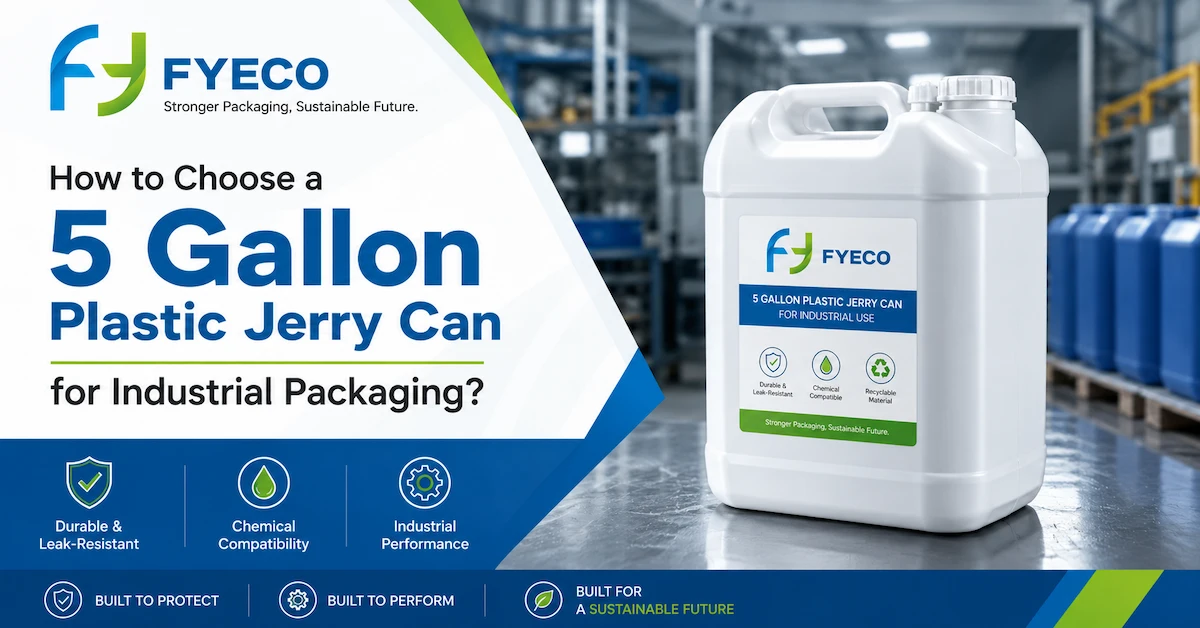
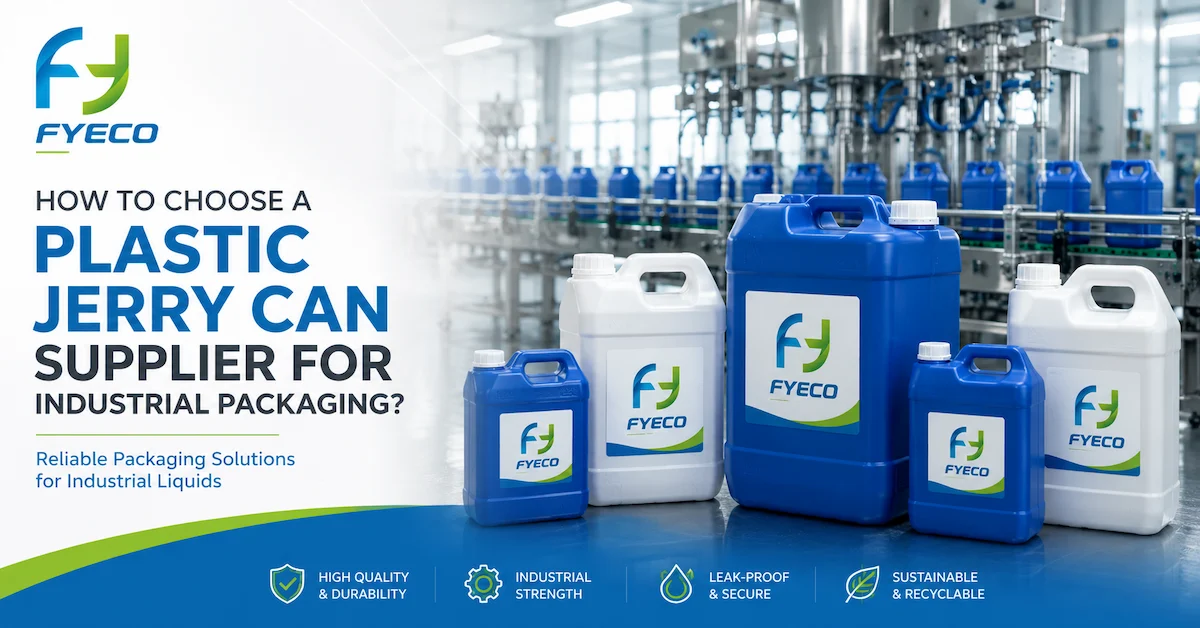
A plastic jerry can is a rigid plastic container designed with an integrated handle and cap. It is commonly used for liquid storage, transportation, and distribution. Compared with large drums or barrels, plastic jerry cans are easier to carry, pour, label, pack, and distribute.
Plastic jerry cans are commonly used for:
- Automotive fluids
- Antifreeze and coolant products
- Windshield washer fluid
- Detergents and cleaning liquids
- Chemical additives
- Water-based products
- Lubricants and maintenance fluids
- Industrial liquid packaging
You can explore FYECO’s related industrial packaging and product directions on the Products page.
Why Plastic Jerry Can Quality Matters
For industrial liquid packaging, quality problems can quickly become business problems. If the jerry can leaks during shipment, the buyer may lose both product and customer trust. If the handle breaks, the end user may question the overall product quality. If the container does not match the filling line, production efficiency may be affected.
A reliable plastic jerry can should provide:
- Leak-resistant sealing
- Stable wall thickness
- Strong handle support
- Good impact resistance
- Suitable chemical compatibility
- Clean labeling surface
- Consistent size and appearance
- Safe export packaging
For branded products, packaging also influences how customers judge the product. A clean, strong, and well-designed jerry can helps improve brand presentation and repeat purchasing.
Common Materials for Plastic Jerry Cans
Most industrial plastic jerry cans are made from HDPE because it offers good durability and chemical resistance for many applications.
HDPE
HDPE is widely used for jerry cans because it is lightweight, tough, and resistant to many common industrial liquids. It is suitable for detergents, automotive fluids, cleaning liquids, and many chemical-related products.
PP
PP may be used for certain applications that require higher rigidity or specific chemical performance. Buyers should confirm compatibility before choosing PP containers.
Modified Plastic Materials
Some products require better UV resistance, higher strength, or improved processing performance. Modified plastic materials can be selected based on the application.
Recycled Plastic Materials
Recycled materials may be used for non-critical packaging, but they should be carefully evaluated for chemical or high-value liquid products. For industrial packaging, safety and compatibility should come before material cost savings.
Key Features Buyers Should Evaluate
1. Sealing Performance
The cap and container opening must fit accurately. Poor sealing can cause leakage during storage, shipping, or customer use. Buyers should check cap tightness, thread accuracy, gasket options, and tamper-proof requirements.
2. Handle Strength
The handle must support the full weight of the filled jerry can. This is especially important for medium and large-capacity containers used in industrial distribution.
3. Wall Thickness Consistency
Uniform wall thickness helps reduce weak points and deformation. If the wall is too thin, the container may collapse, bulge, or crack under pressure.
4. Chemical Compatibility
Not every plastic container is suitable for every liquid. Buyers should confirm compatibility based on the liquid formula, concentration, filling temperature, storage time, and transport conditions.
5. Pouring Convenience
A good jerry can should be easy to lift and pour. This is important for automotive fluids, detergents, and workshop-use products.
6. Labeling and Branding Surface
For OEM and private label buyers, the container should support labels, logo stickers, or customized brand presentation.
How to Evaluate a Plastic Jerry Can Supplier
Choosing a supplier should be based on long-term reliability, not only one sample or one quotation.
Material Selection Support
A professional plastic jerry can supplier should ask about your liquid before recommending a product. Buyers should provide product type, filling temperature, storage environment, shipping method, and capacity requirements.
If your project involves multiple container types, FYECO’s Products page can help you review broader packaging directions.
Production and Mold Control
Plastic jerry cans are commonly produced through blow molding. Mold accuracy affects the container shape, handle structure, mouth size, wall thickness, and cap matching.
A reliable supplier should control:
- Mold precision
- Mouth dimension
- Wall thickness
- Handle strength
- Bottom stability
- Cap matching
- Surface cleanliness
- Batch consistency
For repeat buyers, stable batch quality is more valuable than a low first-order price.
Quality Control Before Shipment
A good supplier should inspect finished products before delivery. This helps reduce risks before the goods reach the buyer’s warehouse.
| QC Item | Why It Matters |
|---|---|
| Raw Material Check | Ensures stable strength and compatibility |
| Wall Thickness Check | Reduces deformation and cracking risk |
| Capacity Test | Supports accurate filling |
| Cap Matching Test | Helps prevent leakage |
| Handle Strength Test | Reduces breakage during carrying |
| Drop Test | Checks transport durability |
| Appearance Check | Protects brand presentation |
| Packing Inspection | Reduces shipping damage |
For B2B orders, buyers should ask what tests are done and whether inspection standards are consistent across batches.
OEM and Customization Support
Many buyers need plastic jerry cans that match their brand and market positioning. A capable supplier should support customization options such as:
- Custom capacity
- Custom color
- Logo or label support
- Cap color selection
- Tamper-proof cap design
- Handle structure adjustment
- Private label packaging
- Carton or pallet export packing
For customization communication, you can visit the FYECO Services page.
5. Delivery Reliability
Packaging delays can affect filling schedules, shipment plans, and customer delivery. Before choosing a supplier, buyers should confirm sample lead time, bulk lead time, production capacity, repeat order support, and export packing experience.
You can also learn more about FYECO’s company background and industrial direction on the About Us page.
Plastic Jerry Can Supplier Comparison
| Supplier Type | Advantages | Risks | Best For |
| Trading Supplier | Flexible sourcing | Less production control | Small trial orders |
| General Plastic Factory | Basic container production | Limited application support | Simple packaging needs |
| Professional Jerry Can Supplier | Better mold and sealing control | Requires clear specifications | Industrial liquid packaging |
| Integrated Packaging Supplier | Packaging plus application support | Needs deeper communication | OEM brands and long-term buyers |
For chemical, detergent, automotive fluid, and industrial liquid buyers, a supplier with application understanding usually provides stronger long-term value.
Questions to Ask Before Ordering
Before placing an order, buyers should ask:
- What material do you recommend for my liquid?
- Can the jerry can safely hold my product?
- Can you provide samples for testing?
- What capacity options are available?
- Can you customize color, logo, label, or cap?
- What leakage tests do you perform?
- Can the handle support the filled weight?
- What is your normal lead time?
- Can you support repeat bulk orders?
- How do you pack for shipment?
These questions help buyers compare suppliers more clearly and reduce sourcing risk.
Why Choose FYECO for Plastic Jerry Can Packaging Support?
FYECO Solution supports industrial packaging buyers with plastic containers, chemical packaging solutions, automotive fluid packaging applications, and customized service support. For customers sourcing plastic jerry cans, chemical jerry cans, plastic pails, plastic barrels, or other industrial containers, FYECO can help with product communication and packaging selection.
Instead of treating packaging as a simple container purchase, FYECO helps buyers consider product compatibility, sealing performance, filling use, transportation safety, branding, and long-term supply stability.
To explore related packaging options, visit FYECO Products.
To understand customization support, visit FYECO Services.
To learn more about the company, visit About FYECO.
FAQ
1. What is a plastic jerry can used for?
A plastic jerry can is used for storing, filling, transporting, and distributing liquids such as chemicals, detergents, automotive fluids, additives, and industrial products.
2. What material is commonly used for plastic jerry cans?
HDPE is commonly used because it is lightweight, durable, impact-resistant, and chemically resistant to many industrial liquids.
3. How do I choose a plastic jerry can supplier?
You should evaluate material quality, sealing performance, handle strength, wall thickness, quality control, customization ability, and delivery stability.
4. Can plastic jerry cans be customized?
Yes. They can often be customized by capacity, color, logo, label, cap type, handle structure, and packing method.
5. Are plastic jerry cans suitable for chemicals?
Many plastic jerry cans are suitable for chemical packaging, but compatibility should be confirmed based on the specific liquid formula.
6. What causes plastic jerry cans to leak?
Leakage may be caused by poor cap fitting, weak threads, gasket problems, container deformation, or transport damage.
7. Should I test samples before bulk ordering?
Yes. Sample testing helps verify sealing, capacity, handle strength, wall thickness, appearance, and filling compatibility.
8. Where can I source plastic jerry cans?
You can visit FYECO Solution or review the Products page to explore industrial plastic packaging solutions.
Conclusion
Choosing the right plastic jerry can supplier is important for safe, stable, and cost-effective industrial liquid packaging. Buyers should evaluate material quality, cap sealing, wall thickness, handle strength, quality control, customization capability, and delivery reliability.
A good supplier does more than provide plastic containers. It helps buyers reduce leakage risk, protect product quality, improve logistics efficiency, and support long-term brand growth.
If you are sourcing plastic jerry cans for chemicals, automotive fluids, detergents, additives, or industrial liquids, FYECO Solution can help you explore suitable packaging options and customized service support.