
When Standard Antifreeze Stops Being Enough
In many engine applications, cooling problems are not caused by extreme temperatures alone. They arise because standard antifreeze formulations are designed for average conditions, while real engines often operate far outside those assumptions. Continuous high load, extended idle periods, mixed-metal systems, and harsh environments all place demands on coolant chemistry that generic products are not optimized to handle.
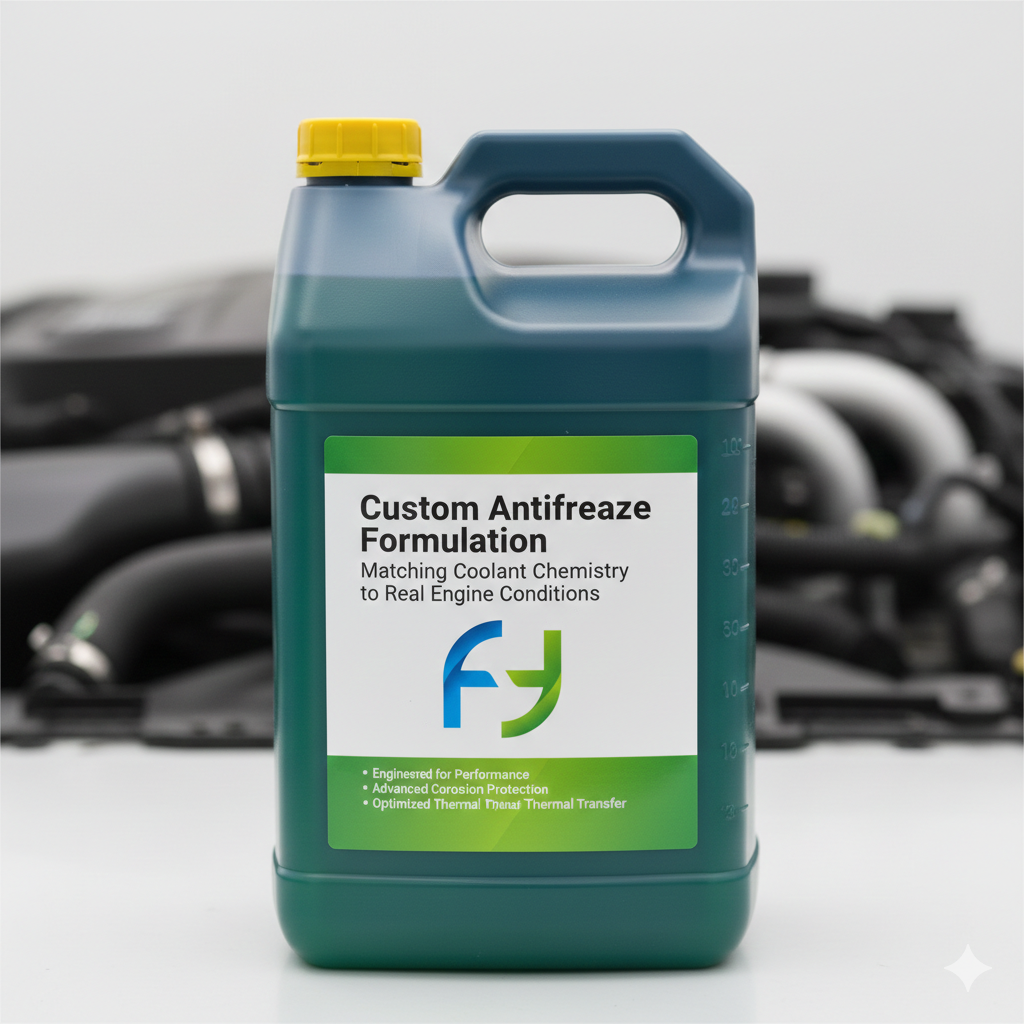
This is where custom antifreeze formulation becomes a practical engineering decision rather than a theoretical option. Instead of adapting maintenance schedules to coolant limitations, formulation parameters are adjusted to reflect actual operating conditions.
What “Custom” Means in Antifreeze Engineering
From an engineering perspective, customization does not mean inventing a new coolant from scratch. It involves selective adjustment of base fluids and additive systems to achieve specific performance targets.
Typical formulation variables include:
-
Base fluid composition to balance heat transfer, viscosity, and safety
-
Corrosion inhibitor systems matched to engine material combinations
-
Cavitation protection tuned for high-load or high-vibration environments
-
pH buffering capacity aligned with long service intervals
-
Additive durability based on oxidation and contamination exposure
A well-executed custom antifreeze formulation focuses on stabilizing system behavior over time rather than maximizing any single property.
Engineering Drivers That Justify Custom Formulation
Custom antifreeze solutions are most often adopted when engines exhibit one or more of the following characteristics:
-
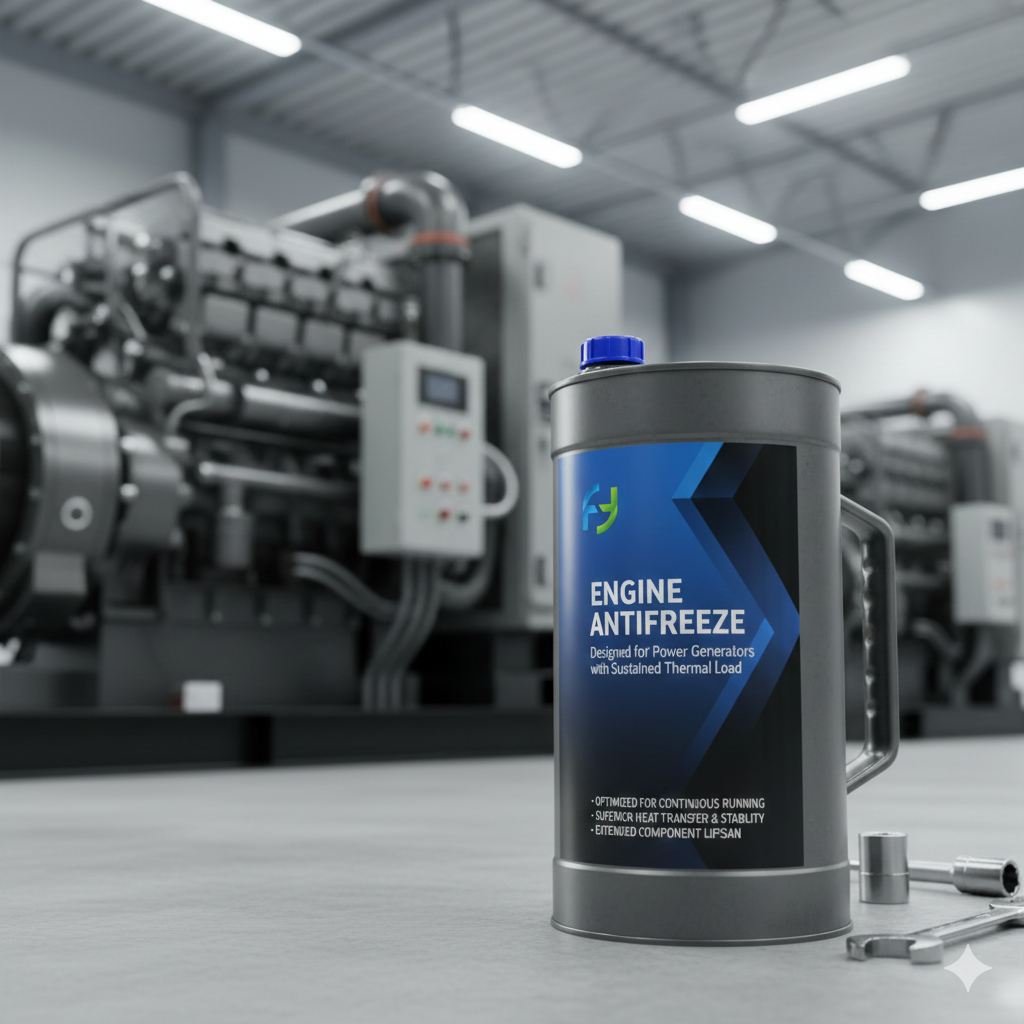
Sustained operation at high load with limited cooling margin
-
Extended service intervals where additive depletion becomes critical
-
Mixed-metal cooling systems sensitive to galvanic corrosion
-
Standby or intermittent operation with long idle exposure
-
Operation in extreme ambient temperatures or high-altitude environments
In these scenarios, customization helps prevent gradual performance drift that would otherwise appear late in service cycles and disrupt maintenance planning.
Performance Outcomes of Application-Specific Coolant Design
The primary benefit of custom antifreeze formulation is predictability. By aligning coolant chemistry with engine design and duty cycle, operators gain more consistent thermal performance across the service interval.
Field data from industrial and off-highway applications shows that tailored formulations can limit viscosity drift to ±3–5%, compared with 8–12% often observed in mismatched standard products. Heat transfer efficiency is likewise more stable, reducing late-interval temperature rise and unplanned interventions.
These improvements are not the result of higher additive concentration alone, but of better balance between protection mechanisms.
Custom Antifreeze vs Standard Formulation
| Technical Aspect | Custom Antifreeze Formulation | Standard Antifreeze |
|---|---|---|
| Base fluid selection | Tuned to application | Fixed |
| Corrosion inhibitor system | Matched to engine materials | General-purpose |
| Cavitation protection | Application-specific | Baseline |
| Viscosity stability | ±3–5% | 8–12% typical |
| Heat transfer consistency | ≥95% retention | Variable |
| Service interval predictability | High | Moderate |
| Maintenance planning | Condition-based | Time-based |
Engineering interpretation:
Customization shifts coolant performance from “acceptable on average” to “stable under specific conditions,” reducing uncertainty over long operating cycles.
Procurement Perspective: When Customization Adds Real Value
From a procurement standpoint, custom antifreeze formulation should be evaluated based on risk reduction and lifecycle cost, not unit price. While customized solutions may carry higher upfront costs, they often reduce indirect expenses related to downtime, shortened service intervals, or premature component wear.
Buyers typically consider customization when standard products fail to meet reliability expectations or when operating conditions cannot be simplified. Supplier capability, formulation consistency, and technical support become more important than catalog specifications alone.
Frequently Asked Questions
Q: Is custom antifreeze formulation only suitable for large fleets or OEMs?
A: No. Customization is increasingly used for specific projects or critical equipment where operating conditions justify tighter performance control.
Q: Does custom formulation increase maintenance complexity?
A: When properly implemented, it often simplifies maintenance by stabilizing coolant behavior and extending predictable service intervals.
Q: Can custom antifreeze replace standard products without system modification?
A: In most cases yes, provided compatibility with seals, hoses, and materials is confirmed during formulation design.
From Standard Products to Tailored Cooling Solutions
Evaluating the need for custom antifreeze formulation starts with understanding real engine conditions rather than relying solely on catalog specifications. FYeco offers a range of antifreeze products that serve as a foundation for application-specific evaluation, allowing users to review existing options through the product portfolio at
https://www.fyecosolution.com/products
When standard formulations cannot fully address operational requirements, customized antifreeze solutions can be developed through FYeco’s technical service process. By adjusting formulation parameters to match engine design, duty cycle, and environment, customized solutions help improve cooling stability and maintenance predictability. Technical discussions and customization support are available via
https://www.fyecosolution.com/contact-us